


 US Pushes Ukraine-Russia Peace Talks Before Summer Amid Escalating Attacks
  U.S. Lawmakers to Review Unredacted Jeffrey Epstein DOJ Files Starting Monday
  Nicaragua Ends Visa-Free Entry for Cubans, Disrupting Key Migration Route to the U.S.
  Bosnian Serb Presidential Rerun Confirms Victory for Dodik Ally Amid Allegations of Irregularities
  India–U.S. Interim Trade Pact Cuts Auto Tariffs but Leaves Tesla Out
  Bangladesh Election 2026: A Turning Point After Years of Political Suppression
  Trump Says “Very Good Talks” Underway on Russia-Ukraine War as Peace Efforts Continue
  Ghislaine Maxwell to Invoke Fifth Amendment at House Oversight Committee Deposition
  Trump Slams Super Bowl Halftime Show Featuring Bad Bunny
  Israel Approves West Bank Measures Expanding Settler Land Access
  China Overturns Death Sentence of Canadian Robert Schellenberg, Signaling Thaw in Canada-China Relations
  Ohio Man Indicted for Alleged Threat Against Vice President JD Vance, Faces Additional Federal Charges
  Anutin’s Bhumjaithai Party Wins Thai Election, Signals Shift Toward Political Stability
  New York Legalizes Medical Aid in Dying for Terminally Ill Patients
  Trump Signs Executive Order Threatening 25% Tariffs on Countries Trading With Iran
  Trump Allows Commercial Fishing in Protected New England Waters


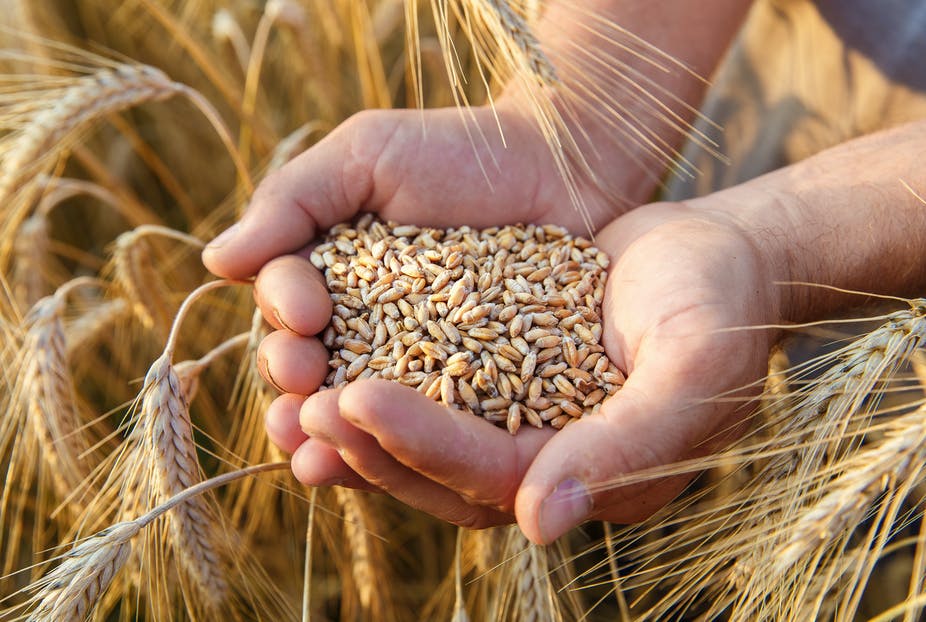

International fears about the impact of the Russia-Ukraine war on an existing global food crisis appear to have faded in the seven months since Russia pulled out of a deal that allowed Ukraine to export grain to world markets.
Such complacency is misplaced and dangerous. The risk of worsening food insecurity through the weaponization of grain continues. It’s troubling that such a risk exists at all, given how blocking access to a basic food staple can devastate innocent people and those with no connection to the conflict.
The idea that access to food and other basic commodities can be cut off to serve the strategic aims of a country at war is among the most concerning contradictions of modern capitalist political economy. Yet it’s barely even questioned in most policy discussions.
Precarity in food supplies has not dissipated despite the relative stabilization of grain exports and prices. As respected Black Sea agriculture expert Andrey Sizov argues: “The calm on the grain exports market is deceptive.” The risk is emanating from many sources.
Targeting food vessels
For one, Russia has placed food vessels to and from Ukraine on its list of potential targets, and Ukraine has retaliated by warning about similarly attacking the Crimea bridge connecting Russian shipping straits to key ports.
There is also the continuing risk of Russia deliberately slowing inspections or restricting exports.
Lastly, global grain prices have decreased in recent months, due in no small part to speculation and hedging in financial markets.
The short selling of grain hurts farmers in Albania, Poland, Romania, Bulgaria, Hungary and Slovakia, in addition to contributing to price fluctuations that affect countries already struggling with food insecurity.
This illuminates a wider fundamental problem with commodified food systems and with neoliberal capitalism’s logic of financialization more broadly.
Most commentators on food security have called for an end to threats of grain disruption, for the revival of the grain deal or for commitments to new agreements.
Others have pushed for a more controlled approach of judiciously managing wheat stocks. Along similar lines, a team of food systems and security researchers has collaborated on establishing recommended research priorities for tackling food security during extreme events.
These suggestions, however, are governance approaches that remain embedded in existing systems of political economy.
Flawed logic
More durable solutions may lie in addressing what gave rise to our shaky and unjust commodity systems in the first place.
At a basic level, the promise of our supply-and-demand capitalism is that those who want a good or service are willing to pay more for it. But that’s illogical, because those who want or need goods the most may not be able to pay top dollar for them.
The result of this flawed logic has been that even the threat of disruptions to grain supply have driven prices high and placed populations in countries across Africa, the Middle East and Asia at risk of hunger.
The financialization of everything, including basic needs, is just one mechanism of neoliberal capitalism, and it reveals the dangers of turning basic needs into commodities.
Since the war in Ukraine, implied price volatility for wheat has peaked beyond what we saw during the 2008 global food price crisis.
Financialization leads to speculation and hedging that triggers price volatility in international grain markets.
Speculation multiplies the risk to food accessibility because the mere perception of risk in financial hubs like New York and London can cascade into very real food shortages for millions. That, in turn, can spawn other crises, from violent social conflict to mass displacement.
Throughout the Russia-Ukraine war, wheat has provided hedging benefits to investors. The United Nations Conference on Trade and Development (UNCTAD) has recognized that this has exacerbated the current global food crisis.
Speculation underpins food insecurity
Hopeful discussions and research by the G24 group of nations occurred during the 2008 crisis and focused on the role of financial market speculation in creating food insecurity.
These conversations are urgently needed again to further examine the underlying influences of capitalism on food insecurity.
The newly released UNCTAD Trade and Development Report 2023 has again raised concerns over financial speculation and hedging. The report directly links food insecurity to corporate profiteering made possible by financial speculation in commodity markets.
Prices and profits: Is commodity speculation making the global food crisis worse?
— United Nations Geneva (@UNGeneva) October 12, 2023
This episode of the #WeeklyTradecast looks at the influence big trading companies have on food supplies & prices with @UNCTAD economist Anastasia Nesvetailova. https://t.co/pi9ljfVsid pic.twitter.com/aRi0BT16wq
But it failed to call into question the underlying political-economic organization of neoliberal capitalism, which has encouraged the use of critical and life-sustaining commodities as geopolitical pawns.
A more forward-looking and sustainable solution would be to decommodify basic needs altogether.
Decommodification is an attainable aim, but to achieve it requires a critical examination of the wider political economy. Research is demonstrating how basic needs, like food, can have both stable and sustainable supply. These discussions on alternatives to neoliberal capitalism are beginning to happen in prominent policy arenas.
The war in Ukraine’s impact on food insecurity is critical, of course, but there is more to the picture. The main problem is that capitalism allows food and other basic needs to become precarious commodities.
The current global food crisis may be triggered by war, but neoliberal capitalism is the fuel.













