


 Anutin’s Bhumjaithai Party Wins Thai Election, Signals Shift Toward Political Stability
  Trump’s Inflation Claims Clash With Voters’ Cost-of-Living Reality
  Trump Congratulates Japan’s First Female Prime Minister Sanae Takaichi After Historic Election Victory
  Trump Says “Very Good Talks” Underway on Russia-Ukraine War as Peace Efforts Continue
  China Warns US Arms Sales to Taiwan Could Disrupt Trump’s Planned Visit
  Netanyahu to Meet Trump in Washington as Iran Nuclear Talks Intensify
  Trump Lifts 25% Tariff on Indian Goods in Strategic U.S.–India Trade and Energy Deal
  Trump Backs Nexstar–Tegna Merger Amid Shifting U.S. Media Landscape
  Bosnian Serb Presidential Rerun Confirms Victory for Dodik Ally Amid Allegations of Irregularities
  Japan’s Prime Minister Sanae Takaichi Secures Historic Election Win, Shaking Markets and Regional Politics
  U.S.-India Trade Framework Signals Major Shift in Tariffs, Energy, and Supply Chains
  New York Legalizes Medical Aid in Dying for Terminally Ill Patients
  Ohio Man Indicted for Alleged Threat Against Vice President JD Vance, Faces Additional Federal Charges
  Pentagon Ends Military Education Programs With Harvard University
  India–U.S. Interim Trade Pact Cuts Auto Tariffs but Leaves Tesla Out
  Trump Administration Appeals Court Order to Release Hudson Tunnel Project Funding
  Bangladesh Election 2026: A Turning Point After Years of Political Suppression


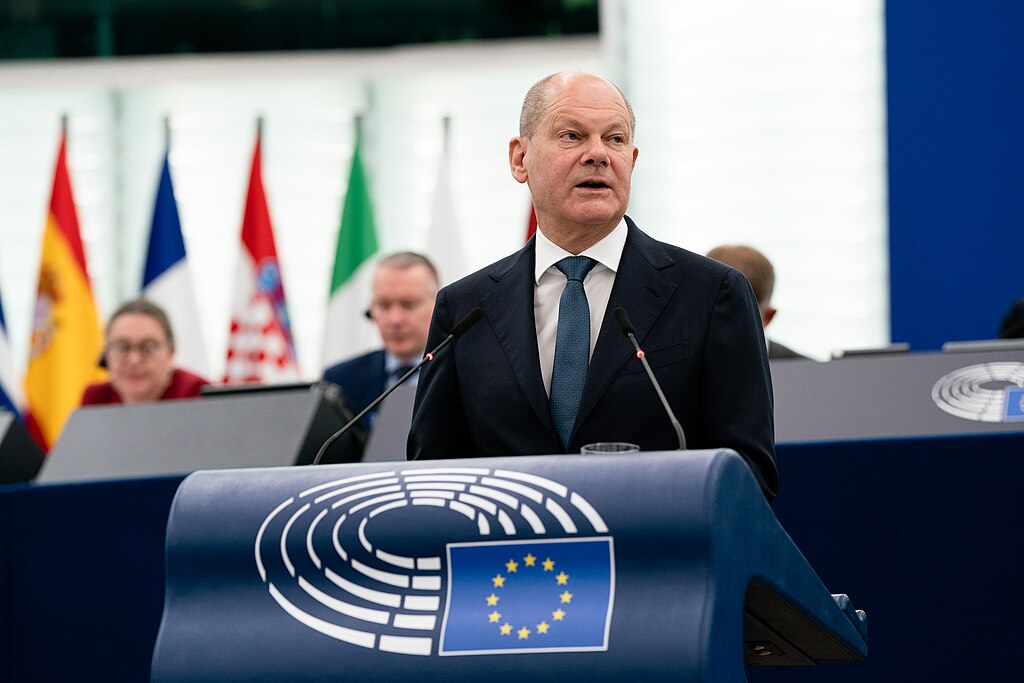
German Chancellor Olaf Scholz strongly criticized U.S. Vice President JD Vance at the Munich Security Conference on Saturday for his comments urging European leaders to reconsider their stance on far-right parties. Scholz rejected Vance's call for German cooperation with the far-right Alternative for Germany (AfD), emphasizing that Germany's decision to isolate the AfD is rooted in its historical responsibility to oppose ultranationalism.
Vance, speaking at the conference a day earlier, accused European leaders of suppressing free speech and criticized Germany's political firewall against the anti-immigration AfD, which is polling at around 20% ahead of the February 23 general election. Scholz responded firmly, stating that it was inappropriate for allies to advise Germany on its domestic political decisions, particularly regarding a party known for its extremist views.
Highlighting Germany's commitment to democratic values, Scholz underscored the nation's rejection of fascism, racism, and militarism, referencing the atrocities of Adolf Hitler's Nazi regime. He defended Europe's measures to regulate hate speech, arguing that democracies must protect themselves from radical anti-democratic forces.
While the Munich conference was expected to focus on the Ukraine-Russia conflict following a recent call between U.S. President Donald Trump and Russian President Vladimir Putin, Vance's speech largely bypassed the topic. Instead, he highlighted what he sees as Europe's abandonment of core democratic values, particularly in free speech and immigration policies.
Scholz's remarks reinforced Germany's stance on safeguarding its democracy and resisting external pressures to compromise its principles, especially from allies like the United States. His response has intensified debates over free speech, far-right politics, and international diplomacy in the lead-up to Germany's critical election.













