


 Samsung to Launch First Yongin Chip Plant by 2029 as South Korea Speeds Up Semiconductor Hub
  Arm Stock Falls After HSBC Downgrade, Citing Limited Near-Term AI Upside
  Zhipu AI Stock Jumps on Report of Custom AI Chip Development Plans
  Elon Musk Says Anthropic Leads AI Race as Claude Models Challenge OpenAI
  TSMC Q2 Revenue Surges 36% as AI Chip Demand Powers Growth Ahead of Earnings
  SoftBank Corp Partners With Sierra to Expand AI Customer Support Across Japan
  SK Hynix Stock Soars as AI Memory Demand Outlook Fuels Chip Rally
  DeepSeek Eyes China IPO as AI Startup Seeks $71 Billion Valuation in New Funding Round
  Nvidia Invests $500M in Firmus Technologies Ahead of Planned ASX IPO
  OpenAI Executive Fidji Simo to Step Down Amid Health Challenges Ahead of IPO
  OpenAI GPT-5.6 Set for Wider Release After U.S. Commerce Approval, Report Says
  SK Hynix Shares Drop After Strong Nasdaq Debut Despite $26 Billion ADR Listing
  Nvidia Tightens AI Chip Sales in Asia With Stricter Customer Approval Process
  SK Hynix Soars 13% in Nasdaq Debut After Record $26.5 Billion IPO
  Bain Capital Exits Kioxia After AI-Fueled Valuation Surge
  EU to Propose New Rules Limiting Children's Access to Social Media


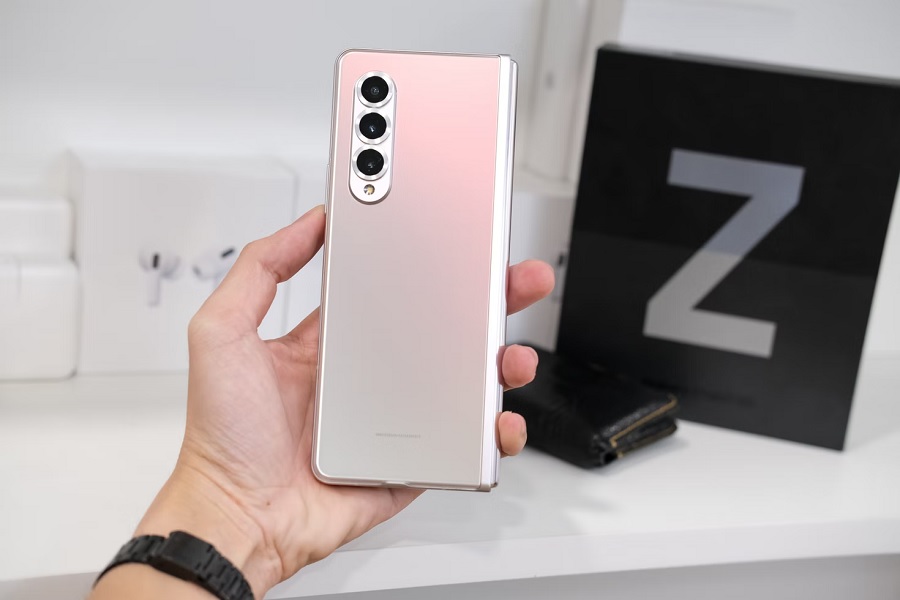
Samsung has reportedly contemplated changing how it applies biometric sensors for Galaxy Z Fold 4 and Galaxy Z Flip 4. But the tech giant ultimately decided to keep using a side-mounted fingerprint reader.
More OEMs have started using in-display fingerprint sensors on their premium smartphones in recent years, including Samsung. The company has even received praises for the improvements of its ultrasonic in-display fingerprint scanner on the Galaxy S22 series. However, this technology might not be used on its foldable phones anytime soon.
Business Korea said the company has also considered doing the same for its next series of Galaxy foldable phones but decided not to implement it this year. The same report added the Galaxy Z Fold 4 and Galaxy Z Flip 4 would still have their fingerprint scanners integrated into the side-mounted power button just like their predecessors. Samsung reportedly deemed this to be “more advantageous” and would offer a better user experience.
Samsung previously filed a patent for a dual-sided sensor, which was discovered late last year, sparking speculations that the company could use in-display fingerprint scanners on its future foldable phones. In the illustrations provided by LetsGoDigital, Samsung’s concept includes two sensors that would allow users to have their fingerprints scanned from the external and main displays.
It appears that the main purpose of having a dual-sided fingerprint scanner is to allow users of a foldable phone to unlock the device when it is either folded or unfolded. While this could be a great innovation, in terms of functionality, Samsung may not have a reason to rush into adopting this technology for the Galaxy Z Fold 4 and Galaxy Z Flip 4. Having the fingerprint scanner on the side power button already allows for easy access to the sensor when biometric authentication is needed, regardless of which screen is being used.
The report also noted that the Galaxy Z Fold 4 and Galaxy Z Flip 4 are planned to launch in the third quarter of 2022. That falls within the usual schedule of Samsung’s summer product launch. Last year, the third generation of foldable smartphones was unveiled on Aug. 11 and arrived in stores later in the same month.
Photo by Thai Nguyen on Unsplash







