


 Chinese Chip Stocks Jump as Apple Reportedly Tests CXMT Memory Chips for China Devices
  Samsung Chairman Lee Jae-yong Expected to Meet Nvidia CEO Jensen Huang on AI and Chip Partnership
  SK Hynix’s $28 Billion U.S. Share Sale Draws Massive Demand Amid AI Chip Boom
  SoftBank Corp Partners With Sierra to Expand AI Customer Support Across Japan
  SK Hynix’s $28B U.S. IPO Draws Strong Demand as AI Chip Boom Fuels Investor Interest
  ASML Raises 2026 Outlook as AI Chip Demand Lifts Q2 Earnings
  Zhipu AI Stock Jumps on Report of Custom AI Chip Development Plans
  Yaskawa Electric Shares Slide as Weak Profit Overshadows Strong AI Demand
  Australia Flags Child Safety Gaps at Apple, Meta, Google Over Online Sexual Extortion
  Arm Stock Falls After HSBC Downgrade, Citing Limited Near-Term AI Upside
  Wolfspeed Sues Navitas Over GaN and SiC Patent Infringement
  EU to Propose New Rules Limiting Children's Access to Social Media
  SK Hynix Stock Soars as AI Memory Demand Outlook Fuels Chip Rally
  Nvidia Tightens AI Chip Sales in Asia With Stricter Customer Approval Process
  Elon Musk Says Anthropic Leads AI Race as Claude Models Challenge OpenAI
  SK Hynix Soars 13% in Nasdaq Debut After Record $26.5 Billion IPO


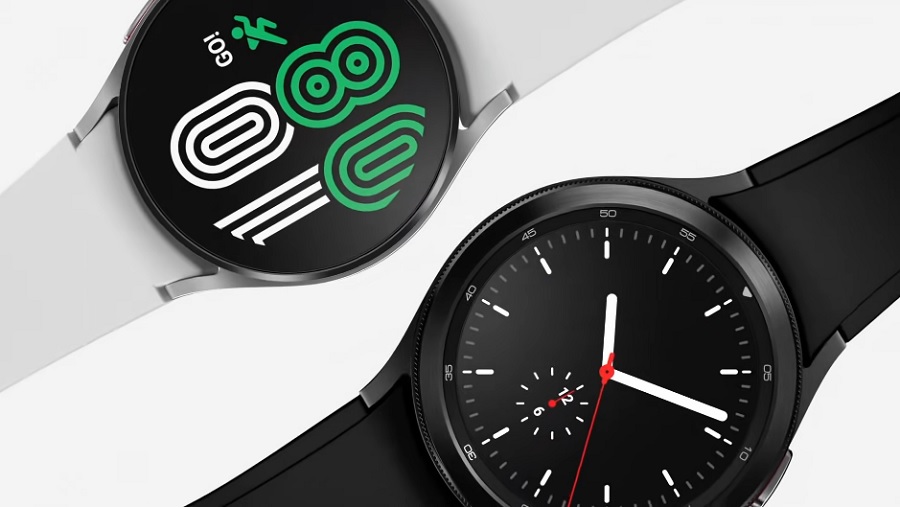
Samsung fans may have to wait several months before the official announcement of the Galaxy Watch 5 series. However, early details about its potential technical specifications have started appearing in the wild. A recently spotted certification suggests the smartwatch could offer a larger battery than its predecessor.
A battery component with part number EB-BR900ABY was listed on the Korea Agency for Technology and Standards with certification number YU10211-22003 last week. There is not much information about the battery included in the certification, but SamMobile suggested it may be used for the upcoming Galaxy Watch 5 with model number SM-R900, which could then be the direct successor of the 40mm Galaxy Watch 4.
The certification also includes a photo of the battery showing its measurements and the stamped rated capacity of 1.07Wh 3.88V, which is equivalent to about 276mAh. This signals a slight improvement to the battery life of the 40mm Galaxy Watch 4 and 42mm Galaxy Watch 4 Classic rated at 247mAh. It is worth noting that the earlier released 41mm Galaxy Watch 3 has the same battery capacity.
Per the report, the increased battery life is expected on the smaller Galaxy Watch 5 model. Currently, Samsung is also selling 44mm and 46mm variants of the Galaxy Watch 4 and Galaxy Watch 4 Classic, respectively, that both sport a 361mAh battery.
The official technical specs sheet for the Galaxy Watch 4 series does not indicate a specific battery life per charge since it can widely vary depending on how every person uses the device. Samsung only officially says the currently available watches have “multi-day battery life.” So the slight increase to 276mAh on the base model of Galaxy Watch 5 will likely deliver some improvements.
Another report from Korea IT News recently claimed that Samsung is developing a technology that would add a new sensor to the Galaxy Watch 5 to measure the user’s body temperature. It could be used to help female users track their ovulation cycles or alert all users when they potentially have a fever.
Adding a new health sensor is more complicated than increasing a device’s battery life, though. So it remains to be seen if Samsung will finish developing the rumored technology in time for the release of the Galaxy Watch 5 later this year.







