


 Trump Lifts 25% Tariff on Indian Goods in Strategic U.S.–India Trade and Energy Deal
  U.S. Lawmakers to Review Unredacted Jeffrey Epstein DOJ Files Starting Monday
  Trump Says “Very Good Talks” Underway on Russia-Ukraine War as Peace Efforts Continue
  Trump Allows Commercial Fishing in Protected New England Waters
  Trump Administration Appeals Court Order to Release Hudson Tunnel Project Funding
  Trump’s Inflation Claims Clash With Voters’ Cost-of-Living Reality
  Taiwan Says Moving 40% of Semiconductor Production to the U.S. Is Impossible
  US Pushes Ukraine-Russia Peace Talks Before Summer Amid Escalating Attacks
  China Warns US Arms Sales to Taiwan Could Disrupt Trump’s Planned Visit
  New York Legalizes Medical Aid in Dying for Terminally Ill Patients
  Ghislaine Maxwell to Invoke Fifth Amendment at House Oversight Committee Deposition
  China Overturns Death Sentence of Canadian Robert Schellenberg, Signaling Thaw in Canada-China Relations
  Japan Election 2026: Sanae Takaichi Poised for Landslide Win Despite Record Snowfall
  Netanyahu to Meet Trump in Washington as Iran Nuclear Talks Intensify
  Sydney Braces for Pro-Palestine Protests During Israeli President Isaac Herzog’s Visit
  Jack Lang Resigns as Head of Arab World Institute Amid Epstein Controversy
  Trump Signs Executive Order Threatening 25% Tariffs on Countries Trading With Iran


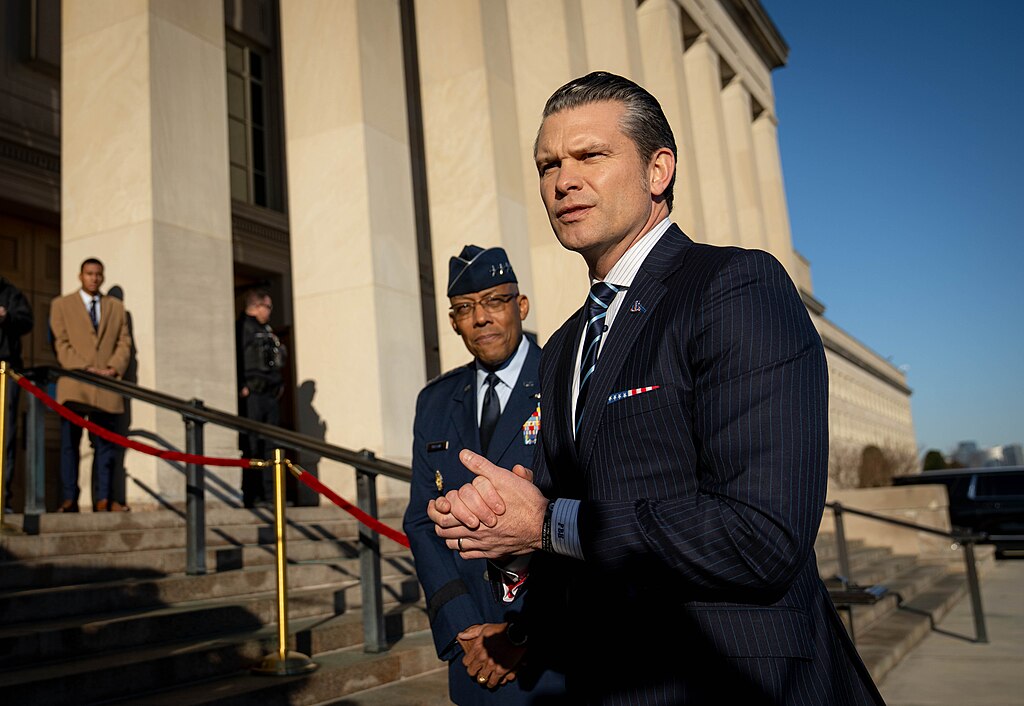
U.S. Defense Secretary Pete Hegseth criticized China on Saturday for escalating “destabilizing actions” in the South China Sea, vowing to strengthen regional security ties and provide Southeast Asian nations with advanced technology to counter Beijing’s growing influence. Speaking in Kuala Lumpur during multilateral talks with defense ministers from Australia, Japan, and the Philippines, Hegseth emphasized the need for a joint maritime awareness initiative to help ASEAN countries respond collectively to Chinese threats.
“You live it—the threats we all face from China’s aggression and conduct in the South China Sea,” Hegseth said, stressing that the United States aims to ensure regional partners are “never alone” in the face of provocation. He added, “No one can innovate and scale like the United States of America, and we’re eager to share those capabilities with allies and partners.”
His remarks followed joint naval exercises by the U.S., Australia, New Zealand, and the Philippines, which China condemned as a move that “undermined peace and stability.” Beijing continues to claim nearly the entire South China Sea, overlapping with the exclusive economic zones of Brunei, Indonesia, Malaysia, the Philippines, and Vietnam. The Chinese Coast Guard has frequently clashed with Philippine vessels and disrupted regional energy exploration efforts—actions Beijing defends as legitimate protection of its sovereignty.
China’s Defense Minister Dong Jun urged ASEAN to “pool Eastern strength” to maintain regional stability. Meanwhile, Hegseth’s Southeast Asia visit came amid heightened tensions following U.S. President Donald Trump’s call to resume nuclear weapons testing after a 33-year halt. Hegseth described the move as “prudent,” underscoring America’s intent to maintain “an unmatched military power” and safeguard peace through strength.
Hegseth reiterated that Washington seeks peace, not conflict, but warned that China’s ambitions to dominate the Indo-Pacific must be closely watched.













