


 Nvidia Confirms Major OpenAI Investment Amid AI Funding Race
  Baidu Approves $5 Billion Share Buyback and Plans First-Ever Dividend in 2026
  Sam Altman Reaffirms OpenAI’s Long-Term Commitment to NVIDIA Amid Chip Report
  SpaceX Reports $8 Billion Profit as IPO Plans and Starlink Growth Fuel Valuation Buzz
  Jensen Huang Urges Taiwan Suppliers to Boost AI Chip Production Amid Surging Demand
  TSMC Eyes 3nm Chip Production in Japan with $17 Billion Kumamoto Investment
  Sony Q3 Profit Jumps on Gaming and Image Sensors, Full-Year Outlook Raised
  Elon Musk’s SpaceX Acquires xAI in Historic Deal Uniting Space and Artificial Intelligence
  Instagram Outage Disrupts Thousands of U.S. Users
  Alphabet’s Massive AI Spending Surge Signals Confidence in Google’s Growth Engine
  SpaceX Updates Starlink Privacy Policy to Allow AI Training as xAI Merger Talks and IPO Loom
  AMD Shares Slide Despite Earnings Beat as Cautious Revenue Outlook Weighs on Stock
  SoftBank and Intel Partner to Develop Next-Generation Memory Chips for AI Data Centers
  Anthropic Eyes $350 Billion Valuation as AI Funding and Share Sale Accelerate
  Elon Musk’s Empire: SpaceX, Tesla, and xAI Merger Talks Spark Investor Debate
  SpaceX Prioritizes Moon Mission Before Mars as Starship Development Accelerates


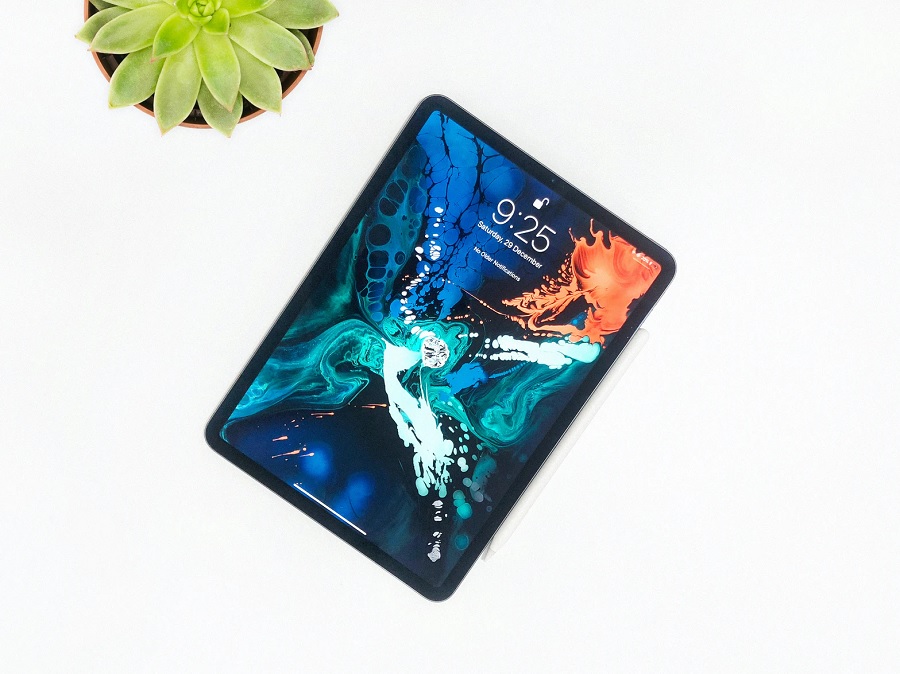
Apple introduced its first device with a mini-LED display earlier this year, but more could come in 2022. A new report from a renowned analyst is predicting that the tech giant could expand the mini-LED adoption to the next 11-inch iPad Pro.
Analyst Ming-Chi Kuo, known for his oft-accurate predictions, has said in a new investor note (via Apple Insider) that Apple is planning to launch more devices with mini-LED display in 2022, including next year’s 11-inch premium tablet. The list includes the next 12.9-inch iPad Pro and a redesigned MacBook Air.
Apple has reportedly reached out to Luxshare to join the lineup of manufacturers that provide mini-LED surface mounting technology for the Cupertino, California-based tech giant. This suggests Apple is eyeing an increased production of mini-LED panels, hinting that more devices would carry the component next year.
The 12.9-inch iPad Pro became the first Apple device with a mini-LED panel when it was launched last April. Unlike the traditional backlighting solution, the tablet now uses 10,000 custom mini-LEDs that are grouped in 2,500 local dimming zones.
Mini-LED displays are often favored by tech companies as they deliver high contrast and high brightness. Specifically, in the 12.9-inch iPad Pro, its mini-LED solution is said to enable the device to achieve a 1,000,000:1 contrast ratio, with 1000 nits full brightness, and 1600 nits peak brightness for HDR content.
Screen burn-in is one of the most common issues of devices that use OLED panels, and it could be one of the reasons Apple has opted for the mini-LED solution on their premium tablet series. However, mini-LEDs do come with their own caveats.
Shortly after the 12.9-inch iPad Pro was shipped last May, users started to discover one of the potential deal-breakers in having a device with a mini-LED display. Several people have reported experiencing a blooming effect on their screens, especially when they are using the device in dark rooms or turn Dark Mode on. It is, technically, not a screen defect, though. “The Liquid Retina XDR display improves upon the trade-offs of typical local dimming systems, where the extreme brightness of LEDs might cause a slight blooming effect because the LED zones are larger than the LCD pixel size,” Apple said on a support page.
Photo by Rahul Chakraborty on Unsplash













