


 UK Finance Minister Healey Calls for Fiscal Discipline Amid Global Risks
  European Auto Stocks Rise as EU-China Trade Deal Targets Hybrid Imports
  Zelenskiy Offers Russia Energy Truce Amid Trump Pressure
  US Condemns China Sanctions on Taiwan Allies Belize and Paraguay
  Greenland Lawmakers Back Trump Security Deal Despite Economic Concerns
  North Korea Fires Ballistic Missiles Amid Rising Tensions With South Korea
  US Authorities Raid Ilhan Omar’s Home Amid Immigration Fraud Probe
  Trump Denies Russia and China Are Helping Iran in U.S. Conflict
  Jordan Bardella Antisemitism Allegations Threaten Le Pen’s Campaign
  Trump Calls for Zelenskyy Replacement Amid Russian Diesel Deal
  Brazil Election: Lula and Bolsonaro Rally Ahead of October 25 Runoff
  Yandex Data Center Hit by Drone Strike as Russia-Ukraine Cyber Infrastructure Attacks Escalate
  NATO Commander Warns Russia of Devastating Response to Attack
  Trump Sanctions International Criminal Court, Sparking EU Backlash
  Russian Strikes Kill Six in Ukraine, Including Three in Kharkiv
  Kim Jong Un Showcases ICBM Ahead of Possible Trump Meeting
  Trump Plans White House Shake-Up of Key AI Safety Agency


 Add as a preferred source on Google
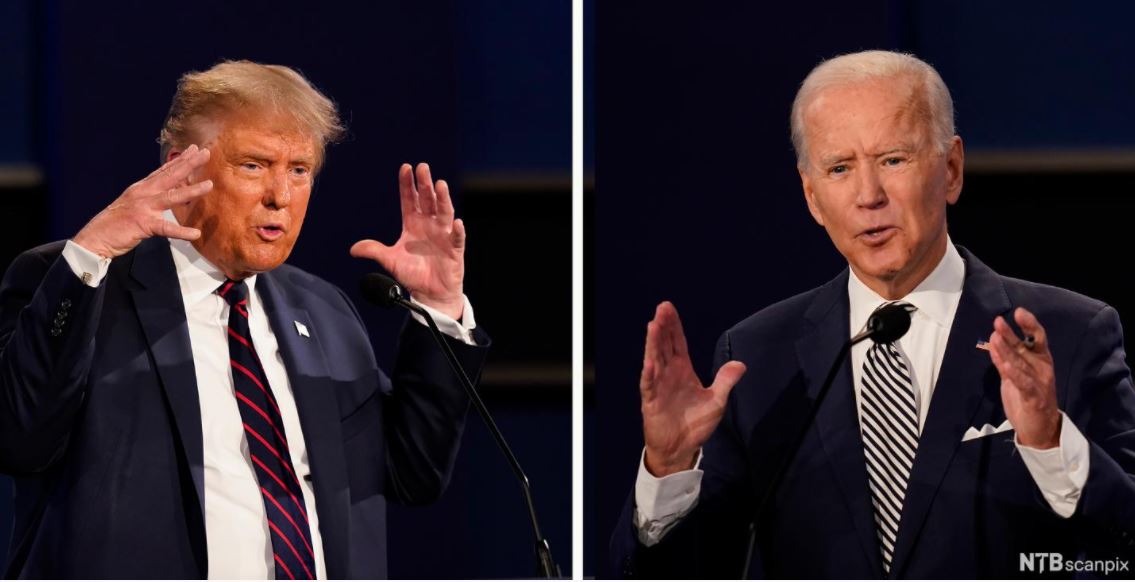

Sharp-eyed 20/20 vision has been hard to maintain in the maelstrom of 2020, with daily fears and passions often clouding analysis.
Here’s one helpful tool on one high-profile event: As the American presidential campaign concludes, a measure of depth and context can be applied to the chaos by comparing the Donald Trump-Joe Biden battle to tumultuous U.S. elections of the past.
Americans have been whiplashed by crises in 2020. The COVID-19 cyclone alone has been traumatic: There have been well over 200,000 deaths (and counting), staggering economic damage, including layoffs and business failures, and mental health challenges (for example, a record number of deadly opioid overdoses), to name just a handful of the pandemic-fuelled tribulations.
Add in compounding stresses like flareups in racial tensions and urban protests against systemic racism. Wrap everything up in an election year that never promised calm waters thanks to Trump’s voracious appetite for provocation on immigration, taxes, health care and a host of other issues.
The hypnotic grasp of the daily news cycle has been further intensified by the president’s behaviour since his positive COVID-19 diagnosis. The coronavirus has invaded the White House and its occupants have had no qualms about sharing it.
Given Trump’s simultaneous refusal to pledge he’ll accept the results of the election, it’s tempting to see a Game of Thrones-like scenario unfolding. For those familiar with the television version of the George R.R. Martin saga, the Sept. 26 Rose Garden celebration of Amy Coney Barrett’s Supreme Court nomination became something of a Red Wedding moment when a horde of participants were felled, at least temporarily, by COVID-19.
Americans have been here before
And yet for all the current chaos, the United States has experienced moments like this before — and an awareness of this history could help put 2020 into perspective.
The 1824 election is an early example of problematic volatility in American political history. There were four major candidates, all self-identified as members of a crumbling Democratic-Republican Party. One nominee was disabled by a stroke, but remained in the race — and the election was thrown into the House of Representatives when no candidate received a majority in the Electoral College.
Matters then went from bad to worse. Andrew Jackson, leading strongly in the popular vote, was denied victory when Henry Clay (who had placed fourth in the popular vote) threw his support to John Quincy Adams. Jackson supporters saw a “corrupt bargain” as Adams then named “Judas” Clay as his secretary of state.
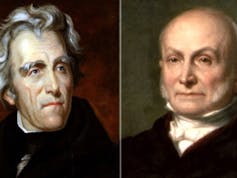
The 1824 election showdown between Andrew Jackson (left) and John Quincy Adams (right) was notoriously nasty and chaotic. (Creative Commons)
Vitriolic campaigning never let up on the road to the 1828 election. Jackson was castigated as a drunk adulterer married to a bigamist; Adams was denounced as an effete “academician” wearing silk underwear. Adams’ wife was also accused of being born out of wedlock.
1860’s election spurred a war
Adams’ presidency was often hamstrung by 1824’s fallout. In 1860, the U.S. election had exponentially more disastrous results. Bad went not just to worse, but to hell.
The presidential contest was troubled enough: Four major candidates (again) as a disbanded Democratic convention in Charleston, S.C., gave way to an imploding second try in Baltimore.
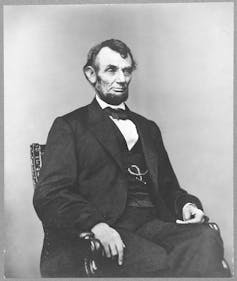
Abraham Lincoln and the Republicans won the 1860 election, resulting in the Civil War. (Library of Congress)
Abraham Lincoln and the Republicans won, but the U.S. Civil War was the result as southern states moved to secede. The devastation of the four-year struggle was unparalleled in American experience — and remains so. “Immense the butcher’s bill has been,” wrote young Lieut. Oliver Wendell Holmes, Jr., his thoughts echoed by many others as the death toll climbed to 750,000.
Lincoln’s election, of course, was not the root cause of the Civil War — though he was denounced as “that damned long-armed ape” in some quarters. The 1860 vote, on the contrary, provides an example of the way a troubled election, then and now, can be a symptom of deeper volatility; in this case, a symbol of the profound tensions emanating from issues like slavery and sectional struggles over government policies for economic development.
1968: Richard Nixon re-emerges
So does the election of 1968 — another event that unfolded as volcanic tremors shook American society. Protests spurred by the Vietnam War drove Lyndon Johnson into retirement; there were riots in more than 100 cities amid the civil rights movement; the assassinations of Robert Kennedy and Martin Luther King Jr. stoked outrage, grief and anxiety.
At the Democratic convention in Chicago, violent street clashes shocked television viewers. A “police riot” was widely condemned, with Mayor Richard Daley’s Windy City strong-arm approach contrasting half-absurdly, half-horrifyingly with nominee Hubert Humphrey’s call for a “politics of joy.”
A look at the police violence against anti-war protesters at the Democratic convention in 1968, courtesy of Democracy Now.
Richard Nixon and the Republicans forged a winning campaign strategy that paired “law and order” (the very words back in play in 2020) with a “secret plan” to end the Vietnam ordeal.
That was accompanied by a “southern strategy” designed to bring white voters into the GOP (an approach that remains a party mainstay).
There have been other volatile elections: 1800, 1912, 1952, 2000 and 2016, for example. Their disruptive tensions have taken their toll. Tooth-and-nail presidential battles have sometimes been followed by terrible consequences — including the horrors of the Civil War (and Iraq) and the resistance to social and economic reforms that regularly tarnished the country’s post-Depression and post-Great Society history.
The heavy weight of the past
Of equal importance, especially as the challenges of 2020 are contemplated, is the sheer burdensome weight of the past. Weaknesses in political processes are as old as the U.S. Constitution itself (including the periodic failure of “checks and balances” or the monkey wrenches lurking in the Electoral College).
The racism that poisoned the atmosphere in 1860 has remained tragically potent ever since — just as it was before the Civil War, of course. It’s impossible to pinpoint the origins of other inequities still plaguing American society, straining the safety and limiting the opportunities of women, people of colour, the poor, LGBTQ+ citizens and the disabled.
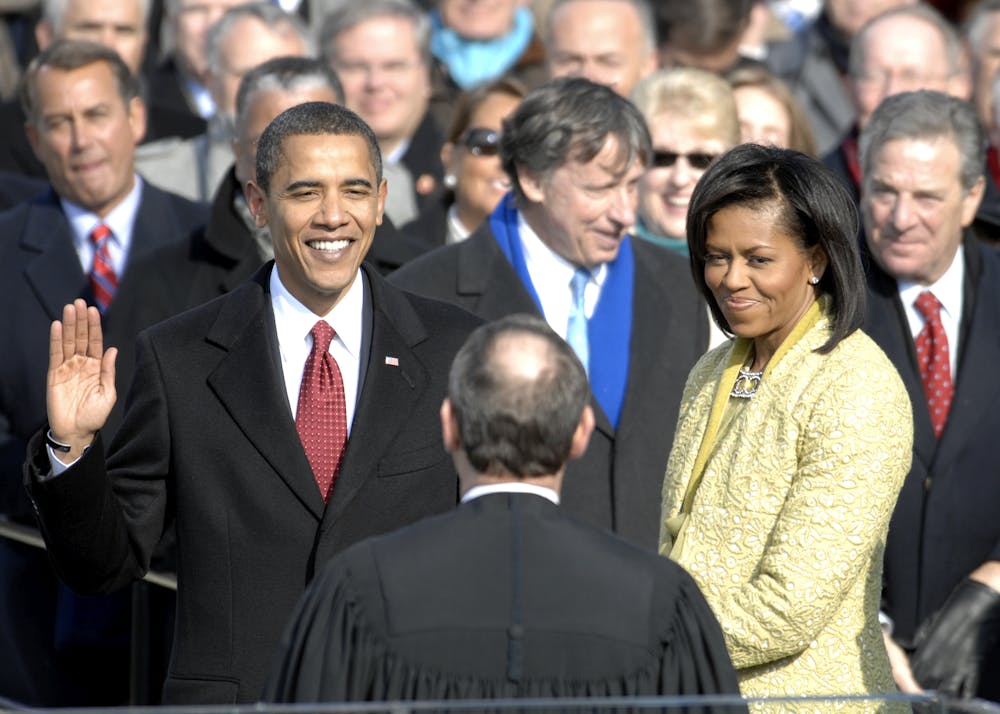
Barack Obama takes the oath of office at his inauguration on Jan. 20, 2009. (Master Sgt. Cecilio Ricardo, U.S. Air Force/Flickr)
Whatever the woeful permutations of 2020 to date, this troubled election is again serving as a symptom and a symbol of a troubled society. Barack Obama was elected in 2008 on a wave of “hope and change,” and yet amid the tumult 2020, that optimism seems a distant memory. Whatever this year’s immediate outcomes, history suggests anything but a quick resolution to deeply rooted problems.







