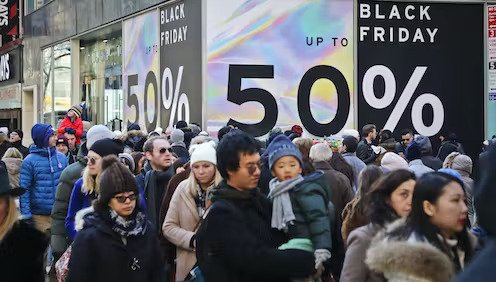
U.S. online spending surged to a record $11.8 billion on Black Friday as AI-powered shopping tools transformed how consumers searched for deals, compared prices, and navigated rising prices. According to Adobe Analytics, online sales jumped 9.1% from last year, fueled by shoppers opting for digital convenience over crowded physical stores. With household budgets tightening, unemployment nearing a four-year high, and consumer confidence slipping, many buyers leaned on AI chatbots and retail assistants to stretch every dollar.
AI-driven traffic to major U.S. retail sites skyrocketed 805% year-over-year, thanks to new tools such as Walmart’s Sparky and Amazon’s Rufus. Analysts say these large language model–powered assistants reduce the stress of gift shopping by offering faster, more personalized product recommendations. Hot Black Friday sellers included LEGO sets, Pokémon cards, gaming consoles like the Nintendo Switch and PlayStation 5, and popular electronics such as Apple AirPods and KitchenAid mixers.
Mastercard SpendingPulse reported a 10.4% rise in e-commerce sales compared with only 1.7% in-store growth, highlighting a continued shift toward online shopping. Globally, AI agents influenced $14.2 billion in Black Friday purchases, with $3 billion coming from U.S. shoppers alone, Salesforce said. Its data shows Americans spent $18 billion online, though higher prices meant shoppers bought fewer items per order compared to last year.
Despite strong spending, inflation and tariffs have pushed product costs higher, flattening discount rates and affecting how “deep” Black Friday deals feel to consumers. Salesforce noted that order volumes dipped 1% while average selling prices rose 7%. Luxury categories performed strongly, driven by higher-income shoppers, even as typical consumers grew more cautious.
The record-setting Black Friday is expected to fuel an even bigger Cyber Monday, with sales projected to hit $14.2 billion. Electronics, apparel, and computers are predicted to see some of the steepest markdowns of the season.