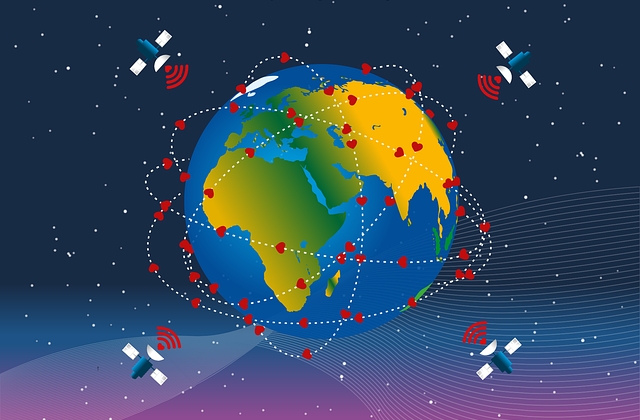
Amazon is planning to launch and operate its own internet satellites next year, and it has already asked the U.S. Federal Communications Commission for approval. The e-commerce and tech company is applying for two prototype internet satellites so it can build a space-based satellite network.
The company's application for the approval of internet satellite launch and operation was revealed on Monday, Nov. 1. According to Reuters, Amazon committed to investing at least $10 billion to make 3,236 satellites through its Project Kuiper program.
Jeff Bezos' firm stated that the trial and demonstration launch is a crucial step toward its aim of offering high-capacity, low latency broadband services to millions of "unserved and underserved consumers and businesses." Amazon said it would continue to invest in the project as they are approaching the full production stage and getting ready to serve customers worldwide.
It was reported that Amazon's Project Kuiper was approved by the FCC in 2020, and the plan is to build the constellation of low-Earth orbit satellites that will rival Elon Musk's Starlink satellite network. Bezos and Musk are two of the richest people in the world, and they are also big rivals in the space and aeronautics business, and now they are also set to compete in the internet satellite biz.
CNBC reported that Project Kuiper is expecting to launch the internet satellites in the fourth quarter of 2022. The first two prototypes, called the KuiperSat-1 and KuiperSat-2, are the first to be deployed into orbit. These satellites are going to be brought beyond the skies with ABL Space on its RS1 rocket.
"We have invented lots of new technology to meet our cost and performance targets for Project Kuiper," Rajeev Badyal, Amazon's vice president of technology, said in a press release. "All of the systems are testing well in simulated and lab settings, and we'll soon be ready to see how they perform in space. There is no substitute for on-orbit testing, and we expect to learn a lot given the complexity and risk of operating in such a challenging environment. We can't wait to get started."
Finally, Amazon is looking to begin offering early service once it has placed 578 satellites in orbit. Kuiper is expected to clash with SpaceX's Starlink network in this new generation of broadband satellite systems.