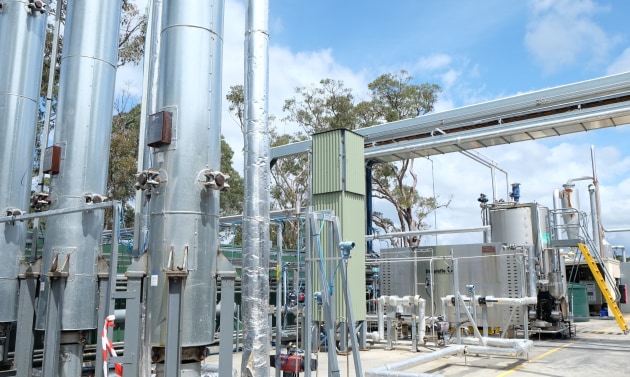
Amcor’s Australia and New Zealand business will invest in an advanced plastic recycling facility that will utilize Licella’s Cat-HTR technology, which relies on collections to divert soft plastic waste from landfill or incineration.
To be located in Melbourne, the new site will be one of the first advanced recycling facilities to be built in Australia.
The proposed facility’s stage one is expected to process 20,000 tons of waste plastic annually.
Licella’s CEO, Len Humphreys noted that their Cat-HTR technology enables soft plastic to be repeatedly recycled into food-grade post-consumer recycled content.
To finalize the terms and agreements, both parties will hold additional negotiations after receiving their internal approvals.
Australia's first soft plastic food wrapper manufactured with recycled material was created through a partnership between Licella and Amcor and several other businesses in 2021.

Boeing, SPEEA Reach Tentative Four-Year Labor Deal
An unexpected anomaly was found in the Pacific Ocean – and it could be a global time marker
How to create a thriving forest, not box-checking ‘tree cover’
Wildfires ignite infection risks, by weakening the body’s immune defences and spreading bugs in smoke
U.S. Accuses Chinese AI Firms of Extracting Model Capabilities
UK Food Inflation Forecast to Hit 6.4% by Mid-2027
Gold Prices Rebound as Dollar Weakens, Fed Decision Looms
Swimming in the sweet spot: how marine animals save energy on long journeys
Novartis Shares Plunge After Muscle Drug Fails Phase III Trial
Rice feeds billions of people – but its role in fueling climate change is growing
Enflame Shares Surge 200% in Shanghai AI Chip Debut
Fungi are among the planet’s most important organisms — yet they continue to be overlooked in conservation strategies
Ukraine minerals deal: the idea that natural resource extraction can build peace has been around for decades
As the Black Summer megafires neared, people rallied to save wildlife and domestic animals. But it came at a real cost
Thousands of satellites are due to burn up in the atmosphere every year – damaging the ozone layer and changing the climate 


