
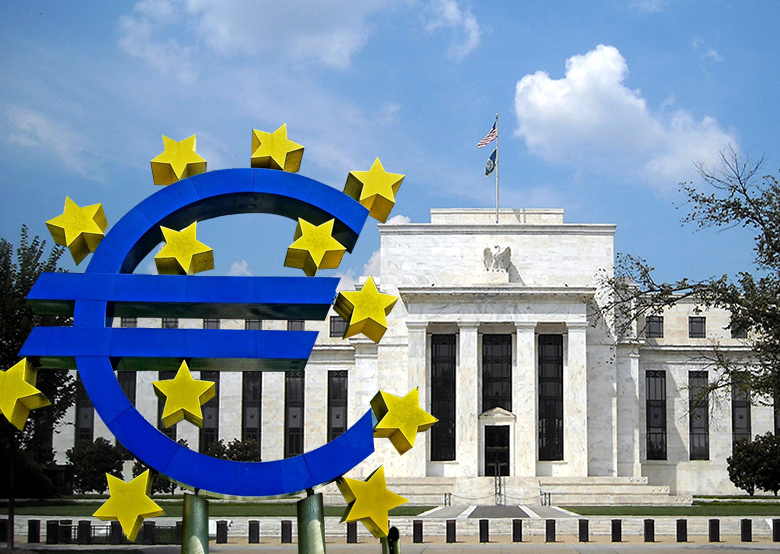
2016 view is not significantly different from that in 2015 - mainly because many of the variables haven't changed very much. Major central banks around the globe will do very little to alter their current paths. The BoE will remain dovish while the ECB and BOJ won't significantly alter their QE.
Central banks' large-scale QE programs are primarily implemented with the intention to boost the domestic economy. However, a significant proportion of the benefit of QE has been the associated weakening of the currency and policymakers are well aware of this fact.
There is an increased risk that we could see an escalating series of policies, where at least part of the aim is to weaken the currency. Currency wars likely to become the new normal in 2016. Hence it would not be wrong to say that recent actions by the ECB and BoJ are consistent with a policy war.

