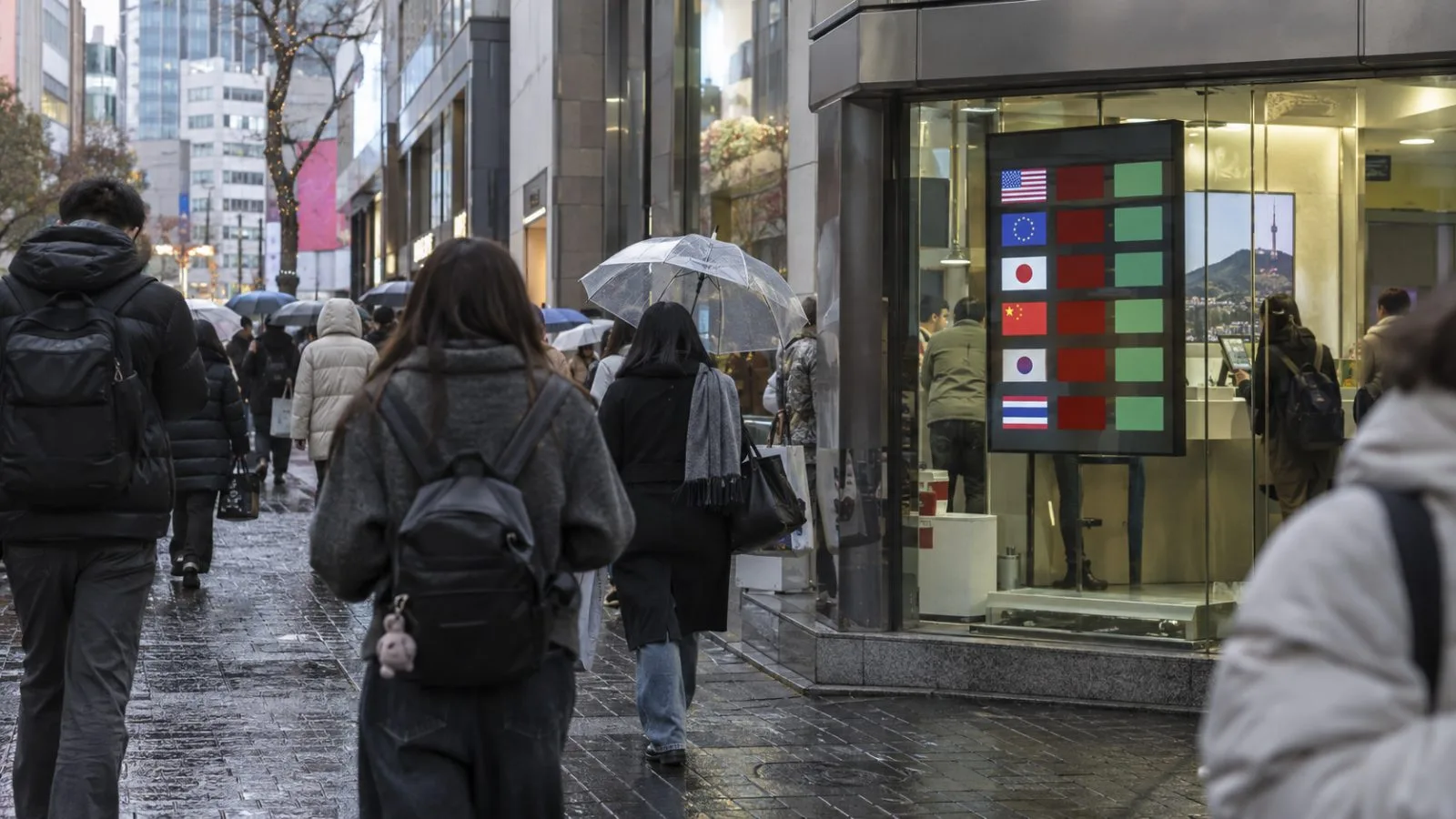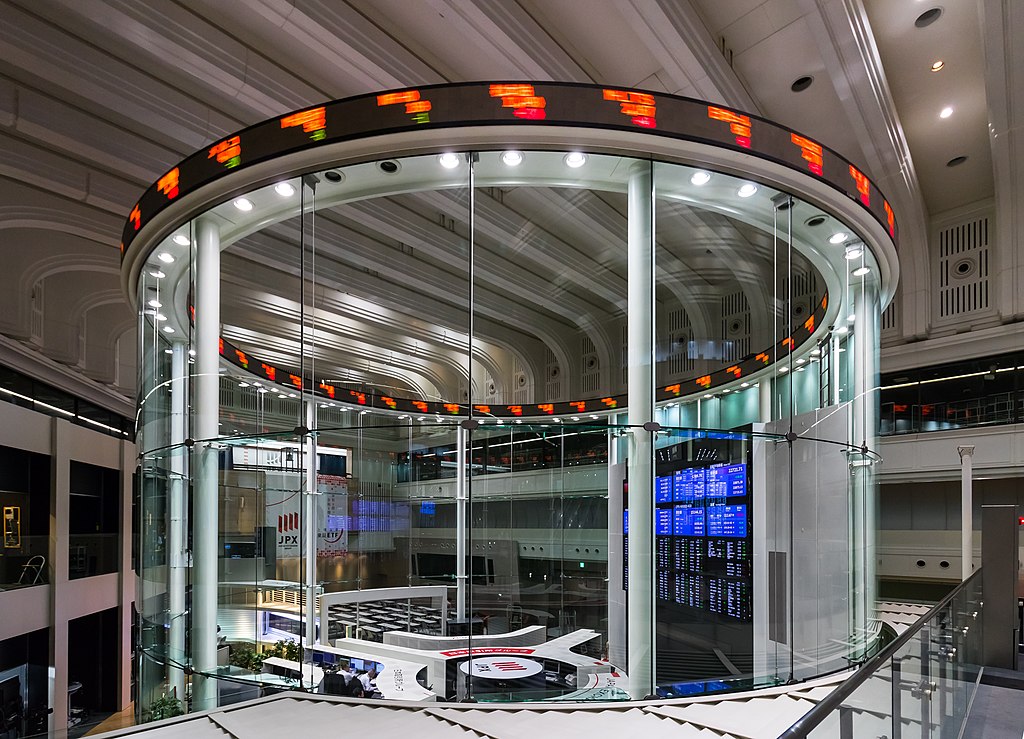
Asian stock markets showed mixed performance on Wednesday as technology stocks weakened, reflecting overnight losses on Wall Street, while Japan’s benchmark Nikkei 225 reached a new record high. Investors remained cautious as they assessed geopolitical developments, particularly U.S. President Donald Trump’s decision to extend the Iran ceasefire indefinitely.
Technology shares across the region faced selling pressure after U.S. markets closed lower, driven by profit-taking in high-growth sectors and ongoing geopolitical uncertainty. South Korea’s KOSPI slipped 0.3% after recently touching record levels, while Hong Kong’s Hang Seng index dropped 1.4%. The Hang Seng TECH index saw sharper losses, falling 2%, highlighting continued weakness in the tech sector.
In contrast, Japan’s Nikkei 225 rose 0.5% to an all-time high of 59,708.21 points, supported by strong economic data and investor confidence. However, the broader TOPIX index edged down 0.7%, indicating uneven market performance. Japan’s export data boosted sentiment, with shipments increasing 11.7% year-on-year in March, marking the seventh consecutive month of growth and surpassing expectations. Imports also climbed 10.9%, reflecting resilient domestic demand and rising energy costs.
Elsewhere in Asia, China’s Shanghai Composite and CSI 300 indices both gained 0.2%, while Australia’s S&P/ASX 200 fell 1%. Singapore’s Straits Times Index declined 0.4%, and India’s Nifty 50 dropped 0.5%, reflecting broader regional caution.
Market sentiment remained subdued despite Trump’s extension of the Iran ceasefire, as uncertainty persists over Iran’s response and the future of diplomatic negotiations. Concerns about disruptions in the Strait of Hormuz, a critical global energy route, continue to weigh on investor confidence.
Meanwhile, attention also turned to U.S. monetary policy as Federal Reserve chair nominee Kevin Warsh testified before lawmakers. Warsh emphasized the importance of central bank independence and clarified that he had not committed to any interest rate cuts, adding another layer of uncertainty for global markets.