


 Senate Sets December 8 Vote on Trump’s NASA Nominee Jared Isaacman
  Is space worth the cost? Accounting experts say its value can’t be found in spreadsheets
  Cogent Biosciences Soars 120% on Breakthrough Phase 3 Results for Bezuclastinib in GIST Treatment
  FDA Adds Fatal Risk Warning to J&J and Legend Biotech’s Carvykti Cancer Therapy
  China vs. NASA: The New Moon Race and What's at Stake by 2030
  Blue Origin New Glenn Explosion Could Delay Launch Operations Until 2028
  SpaceX’s Starship Completes 11th Test Flight, Paving Way for Moon and Mars Missions
  Trump Administration to Launch Autism Initiatives Targeting Acetaminophen Use and New Treatment Options
  Trump and Merck KGaA Partner to Slash IVF Drug Costs and Expand Fertility Coverage
  SpaceX Delays Starship V3 Launch Ahead of Potential Record IPO
  SpaceX Pivots Toward Moon City as Musk Reframes Long-Term Space Vision
  Trump Administration Releases New UFO Files and Apollo Mission Records


 Add as a preferred source on Google
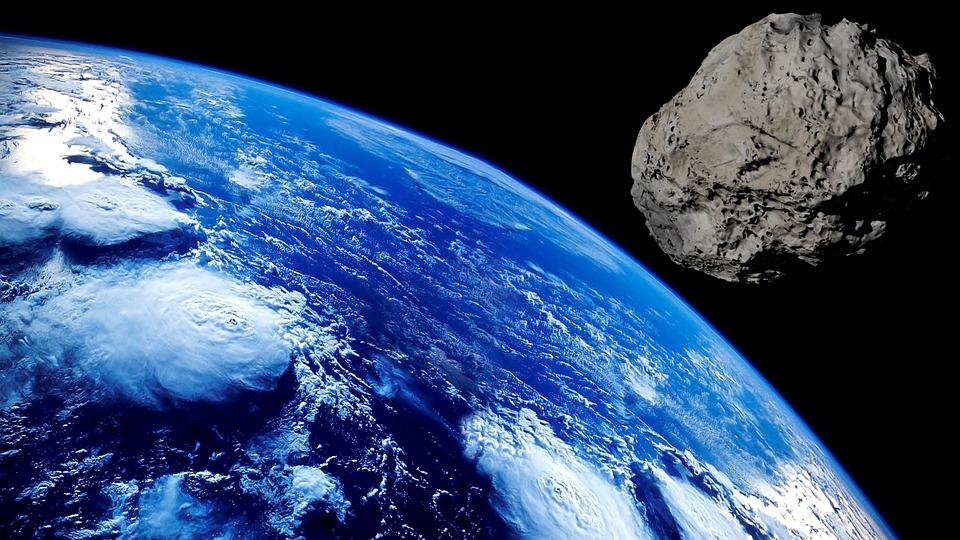
Space agencies such as NASA are closely keeping tabs on what happens outside of Earth such as asteroids that could be making their way towards our planet. A new study has found that one particular asteroid, Apophis, can potentially crash into our planet in the coming decades.
A study by astronomers from the University of Hawaii’s Institute for Astronomy found that there is a chance that asteroid Apophis could still hit the Earth by 2068. This was due to the fact that the team of astronomer Dave Tholen found a small Yarkovsky acceleration on the surface of the 378-meter asteroid Apophis. The Yarkovsky effect refers to an asteroid or cosmic entity changing orbit due to a push of heat from either itself or the gravitational push and shove from other celestial bodies.
Thus, the scientists found that this could be how Apophis may be Earth-bound over the coming decades, by 2068. This is despite the chances of Apophis actually colliding with Earth being one in 530,000, which is a very slim chance. NASA previously predicted that Apophis has a 2.8 percent chance of actually impacting the Earth by 2029.
“We have known for some time that an impact with Earth is not possible during the 2029 close approach,” said Tholan. “The new observations were obtained with the Subaru telescope earlier this year were good enough to reveal the Yarkovsky acceleration of Apophis, and they show that the asteroid is drifting away from a purely gravitational orbit by about 170 meters per year, which is enough to keep the 2068 impact scenario in play.”
Asteroids, in general, are very widely studied by astronomers as it provides some further understanding of the universe. These space rocks are already known to be rich in certain compounds and elements, which could prove to be of very high value to us on Earth. Scientists have analyzed a meteor back in 2018 in its pristine condition and found compounds of alien origin within the fallen space rock.
The study’s lead author, Professor Philipp Heck of the University of Chicago revealed that the meteor they were able to analyze and obtain in its mint condition was full of alien compounds.







