


 Eli Lilly’s Inluriyo Gains FDA Approval for Advanced Breast Cancer Treatment
  Senate Sets December 8 Vote on Trump’s NASA Nominee Jared Isaacman
  Trump Signs Executive Order to Boost AI Research in Childhood Cancer
  Trump Administration Releases New UFO Files and Apollo Mission Records
  Neuralink Expands Brain Implant Trials with 12 Global Patients
  Trump and Merck KGaA Partner to Slash IVF Drug Costs and Expand Fertility Coverage
  NASA Artemis II: First Crewed Moon Mission Since Apollo Takes Four Astronauts on 10-Day Lunar Journey
  FDA Adds Fatal Risk Warning to J&J and Legend Biotech’s Carvykti Cancer Therapy
  Blue Origin New Glenn Explosion Could Delay Launch Operations Until 2028


 Add as a preferred source on Google
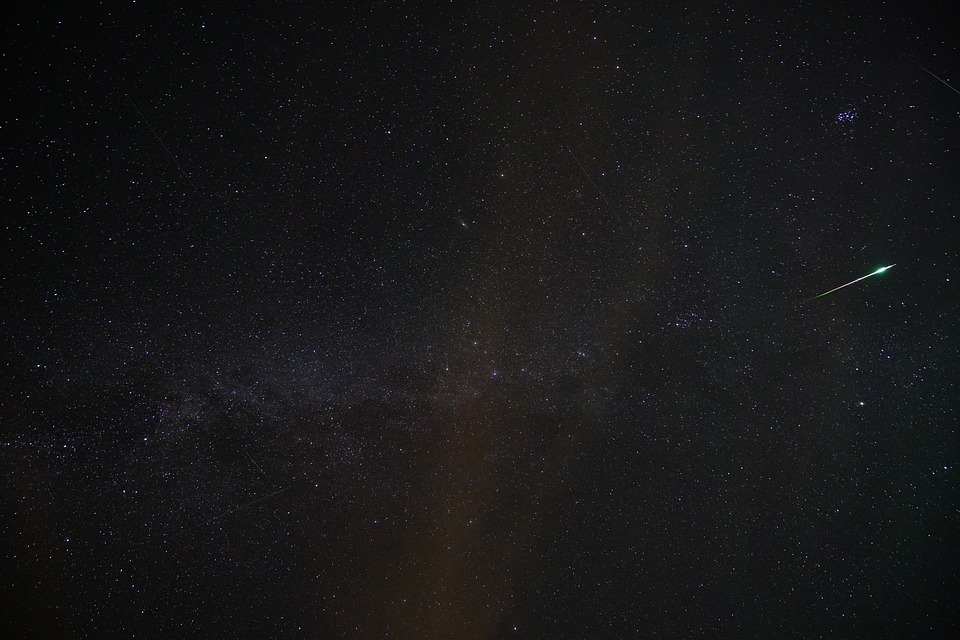
Asteroids usually have a very small chance of colliding with Earth, especially massive space rocks that travel through space. However, the same could not be said for the much smaller ones, which wind up meeting our planet’s atmosphere, as witnessed by residents on the west coast of the United States.
Last week, on October 23, a fireball was seen over the night skies of the US west coast, and residents in the states of Oregon, Washington, and California were able to witness this phenomenon. The International Meteor Organization since received hundreds of reports of the fireball that was seen. One witness described the fireball as “green and dramatic” when it streaked the skies until it disintegrated. The witness initially thought it might have been a firework, but eventually realized that it was a meteor.
Another witness also echoed the reports of other witnesses, describing how big the fireball was, and that it was big enough to be mistaken as manmade. Other witnesses have also noted that it looked like a very big shooting star.
Fireballs are a result of asteroids coming into contact with the Earth’s atmosphere. The air seeps into its cracks and crevices, pushing it apart and resulting in an explosion. According to the IMO, asteroids or space debris that are larger than a millimeter could bring about a bright flash when it moves through the skies and disappears on its way down.
Onto another asteroid, last week also saw a space rock, known as 2020 UF3 pass by Earth on Thursday, October 22. UF3 passed by Earth as close as 47,000 miles, which is around 11 percent of the distance between our home planet and the Moon. NASA has revealed that UF3 was traveling through space at a rate of 22 kilometers per second or over 79,000 kilometers per hour. The astronomers from the Virtual Telescope Project has described this asteroid as the fastest asteroid that they have ever observed.
“The near-Earth asteroid 2020 UF3 safely came very close to our planet, reaching a minimum distance from the Earth of about 42,000 km, 11 percent the average distance of the Moon. It was moving extremely fast in the sky, setting a record for the Virtual Telescope facility,” said the astronomical group.







