


 SpaceX Prioritizes Moon Mission Before Mars as Starship Development Accelerates
  SpaceX Pivots Toward Moon City as Musk Reframes Long-Term Space Vision
  Blue Origin’s New Glenn Achieves Breakthrough Success With First NASA Mission
  Blue Origin New Glenn Rocket Explodes During Launch Pad Test, Delaying Space Ambitions
  NASA and Roscosmos Chiefs Meet in Florida to Discuss Moon and ISS Cooperation
  SpaceX Delays Starship V3 Launch Ahead of Potential Record IPO
  China vs. NASA: The New Moon Race and What's at Stake by 2030
  Trump Administration Releases New UFO Files and Apollo Mission Records
  Trump and Merck KGaA Partner to Slash IVF Drug Costs and Expand Fertility Coverage
  Cogent Biosciences Soars 120% on Breakthrough Phase 3 Results for Bezuclastinib in GIST Treatment
  Trump Administration to Launch Autism Initiatives Targeting Acetaminophen Use and New Treatment Options
  Trump Signs Executive Order to Boost AI Research in Childhood Cancer


 Add as a preferred source on Google
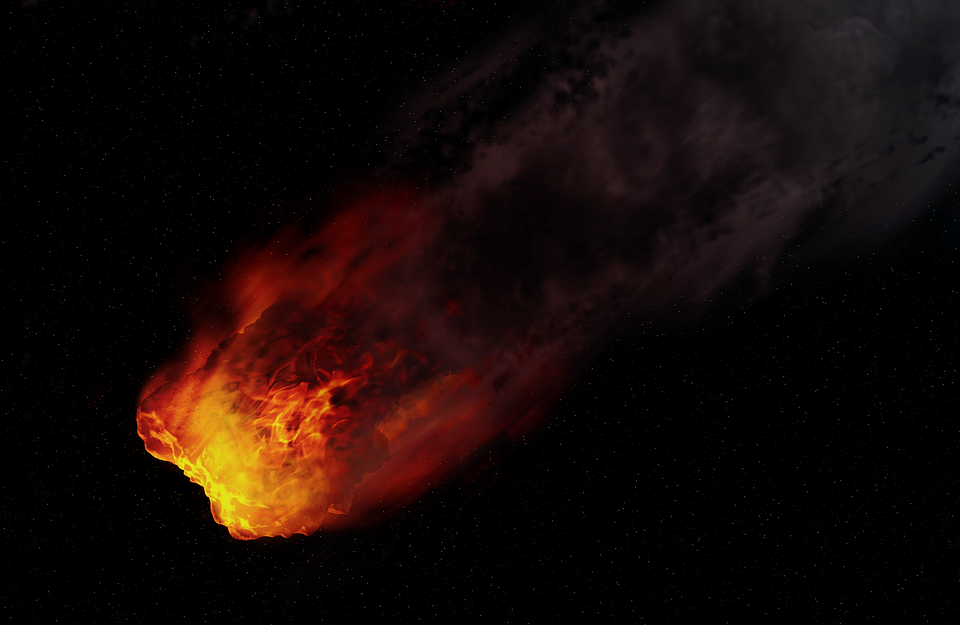
The dinosaurs are widely believed to have gone extinct after a deadly asteroid strike hit the planet over 60 million years ago. According to NASA, there is a chance that an asteroid similar to that one may also hit the planet.
Express reports that the agency revealed the probability of an asteroid similar to the one that caused the extinction of the dinosaurs. According to NASA, there is a 0.000001 chance that a large asteroid would strike the Earth every year. Although it is a very slim chance, knowing that there is still a chance that it could happen would be enough for space agencies all over the world to prepare for a possible collision.
The agency’s asteroid trackers are always on the lookout for possible asteroids that may approach Earth, also called Near-Earth Objects or NEOs. Among those NEOs, the larger ones are classified as “Potentially hazardous” and are more likely to pass through the Earth’s atmosphere without burning up through it. Any asteroid that measures less than 10 meters will likely implode upon contact with the planet’s atmosphere, but it is still possible that the bits and pieces from the broken up space rock would pass through and hit the Earth. One example of which is the incident in 1992, when a small fragment of an asteroid made it through the Earth’s atmosphere and caused a hole in a car.
On the other hand, if the one percent should occur, then it has a 70 percent chance that it will most likely land in the water, while the remaining 25 percent would be the asteroid hitting a vacant lot of land.
Meanwhile, asteroid hunter and The Spaceguard Center director Jay Tate revealed to Express that these space rocks pose a bigger threat to civilization compared to natural calamities. Tate explained that an asteroid strike is the “one natural hazard that we know of that could remove our species from existence, basically at any time in the space of about 90 minutes.”
But even though asteroid strikes would prove to be the greatest threat to humanity, Tate believes that something can be done. “We can’t do anything about volcanoes, and tsunamis, and earthquakes, but we can fix this one.”







