


 FDA Adds Fatal Risk Warning to J&J and Legend Biotech’s Carvykti Cancer Therapy
  Blue Origin New Glenn Rocket Explodes During Launch Pad Test, Delaying Space Ambitions
  Eli Lilly’s Inluriyo Gains FDA Approval for Advanced Breast Cancer Treatment
  Trump Administration Releases New UFO Files and Apollo Mission Records
  NASA's Artemis II Mission: First Crewed Lunar Journey Since Apollo
  Trump Signs Executive Order to Boost AI Research in Childhood Cancer
  Trump and Merck KGaA Partner to Slash IVF Drug Costs and Expand Fertility Coverage
  SpaceX Pivots Toward Moon City as Musk Reframes Long-Term Space Vision
  Blue Origin’s New Glenn Achieves Breakthrough Success With First NASA Mission
  Neuralink Plans High-Volume Brain Implant Production and Fully Automated Surgery by 2026
  Cogent Biosciences Soars 120% on Breakthrough Phase 3 Results for Bezuclastinib in GIST Treatment
  Trump Administration to Launch Autism Initiatives Targeting Acetaminophen Use and New Treatment Options
  SpaceX’s Starship Completes 11th Test Flight, Paving Way for Moon and Mars Missions
  Is space worth the cost? Accounting experts say its value can’t be found in spreadsheets


 Add as a preferred source on Google
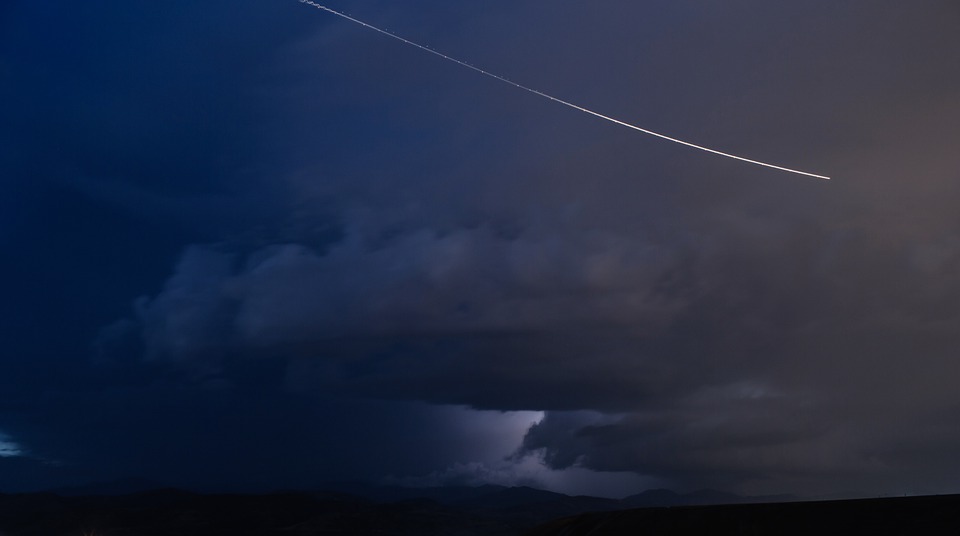
Asteroids are mostly known for passing by Earth, but there have been times when some space rocks, especially very small ones, go straight for the planet only to end up burning upon contact with the atmosphere. One such incident happened when residents in four states in the US were able to witness a fireball crossing over their skies.
Last week, residents from Missouri, Illinois, Iowa, and Michigan were able to catch a fireball shooting through the night skies. Residents also reported the sighting to the International Meteor Organization, one user recalling how it was green and emitted white sparks as it flew over. Another user shared how the fireball was so bright, it could still be seen even as all the lights at home are on.
Asteroids and meteors that head directly into Earth produce a bright flash when it meets the atmosphere. However, because of these sightings, this has prompted space agencies to keep a closer watch on what happens in the skies, especially if asteroids much larger than the fireballs that would blow up, enter the planet. Fortunately, the chances of a much bigger asteroid crashing into Earth are very small, but agencies are already in the process of coming up with ways to protect Earth from major asteroid collisions.
Massive asteroids that are classified as potentially hazardous can potentially cause a global catastrophe, setting off a chain reaction in the form of natural disasters like tsunamis and earthquakes. Asteroids that are still big yet not classified as potentially hazardous, would likely only cause damage to the local area it crashes into, and experts predict that asteroids, in general, will most likely hit water rather than land.
Meanwhile, NASA has revealed that an asteroid known as 2011 ES4 will be passing by Earth next week. It measures 30 meters in diameter, equivalent to a double-decker bus. The agency revealed that it will be Earthbound at a speed of 29,500 kilometers per hour.
Contrary to many other asteroids, ES4 will be approaching at a much closer distance when it approaches Earth. ES4 will be as far as 0.3 lunar distance or 71,000 miles, much closer than the distance between the Moon and Earth.







