


 NASA and Roscosmos Chiefs Meet in Florida to Discuss Moon and ISS Cooperation
  FDA Adds Fatal Risk Warning to J&J and Legend Biotech’s Carvykti Cancer Therapy
  Trump and Merck KGaA Partner to Slash IVF Drug Costs and Expand Fertility Coverage
  NASA Artemis II: First Crewed Moon Mission Since Apollo Takes Four Astronauts on 10-Day Lunar Journey
  Eli Lilly’s Inluriyo Gains FDA Approval for Advanced Breast Cancer Treatment
  SpaceX’s Starship Completes 11th Test Flight, Paving Way for Moon and Mars Missions
  SpaceX Delays Starship V3 Launch Ahead of Potential Record IPO
  Trump Administration to Launch Autism Initiatives Targeting Acetaminophen Use and New Treatment Options
  Neuralink Plans High-Volume Brain Implant Production and Fully Automated Surgery by 2026
  Trump Signs Executive Order to Boost AI Research in Childhood Cancer
  SpaceX Pivots Toward Moon City as Musk Reframes Long-Term Space Vision
  Blue Origin New Glenn Explosion Could Delay Launch Operations Until 2028
  Is space worth the cost? Accounting experts say its value can’t be found in spreadsheets


 Add as a preferred source on Google
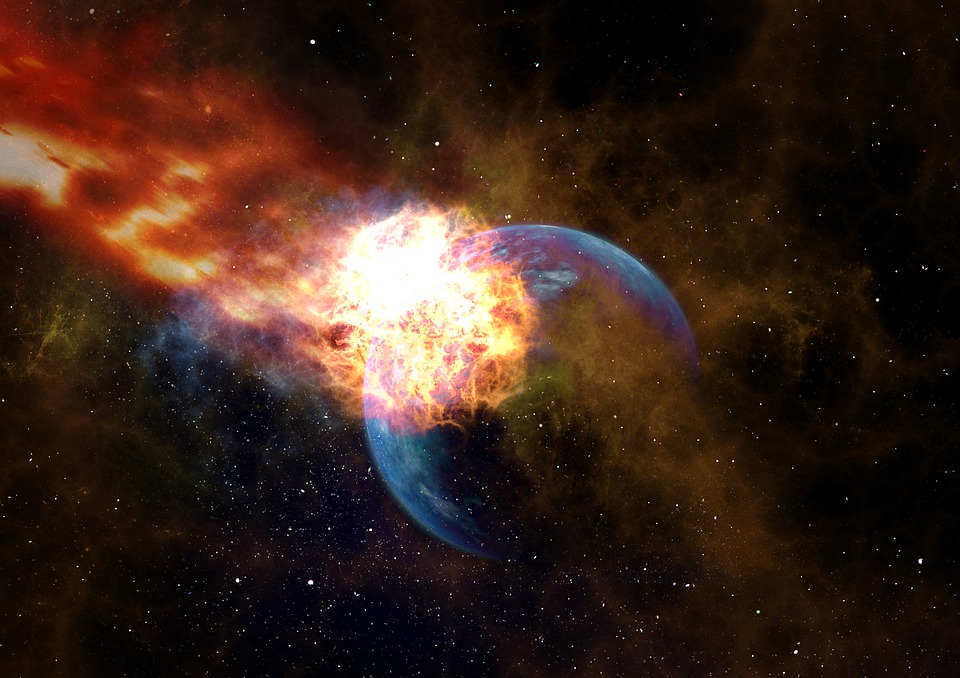
From what is known about meteors or asteroids, is that these rocks have been responsible for the extinction of the dinosaurs. However, experts say that these meteorite impacts could have been responsible for jump-starting life on Earth.
Express reports that meteorite impacts may have been responsible for the tectonic plates on the planet. Macquarie University Professor Craig O’Neill explained to the outlet the effects of the solar system “dynamics on how the Earth behaves.” O’Neill stated that when an asteroid crashlands on the Earth, shockwaves form as well as a crater that is formed through the energy emitting from the space rock resulting in an explosion that is equivalent to an atomic bomb.
The crater, later on, collapses into itself, with the dust and stream changing the climate of the crash site for a short while. O’Neill went on to say that it might have taken 10 to 20 years for this kind of climate to cool, depending on how much greenhouse gas there is. This kind of asteroid impact would then result in the upwellings that could have been the origins of the plate tectonics.
On the other hand, the little evidence there is on the Middle Archaean might have implied otherwise. It might have suggested that instead of an enormous asteroid causing the plate tectonics, it might have been something smaller. O’Neill and his team conducted an experiment to prove this theory, using existing techniques in order to determine the impact record on the Archaean. They found that the 62-mile wide meteor impacts might be capable of making a dent in the Earth’s crust.
Meanwhile, Express previously reported that asteroid crashes might have provided the elements in creating life or at least an atmosphere that would bring up life on Earth as well as other exoplanets in the galaxy. According to Cambridge University Professor Mark Wyatt, asteroids are also a source of water as well as other volatile elements needed to make up the planet’s atmosphere.
All in all, aside from tectonic plates, it means that asteroids may have also planted the foundations of life due to the impact they leave.







