


 Trump Administration Releases New UFO Files and Apollo Mission Records
  NASA's Artemis II Mission: First Crewed Lunar Journey Since Apollo
  Eli Lilly’s Inluriyo Gains FDA Approval for Advanced Breast Cancer Treatment
  Blue Origin’s New Glenn Achieves Breakthrough Success With First NASA Mission
  SpaceX Pivots Toward Moon City as Musk Reframes Long-Term Space Vision
  Trump Signs Executive Order to Boost AI Research in Childhood Cancer
  Neuralink Plans High-Volume Brain Implant Production and Fully Automated Surgery by 2026
  Trump Administration to Launch Autism Initiatives Targeting Acetaminophen Use and New Treatment Options
  Cogent Biosciences Soars 120% on Breakthrough Phase 3 Results for Bezuclastinib in GIST Treatment
  Tabletop particle accelerator could transform medicine and materials science
  China vs. NASA: The New Moon Race and What's at Stake by 2030


 Add as a preferred source on Google
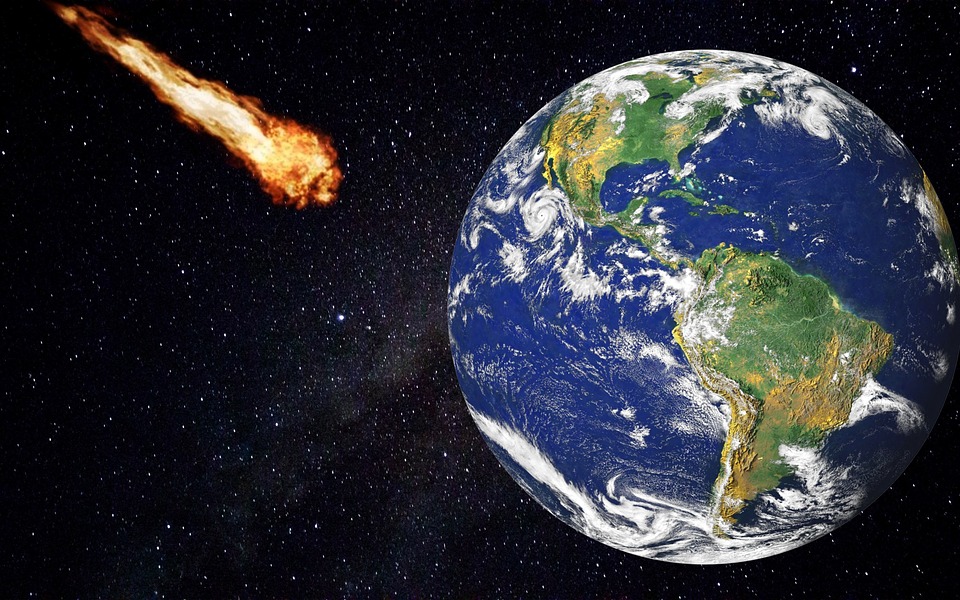
Even this Christmas season, asteroids are making their way towards the Earth’s orbit. Now, NASA reveals that an asteroid they previously spotted two weeks ago is now bound to pass by the planet.
As reported by Express, the space agency revealed that the asteroid they tracked down a few weeks ago is now set to skim Earth on Christmas Eve. The asteroid is referred to as 2019 YU and is set to skim by the planet come dusk. YU is hurtling towards Earth at a speed of over 36,600 miles per hour. It was once classified as a Near-Earth Object or NEO, and NASA has estimated the measurements of this asteroid from 203 feet to 459 feet across. It is known that asteroids or comets that measure over 459 feet are sometimes labeled as potentially hazardous especially if there is a chance of impact.
Although YU is not potentially hazardous, unannounced entry into the atmosphere could bring on disastrous calamities in its wake. YU is actually taller than the Great Pyramid in Giza, Egypt at the most and at the least, the asteroid is taller than the Leaning Tower of Pisa in Italy.
As with many other asteroids that have come close to Earth, it will only skim the planet. At the most, YU will get as close as 0.04994 astronomical units. This is equivalent to 4.64 million miles, which is still very far in human terms, so thankfully the planet is still safe. Another thing to note is that after this approach, YU is not expected to return to the planet’s orbit anytime soon.
Previously, another asteroid referred to as 2019 SG1 made a close approach to Earth as well. SG1 appeared to be a challenge to the team at NASA as they had to track it down 22 times in order to determine the size, speed, and the orbital path it follows. SG1 is classified as Apollo-type space rock and a Near-Earth Object. The space agency estimated SG1’s measurements to be between 24.3 feet to 55.7 feet in diameter, and at the most, SG1 is longer than a double-decker bus.
Due to its size, the chances of an impact are little to none, as SG1 will likely disintegrate upon entering the atmosphere.







