


 SpaceX Pivots Toward Moon City as Musk Reframes Long-Term Space Vision
  Senate Sets December 8 Vote on Trump’s NASA Nominee Jared Isaacman
  FDA Pilot Program Eases Rules for Nicotine Pouch Makers
  SpaceX Delays Starship V3 Launch Ahead of Potential Record IPO
  NASA Artemis II: First Crewed Moon Mission Since Apollo Takes Four Astronauts on 10-Day Lunar Journey
  Trump Signs Executive Order to Boost AI Research in Childhood Cancer
  Neuralink Plans High-Volume Brain Implant Production and Fully Automated Surgery by 2026
  Trump Administration to Launch Autism Initiatives Targeting Acetaminophen Use and New Treatment Options
  Blue Origin New Glenn Rocket Explodes During Launch Pad Test, Delaying Space Ambitions
  SpaceX’s Starship Completes 11th Test Flight, Paving Way for Moon and Mars Missions
  Is space worth the cost? Accounting experts say its value can’t be found in spreadsheets


 Add as a preferred source on Google
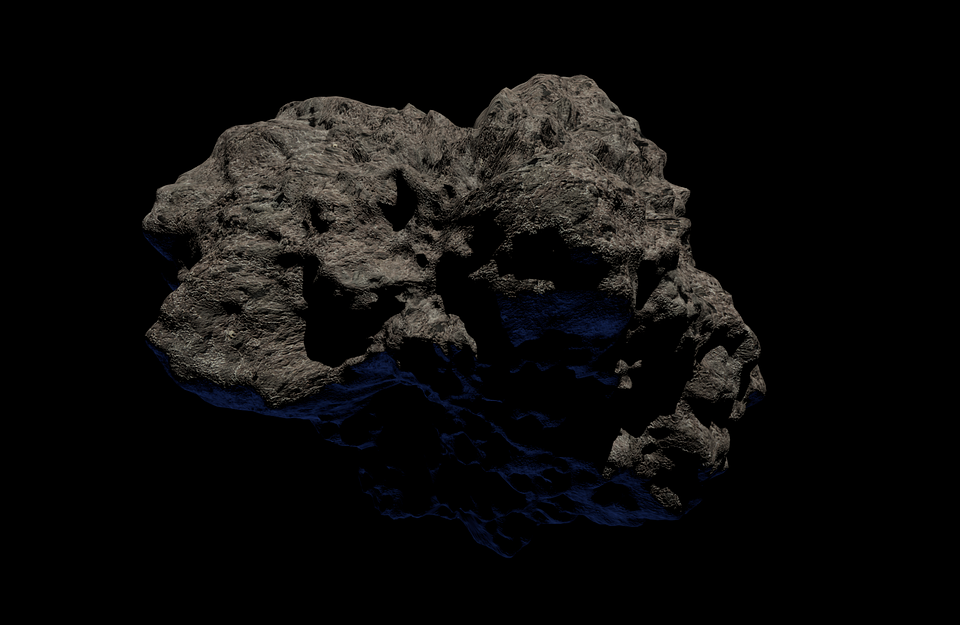
Many might only know about space rocks hurtling towards our planet’s orbit every now and then. However, some scientists from Japan made an unusual discovery about one particular asteroid.
Kope University Graduate School of Science in Japan Assistant Professor Naoyuki Hiratoa has been studying a near-earth object or NEO asteroid Ryugu with his team of researchers. They referred to Ryugu as a potentially hazardous asteroid when they first spotted it in 2018. They managed to find 77 craters on the space rock after carefully analyzing the photos taken by their spacecraft Hayabusa 2, but that was not the only discovery they made.
Looking closely at the photos of the craters, they noticed the location of each one on the space rock. The craters appeared to be 10 to 20 mm in diameter and most of these dents were found on the eastern hemisphere of the rock that is close to the meridian, compared to the craters found in the western region. The craters were also at low-altitude areas The asteroid’s biggest crater named Cendrillon, is close to where these other craters were found.
This result seems to imply that this side of Ryugu was formed at a later time compared to the other sides of the asteroid. Furthermore, it could also mean that the asteroid must have changed their rotational speed twice.
Previously, Express also reports that while NASA is keeping watch over the space debris that is coming in the direction of the planet, there is a possibility that one asteroid might slip through their watch. Dr. Natalie Starkey, the author of Catching Stardust, explained that the Earth is not completely safe as there could be rogue space debris that could catch everyone off-guard. Starkey went on to say that even though there are so many asteroids and comets that might be coming towards the planet, it is important to learn as many of these asteroids and debris as possible.
Starkey even explains the possibilities of space study over the coming decades, with the advanced technology that might be introduced by that time. “Over the next few decades, we have the opportunity to build up a detailed knowledge of space objects in our neighborhood, and even the ones that are still very far from us.”







