
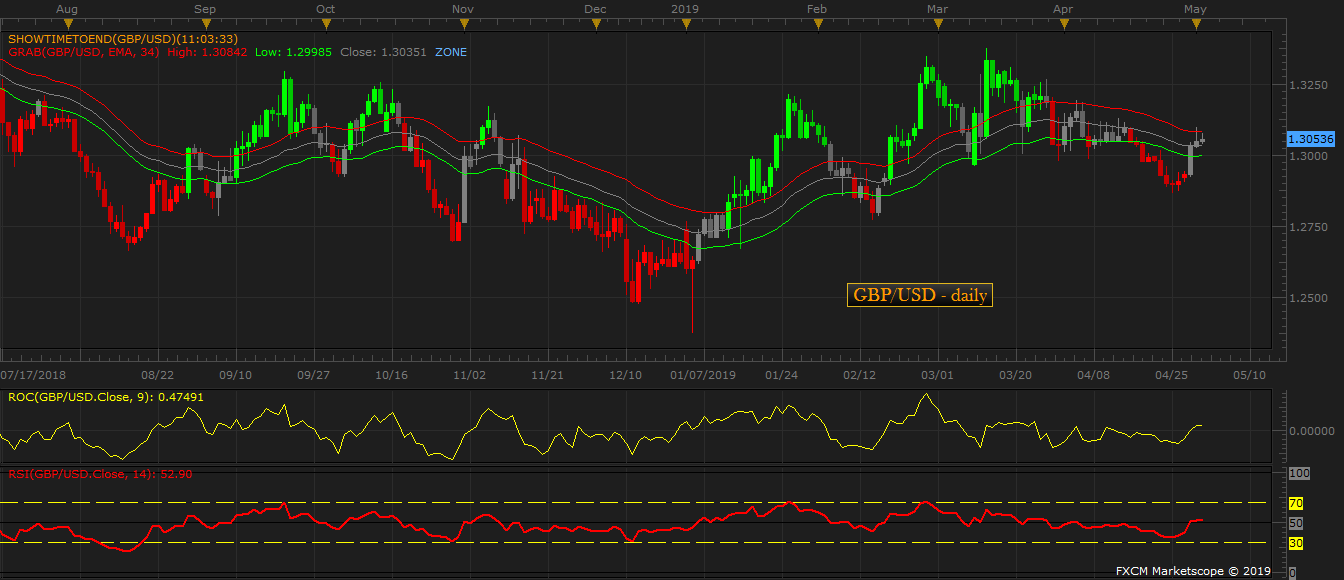
The pound has been struggling amid domestic political trouble, toning down of hawkish rhetoric from Bank of England (BoE), uncertainties surrounding the Brexit agreement between the European Union and the United Kingdom. In addition to that, the economy is still suffering from the political uncertainties of a minority government, which is leading Brexit negotiation, one of the most complex in history. Government’s main coalition DUP voted down many of government’s amendments and both the agreements.
Amid these uncertainties, BoE is scheduled to announce the interest rate decision at 11:00 GMT.
With all the buzz around Brussels and London and with focus on Brexit, the central bank’s announcements would be a non-event but volatility likely to move higher around the announcements.
- Monetary policy is one of the two major directional and volatility risks for the pound with the other being Brexit.
BOE policy and expectation –
- No policy changes expected; with rates at 0.75 percent.
- But, there is a possibility that the central bank might add dovish comments as the U.S. Federal Reserve announced no hikes likely in 2019 and reduced interest paid on excess reserve by 5 bps at yesterday’s meeting.
Impact –
- Likely to add volatility in the market but broadly a non-directional cue event. The pound is currently trading at 1.305 against the USD, heading lower as a bearish inverted hammer in daily chart weighs.
- The stop loss for a short trade in GBP/USD should be around 1.312 area.

