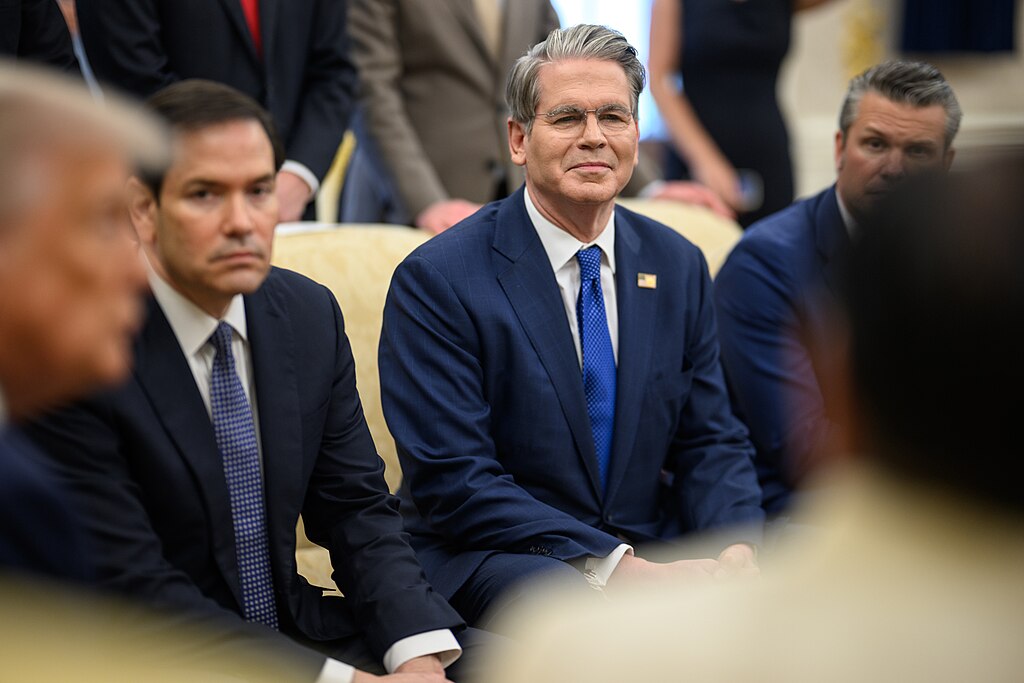
U.S. Treasury Secretary Scott Bessent said the Trump administration is focused on strengthening supply chain resilience to protect critical industries from economic disruptions, pandemics, geopolitical conflicts, and foreign-controlled bottlenecks.
Speaking at the Economic Club of New York, Bessent emphasized that achieving supply chain security does not require every product component to be manufactured entirely within the United States. He described such an approach as impractical and unnecessary. Instead, the administration’s strategy centers on reducing dependence on concentrated foreign supply sources while expanding domestic production capacity in key sectors.
Drawing parallels to Alexander Hamilton’s vision of a self-sufficient American manufacturing base, Bessent argued that the United States must diversify supply chains and develop enough domestic capacity to ensure that Americans are not vulnerable to overseas chokepoints. He said strengthening supply chain resilience is essential for safeguarding national and economic security in an increasingly uncertain global environment.
Bessent also highlighted the need for a more assertive U.S. economic policy after decades of rising trade deficits. According to him, the United States is now more aware of its economic priorities and prepared to defend them. He stated that trading partners should expect a U.S. approach based on reciprocity, protection against discriminatory treatment of American companies, and stronger safeguards for critical supply chains.
The Treasury secretary added that the administration remains committed to enforcing sanctions and combating illicit financial activity while aligning economic policy more closely with broader national interests. He stressed that economic strategy should not be separated from national security objectives.
On financial innovation, Bessent said the United States should support technologies that strengthen the U.S. dollar, improve financial efficiency, expand access to services, and maintain the integrity of the financial system. While he did not announce specific policy measures, he noted that emerging technologies must meet U.S. standards for transparency, security, consumer protection, and law enforcement access.
Bessent’s remarks underscore the administration’s broader effort to enhance economic resilience, strengthen domestic manufacturing, and secure critical supply chains amid growing global competition and geopolitical risks.