


 Nasdaq Falls as Oil Prices Surge Ahead of Bank Earnings
  Oil Prices Surge Above $106 After Deadly Saudi Airport Attack
  US Dollar Index Falls as Fed Signals Caution, Indian Rupee Surges
  Asian Stocks Fall as Oil Prices Rise Ahead of US CPI Data
  China Resumes US Soybean Purchases After Trump-Xi Summit
  Kalshi Seeks Sixth Circuit Review of Sports Betting Ruling
  Trump Defends Russian Diesel Deal Amid US Sanctions Backlash
  IMF Maintains 2027 Global Growth Forecast at 3.4% Amid Rising Risks
  Oil Prices Fall as Russia Signals Higher Diesel Exports
  Gaza Olive Harvest Collapses as War Destroys Farmland
  ASML Raises 2026 Sales Forecast as AI Chip Demand Surges
  BlackRock CEO Warns Data Center Ban Could Trigger US Recession
  Netflix Cuts 1,000 Jobs as Streaming Giant Restructures
  Asian Stocks Plunge as AI Chip Selloff Hits South Korea and Japan
  Italy’s Meloni Warns US-Russia Diesel Deal Could Weaken Ukraine Sanctions
  Samsung, SK Hynix Shares Plunge as China Chip Competition Grows


 Add as a preferred source on Google

In its latest move to spur business investment, the government will extend its $150,000 instant assets write-off until the end of the year.
The six-months extension, which will be legislated, will cost $300 million in revenue over the forward estimates.
As part of the government’s pandemic emergency measures, in March it announced that until June 30 the write-off threshold would be $150,000 and the size of businesses eligible would be those with turnovers of under $500 million.
The government is battling a major investment slump. Bureau of Statistics capital expenditure figures show non-mining investment fell 23% in the March quarter and 9% over the year to March.
Spending on plant and equipment fell 21%, spending on buildings and equipment plunged 25%.
An extra six months
Apart from giving businesses generally more time to claim the write-off, the government says the extension will help those which have been hit by supply chain delays caused by the pandemic.
The write-off helps businesses’ cash flow by bringing forward tax deductions. The $150,000 applies to individual assets – new or secondhand - therefore a single enterprise can write off a number of assets under the concession.
With rain breaking the drought in many areas, farm businesses are getting back into production, so the government will hope the extension will encourage spending on agricultural equipment.
About 3.5 million businesses are eligible under the scheme.
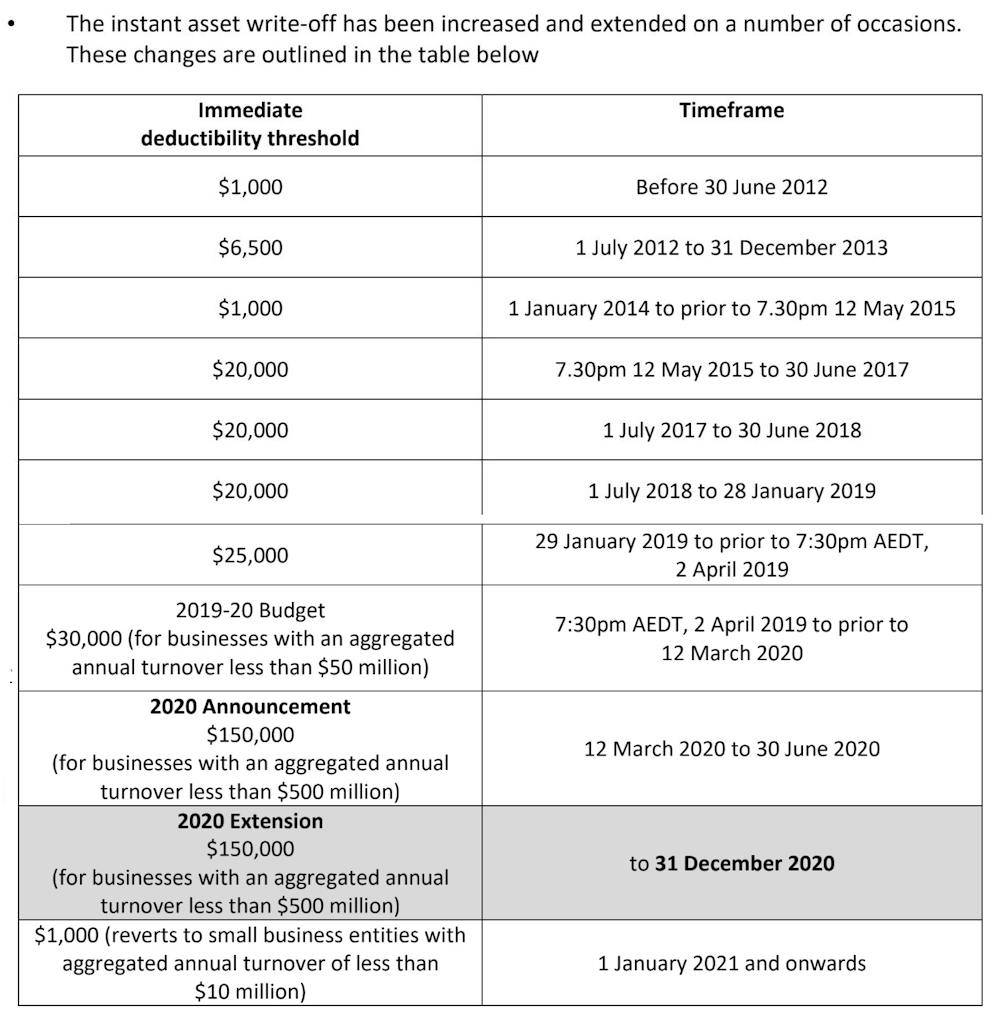
The instant asset write-off has been extended a number of times over the years, and its (much more modest) thresholds altered.
On the government’s revised timetable, from January 1 the write-off is due to be scaled down dramatically, reducing to a threshold of $1000 and with eligibility being confined to small businesses – those with an annual turnover of below $10 million.
But there will be pressure to continue with more generous arrangements, to head off the danger of a fresh collapse in investment.
In a statement, treasurer Josh Frydenberg and small business minister Michaelia Cash said the government’s actions “are designed to support business sticking with investment they had planned, and encourage them to bring investment forward to support economic growth over the near term”.
Commonwealth Government







