


 JPMorgan CEO Jamie Dimon Warns Mythos AI Raises Cyber Risk Tenfold
  As the Black Summer megafires neared, people rallied to save wildlife and domestic animals. But it came at a real cost
  Europol Warns Bitcoin Wallets Face Quantum Computing Risk
  SpaceX Seeks $40 Billion for Nvidia AI Chips
  Extreme heat, flooding, wildfires – Colorado’s formerly incarcerated people on the hazards they faced behind bars
  The world’s biggest trees could hold the secret to coping with drought
  Rapidus Seeks Chip Customers as Japan Pushes 2nm Semiconductor Revival
  OpenAI, Anthropic Back Mandatory AI Breach Reporting in Australia
  Zcash Privacy Demand Rises as AI Exposes Bitcoin Transactions
  Zcash Prepares for NU7 Upgrade as Zebra Gets Key Security Fixes
  Swimming in the sweet spot: how marine animals save energy on long journeys
  How to create a thriving forest, not box-checking ‘tree cover’
  Micron Shares Rise 4% Despite Taiwan Strike Risk
  TikTok Accused of Testing Fake Safety Tools on Users
  DogecoinVM Makes DOGE Transactions 300x Faster


 Add as a preferred source on Google
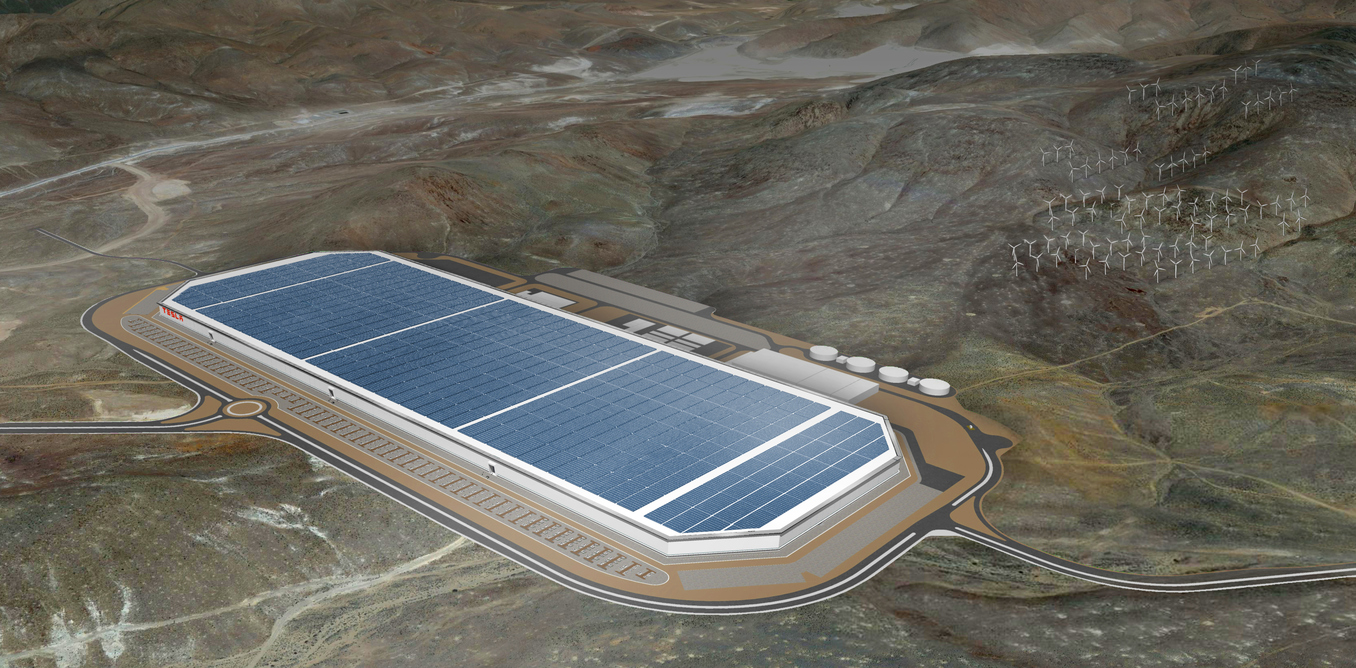

Like Henry Ford before him, Tesla founder and CEO Elon Musk is taking a new approach to car making. Where Ford focused on manufacturing a car that the mass market could afford, Musk is keen to build a vehicle that the environment can bear.
Much has been made of the use of solar power at what is to become the largest factory in the world, the Tesla Gigafactory near Reno, Nevada, which will produce battery packs for cars and other applications. The “end-to-end” vision of using renewable energy sources to generate electricity for product manufacture and use is compelling, and one that has been forcefully made by Elon Musk. At an estimated cost of $5 billion (including $1.3 billion in tax incentives) and with factory floor-space intended to grow to some 1.2m square metres by 2020, on four square kilometres of land, it is a monumental project.
Look beyond the hype, however, and there are major environmental questions that need to be answered, as the rhetoric and reality of green production are very different.
Building energy
Just look at the embodied energy of the factory alone, that is the energy required to create and maintain it. It takes substantial sunk energy costs and carbon emissions to build the solar panels, and all associated cables, that will power the Gigafactory, and to make and transport the concrete, steel, glass, plastic and other materials needed to create more than a million square metres of factory floor space.
Some studies of office buildings have suggested embodied energy can be as much as 30 times the annual operational energy use. For Tesla’s factory, the use of zero-carbon energy during production makes the energy cost of construction even more significant. For example, cement – more than 60,000 cubic yards of concrete were poured to form the base of the factory – has embodied energy of 4.5 megajoules per kilogram, and an embodied carbon value of 0.73 kilograms of carbon dioxide/kg.
Some 70% of solar panel lifecycle carbon emissions also occur in manufacturing, with a typical total figure of 40g in CO2 emissions per kWh. This means that upward of 50% of the lifecycle carbon emissions associated with the Gigafactory could occur just in building the plant.
There will also be additional energy running costs due to the factory being located in the Nevada desert. Significant power will be needed for air conditioning, to keep the 6,500 workers in a healthy ambience, in addition to the usual lighting, heating and powering of production equipment.
Is this the best use of available solar power? The issue is simple: renewable does not mean infinite. Many electric vehicles of are of dubious efficiency, and the carbon emissions benefits of each car depend crucially upon the means by which the electricity used to power the car is generated. Even then, compared with an efficient diesel or petrol car, the net reduction in lifecycle carbon emissions is likely to be only in the region of 25-30% – given their promotion as the eco-friendly car, some might expect this figure to be much higher.
Raw power
There are other environmental burdens, too: solar panels are traditionally produced using large quantities of materials such as copper, silver, lithium, and rare earths such as tellurium, or indium for which there are scarcity concerns and very large environmental burdens during extraction and refining including significant human toxicity. In addition, manufacturing processes for panels may involve caustic chemicals such as sodium hydroxide and hydrofluoric acid, for which recycling options are currently limited.
The desert Gigafactory is also in a region of the US with recurrent concerns over long-term water supply. Debate over water concerns around Reno was heated even before the announcement of the Gigafactory, and the direct use of water by the plant has undoubtedly added to this. It is expected that the majority of the water used will be captured, if necessary treated, and then returned to the water supply system. Nevertheless, it is anticipated that the facility will need up to 3m cubic metres of water by the time it reaches maturity.
Moreover, all those workers, a substantial number of which may be recruited from outside the immediate area, along with their families, will add to the indirect water consumption burden. At an average US household size of 2.8 persons, the factory could see an influx of a further 18,200 people into the Reno area. At an average local consumption rate of 741 cubic metres of water per household per annum, that means a potential additional demand of just over 4m cubic metres per annum in total – more than the factory itself.
Tesla certainly is taking a commendable step in the right direction to make its plant as eco-friendly as possible, but there is still room for development. However, where one leads others can and will follow, and the future of manufacturing can only get greener. That has to be good news.
 Peter Wells does not work for, consult, own shares in or receive funding from any company or organisation that would benefit from this article, and has disclosed no relevant affiliations beyond the academic appointment above.
Peter Wells, Professor of Business and Sustainability, Cardiff University
This article was originally published on The Conversation. Read the original article.







