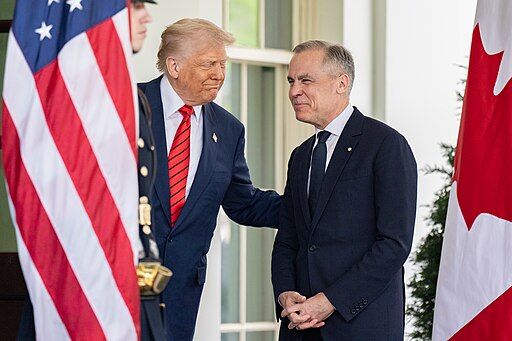
Canadian Prime Minister Mark Carney said Canada is prepared to take whatever steps are necessary to defend its economy as trade tensions with the United States escalate following President Donald Trump's decision to impose new 50% tariffs on a range of Canadian products starting August 19.
Speaking at a meeting of provincial premiers in Charlottetown, Prince Edward Island, Carney described the U.S. tariffs as unjustified and confirmed that Ottawa is intensifying trade negotiations with Washington. He warned that Canada is ready to respond if talks fail, saying all retaliatory options remain under consideration, though he did not outline specific measures.
The renewed dispute comes after Trump decided on July 1 not to extend the United States-Mexico-Canada Agreement (USMCA) for another 16 years. While the trade pact remains in effect, it will now face annual reviews, adding uncertainty to North American trade relations.
The United States is holding separate trade negotiations with Canada and Mexico, with U.S. officials indicating that discussions with Mexico are progressing more quickly. That has fueled concerns that Washington could demand greater concessions from Canada if Mexico reaches a more favorable agreement.
Carney emphasized that his government is seeking a comprehensive trade agreement rather than negotiating separate deals for individual industries. He also stressed that Canada remains committed to protecting its national economic interests throughout the talks.
However, Canada's provinces remain divided on how aggressively to respond. Alberta and Saskatchewan, which export large volumes of crude oil and potash to the United States, oppose using export restrictions or duties as leverage.
Ontario Premier Doug Ford urged Ottawa to match the U.S. tariffs "dollar for dollar," while acknowledging the difficult position Carney faces in negotiations with Trump.
Meanwhile, British Columbia Premier David Eby suggested the province could restrict U.S. access to critical mineral exports, including copper, zinc, and aluminum, if requested by the federal government. Eby said British Columbia stands ready to support Ottawa with stronger negotiating tools should trade discussions with the United States require additional pressure.