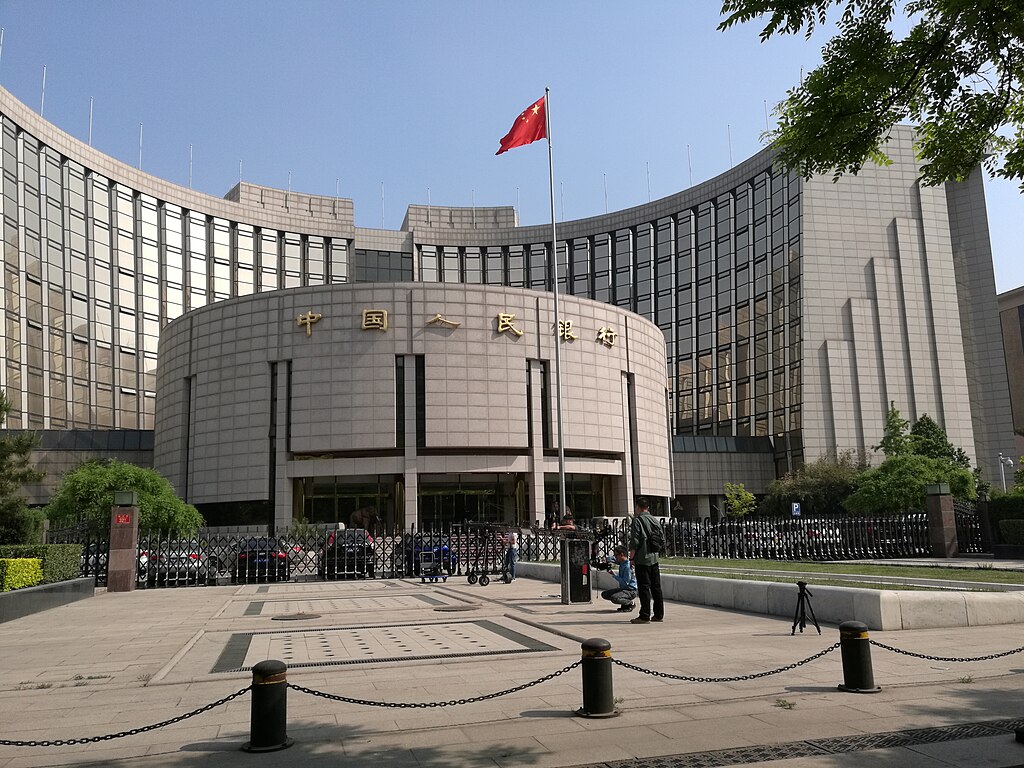
China kept its benchmark lending rates unchanged on Monday, signaling cautious optimism after second-quarter economic data slightly beat expectations. The one-year loan prime rate (LPR) remained at 3.0%, while the five-year LPR stayed at 3.5%, in line with forecasts from a Reuters survey of 20 analysts.
The decision suggests Beijing sees no immediate need for additional stimulus, despite ongoing concerns about weak domestic demand and deflationary pressures. Analysts believe the People’s Bank of China (PBOC) could still opt for monetary easing later in the year, particularly if growth momentum fades.
China’s economy showed surprising resilience in Q2 despite escalating U.S. tariffs, but persistent soft demand and deepening producer deflation—hitting a two-year low in June—continue to weigh on outlooks. Economists warn that while real GDP growth is holding above target, negative nominal growth, marked by nine consecutive quarters of a negative GDP deflator, is squeezing corporate profits and household incomes.
Most Chinese loans are tied to the one-year LPR, while the five-year rate directly impacts mortgage pricing. The current monetary stance is expected to hold until clearer policy signals emerge from the upcoming Politburo meeting, which may outline the government’s economic strategy for the rest of 2025.
Tommy Xie, head of Asia macro research at OCBC, noted the limited scope for aggressive rate cuts due to structural bottlenecks, though he anticipates a further 20 basis point cut by year-end.
With global trade uncertainty and internal deflation risks lingering, markets are closely watching for potential policy shifts as China balances growth support with financial stability.