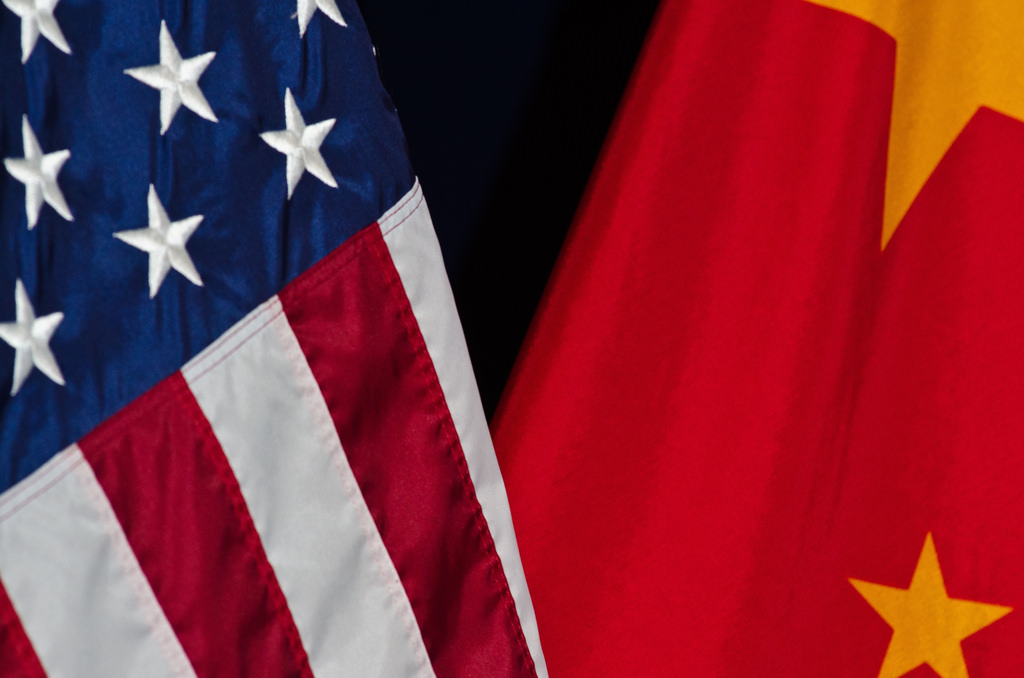
China’s stock market is bracing for renewed volatility as trade tensions between Washington and Beijing resurface. Following U.S. President Donald Trump’s announcement of 100% tariffs on Chinese exports and upcoming restrictions on critical software exports by November 1, investor sentiment has soured, likely triggering profit-taking in markets that recently hit decade highs.
The move comes as retaliation for China’s curbs on rare earth exports, sending U.S. and European markets tumbling. Nasdaq-listed Chinese stocks dropped 6%, while the KraneShares CSI China Internet ETF plunged 7%. Analysts, however, believe the sell-off will be milder than the panic seen in April, with some viewing it as a temporary correction.
Wang Yapei, a Shanghai-based hedge fund manager, noted that “the revived trade war will weigh on China’s stock market,” but expects the downturn to be short-lived. Investors are counting on Beijing’s policy support and possible negotiations between the two powers, given that “the cost of large-scale conflict is too high for both sides.”
China’s government condemned Trump’s new tariffs as hypocritical but refrained from imposing new countermeasures. Analysts, including Charles Wang of Shenzhen Dragon Pacific Capital, predict that growing geopolitical uncertainty will push Beijing to ease monetary policy further—potentially boosting growth-oriented sectors.
Brokerages expect certain industries like AI, robotics, defense, and semiconductor manufacturing to benefit from China’s self-reliance push, while export-heavy sectors such as machinery and electrical equipment may suffer. Still, many believe Trump’s aggressive tariff stance is a negotiation tactic. As Changjiang Securities put it, this could once again turn into “TACO—Trump Always Chickens Out.”
Nomura’s chief China economist, Lu Ting, said both nations remain economically interdependent, describing the current escalation as “posturing ahead of trade negotiations.” A potential Xi-Trump meeting at the upcoming APEC summit in South Korea could provide a diplomatic opening.