
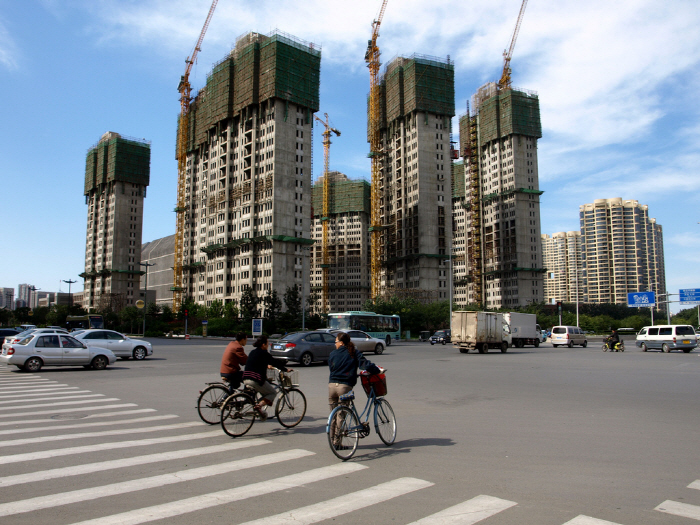
The Chinese economy is expected to continue its trend of moderate recovery over the coming quarters as a strong housing market coupled with a gradual growth in exports, is likely to help bolster the ailing economy. This will probably follow a period of a very hard landing in the Chinese industry and construction sector.
While short-term growth is improving, China is still facing medium-term growth challenges from overcapacity in many sectors, a rising concern over debt levels and a difficult transition from investment-led growth to consumer-driven growth.
"We continue to look for GDP growth of 6.7 percent in 2016 and 6.6 percent in 2017 in line with China’s growth target," Danske Bank said in a research note.
Housing activity was boosted by a significant decline in interest rates in 2015 and a reduction in the requirement for down payments for both first- and second-time buyers in September 2015 and again in February 2016. Home sales picked up sharply in response and helped reduce some of the big oversupply of houses that had sent growth rates in the construction sector sharply lower.
While China is still facing growth challenges in coming years, a strong focus on technology, R&D and innovation will likely to ensure that it continues to climb the development ladder in the long term by increasing efficiency through the rising use of technology and a higher education level. Meanwhile, the real long-term growth drivers for all economies are catching up. Hence, long-term opportunities persist in China, not least within the consumer and service area.
Moreover, exports remain another sector of gradual improvement in the country. Firstly, the recovering of the currency from a sharp headwind during the first half of 2015 to a tailwind, following the recent depreciation of the trade-weighted CNY, has help boost exports. Secondly, foreign demand from the United States, a major trade partner of China, is expected to pick up in the coming days, which will push Chinese trade on the upside.
"We look for CNY to continue to weaken on a trade-weighted basis over the next 12 months and there is a risk that outflows could pick up again at some point over the next one to two years," the report mentioned.

