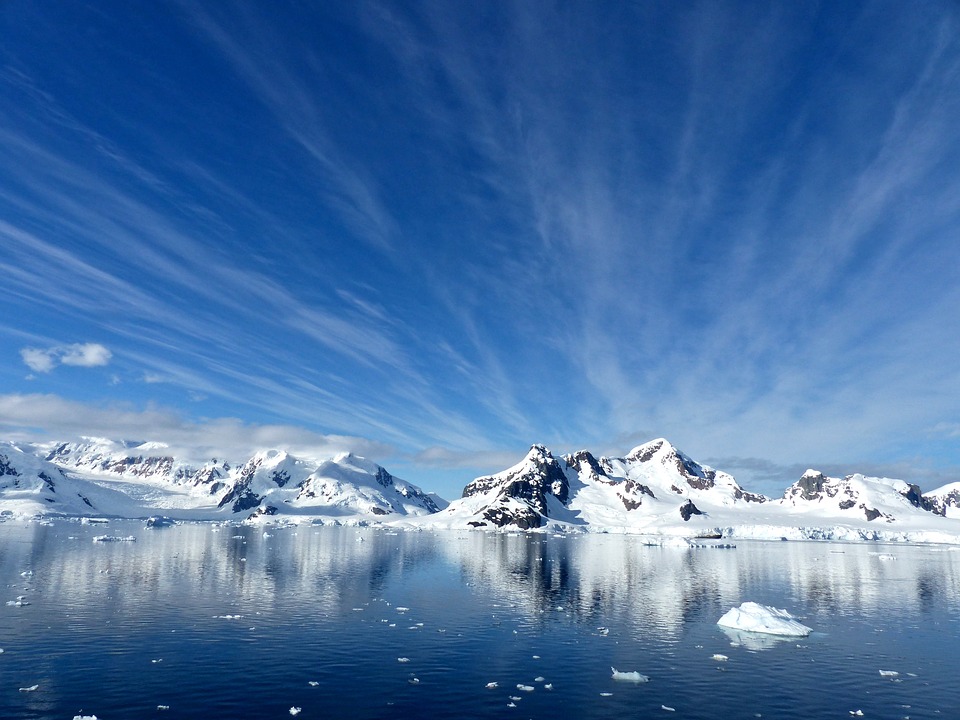
The whole world may be suffering from climate change, but the icy region of Antarctica is among the worst-hit. As the ice has already melted at a concerning rate, scientists have warned that the ice sheet of the continent may become unstable should climate change remain unsolved.
Scientists from the Heidelberg University Institute of Earth Sciences along with researchers from the UK’s University of Southampton looked into how climate change will affect Antarctica’s biggest ice sheet, the East Antarctic Ice Sheet. They found that the future of the ice sheet is at risk as the data has shown that should the problem persist in the near future, the ice sheet will become less stable than expected. This is despite the ice sheet being more stable than its neighbors, the Ross and Thwaites ice sheets. It should be noted that the East Antarctic ice sheet has enough water to make sea levels rise by 58 meters or 193 feet.
“The future melting of polar ice sheets and the associated rise in global sea level as a consequence of climate change will have a substantial impact on low-elevation coastal areas,” said Dr. Kim Jacob from Heidelberg University.
The scientists analyzed deep-sea sediments found n the Atlantic ocean. They focused on the timeframe of 2.8 to 2.4 million years ago. This was a time when the levels of carbon dioxide in the atmosphere were similar to today. They found that there was increased stability in the ice sheet 2.5 million years ago. However, these findings only lasted until the present day as there have been some interruptions in the form of warm phases.
Aside from the effects of climate change in Antarctica, a separate group of scientists made a discovery in the icy continent. Back in 2012, marine biologist Adrian Glover came across a new species as he was exploring the continent’s marine ecosystem and figure out why it is changing. He recalled his experience in a Youtube video, sharing the new kind of species he collected, which was a deep-sea polychaete, found 1,000 meters under the Arctic sea.
“It is a remarkable animal, characterized by these hairs which run down the side of it,” said Dr. Glover. “They are distantly related to earthworms we find on land. What we’re just starting to realize is how biodiversity is changing due to climate change.”