


 Djibouti Migrant Boat Capsizes, Killing 139 and Leaving 84 Missing
  Most Americans Oppose Election Betting on Prediction Markets, Poll Finds
  Brazil Election: Lula and Bolsonaro Rally Ahead of October 25 Runoff
  US Condemns China Sanctions on Taiwan Allies Belize and Paraguay
  Trump Sanctions International Criminal Court, Sparking EU Backlash
  Jordan Bardella Antisemitism Allegations Threaten Le Pen’s Campaign
  Trump Announces Russia-Ukraine Energy Ceasefire Amid U.S. Pressure on Kyiv
  India Voter List Protests Reach Supreme Court as Opposition Demands Election Chief's Resignation
  Greenland Lawmakers Back Trump Security Deal Despite Economic Concerns
  US Authorities Raid Ilhan Omar’s Home Amid Immigration Fraud Probe
  European Auto Stocks Rise as EU-China Trade Deal Targets Hybrid Imports
  UK Finance Minister Healey Calls for Fiscal Discipline Amid Global Risks
  Pakistan Declares Emergency in Khyber Pakhtunkhwa, Suspends Imran Khan’s PTI Government
  Kim Jong Un Showcases ICBM Ahead of Possible Trump Meeting
  Panama Declares Emergency After 7.7 Earthquake Triggers 200 Aftershocks
  Russian Strikes Kill Six in Ukraine, Including Three in Kharkiv
  Trump Calls for Zelenskyy Replacement Amid Russian Diesel Deal


 Add as a preferred source on Google
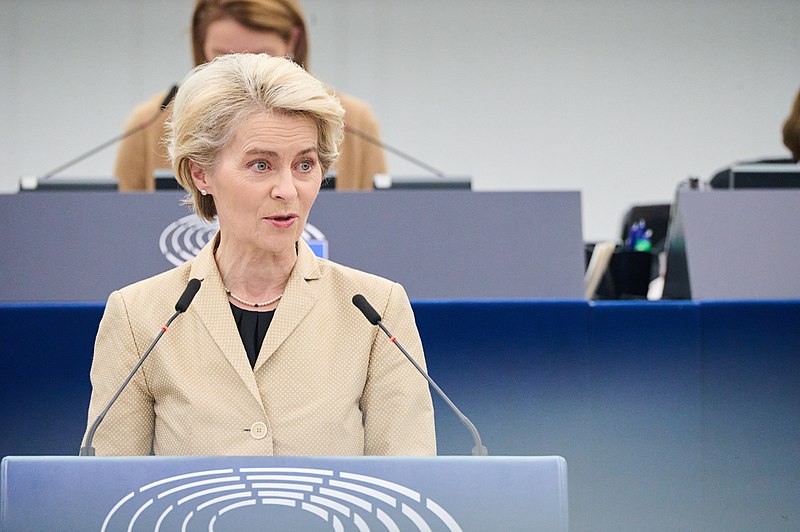
Croatia has entered the new year as the 27th country to enter the European Union’s Schengen zone. Croatia has also switched to the euro currency, leaving its kuna currency as it enters the largest passport-free zone in the world.
During the new year, on Sunday, the Balkan nation switched its currency to the euro and became the 20th member of the eurozone and the 27th country to enter the Schengen zone, the largest passport-free travel area.
EU commission chief Ursula von der Leyen visited Croatia to mark the milestone for the country since it applied to join the EU nearly 10 years ago. Von der Leyen met with Croatian Prime Minister Andrej Plenkovic and Slovenian President Natasa Pirc Musar at the border crossing between Croatia and EU member Slovenia.
“It is the season of new beginnings. And there is no place in Europe where this is more true than here in Croatia,” tweeted von der Leyen.
Experts have said that Croatia’s adoption of the euro currency will help protect the country’s economy at a time when inflation has skyrocketed due to Russia’s invasion of Ukraine, resulting in rising food and fuel prices. Experts have also said that adopting the euro will lower borrowing conditions and economic hardships. Croatia’s inflation rate went up to 13.5 percent compared to the eurozone’s 10 percent back in November.
Among the Croatian public, the reaction to adopting the euro is mixed, as it raised fears that the cost of living may rise as businesses may round up prices when converted.
Last month, Moldovan President Maia Sandu expressed her hopes on Thursday that the country may join the European Union within the decade. The bloc accepted Moldova as a membership candidate back in June, along with Ukraine, marking a diplomatic feat for Sandu, who was elected in 2020 on a pro-European and anti-corruption platform.
“My wishes are very ambitious,” said Sandu in televised remarks. “I think we must become a member of the European Union by the end of this decade.”
While entry into the bloc is a long and complex process, Moldovan economy minister Dumitru Alaiba told Reuters that he was drafting long-term reforms and would cut bureaucracy in order to establish foundations of a business-friendly economy to fast-track the country’s entry into the EU.







