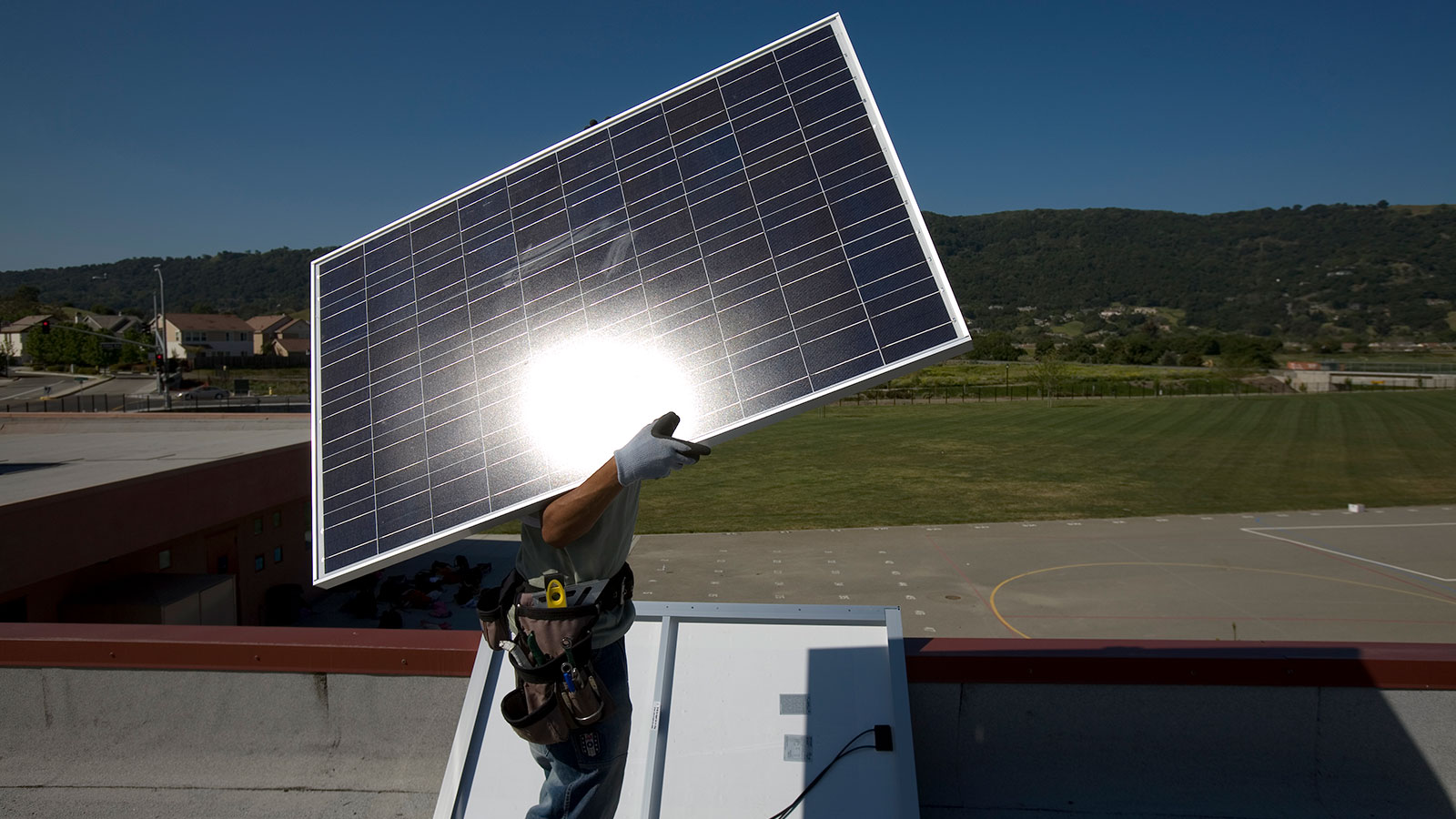
With solar panels falling into disuse peaking sometime around 2036 at 170,000 to 280,000 tons, more companies are now developing solar panel disposal equipment.
Niimi Solar Co., a company based in Niimi, Okayama Prefecture, is developing solar panel disposal equipment that uses water vapor.
It will employ steam heated to 600 degrees or so to vaporize plastic and allow more than 90 percent of the materials, including glass and copper, to be recovered. Company officials said they hope to commercialize the apparatus sometime around 2023.
Solar Frontier KK, a Tokyo-based subsidiary of major oil distributor Idemitsu Kosan Co., has created a process that transforms used solar panels into nitric acid, allowing noble metals and other materials to be extracted.
Company officials said they want to start a firm as soon as possible, perhaps by the end of fiscal 2024, to recycle the chemicals extracted. They said the firm will begin by processing 30,000 or so solar panels each year and would later expand in line with rising demand.
NPC Inc., a Tokyo-based manufacturer of solar panels, has developed mechanical equipment that allows more than 90 percent of the materials contained in solar panels to be recycled. The appliance was put on sale in 2019.
NPC has so far sold five units of the appliance in Japan at $867,000 per unit.
The company also received an order from France last year.
There is the option of repurposing them, but few purchasers would want panels from outdated models with lower power generation efficiency. The panels may, however, be utilized in the production of other machinery if disassembly reveals valuable materials such as aluminum and silver, which can then be extracted from them.
Solar panels are made of elements that are extremely harmful to humans, including lead. How they are engineered to prevent water permeation makes it difficult to take them apart.
Used panels above and beyond the processing capabilities will be assigned to landfills. However, industrial waste disposal sites would reach their capacity limits sometime around 2035 if there is no reduction in waste.
Katsushi Takenaka, head of the photovoltaic recycling preparation office with Solar Frontier, said a mechanism for disposal needs to be established in building new solar farms and there is a need to encourage the reuse of materials, such as by certifying recycled resources.