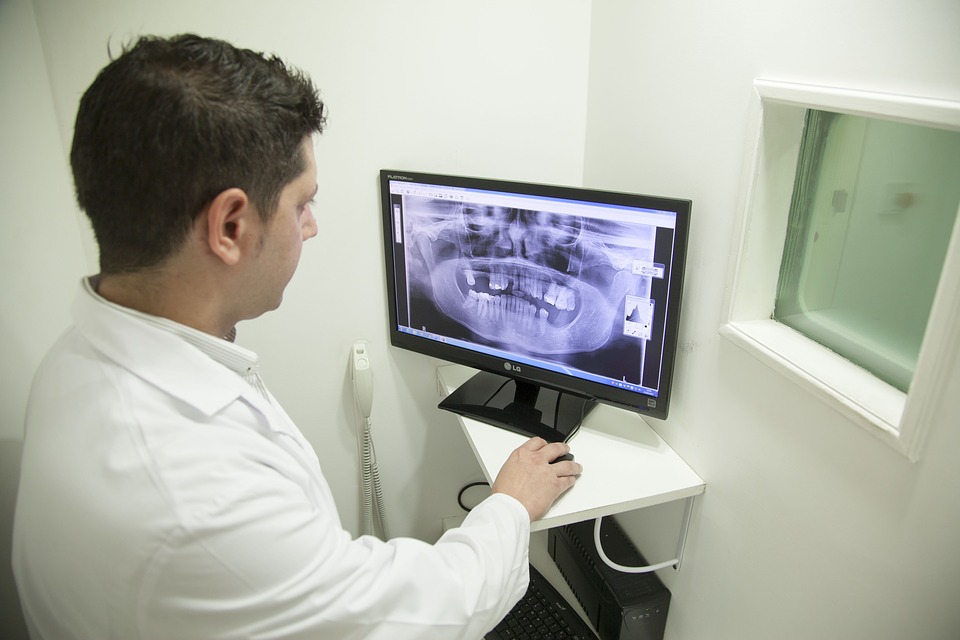
X-rays machines allow doctors to see bones under the skin while CT scans and MRI machines can see internal organs. So far, however, doctors have only had the option of cutting into the skin of their patients to really see what was going on underneath. Thanks to advanced augmented reality technology, it’s now possible to see underneath the skin in real-time.
Called ProjectDR, it’s basically taking the same technology that allows CT scans and MRIs to work, but makes it more versatile. It was created by University of Alberta scientists and according to details, it can capture accurate imaging as the patient moves.
Now, anyone who has ever been inside CT scans or MRI machines will know that patients are required to stay still in order for them to capture the right images. With ProjectDR, this doesn’t have to be the case, which can change the game in the field of medical imagery.
According to computing science graduate student, Ian Watts who developed the technology, the project could revolutionize several fields in medicine. Everything from the actual teaching of anatomy to accurately pinpointing internal damages could see a significant boost in accuracy and efficiency.
"There are lots of applications for this technology, including in teaching, physiotherapy, laparoscopic surgery and even surgical planning," Watts said.
Now, there are still a few things that need to be improved upon with the technology before it can be applied in the field. It will need to pass a test involving surgical simulations, for example, before it could be given pilot testing, Futurism reports.
While the concept of using AR technology to literally see into a patient’s body in real-time and with a considerable level of accuracy has been imagined in sci-fi properties before, this is the first real-world example of it happening. It’s just another example of how fast technology is advancing.