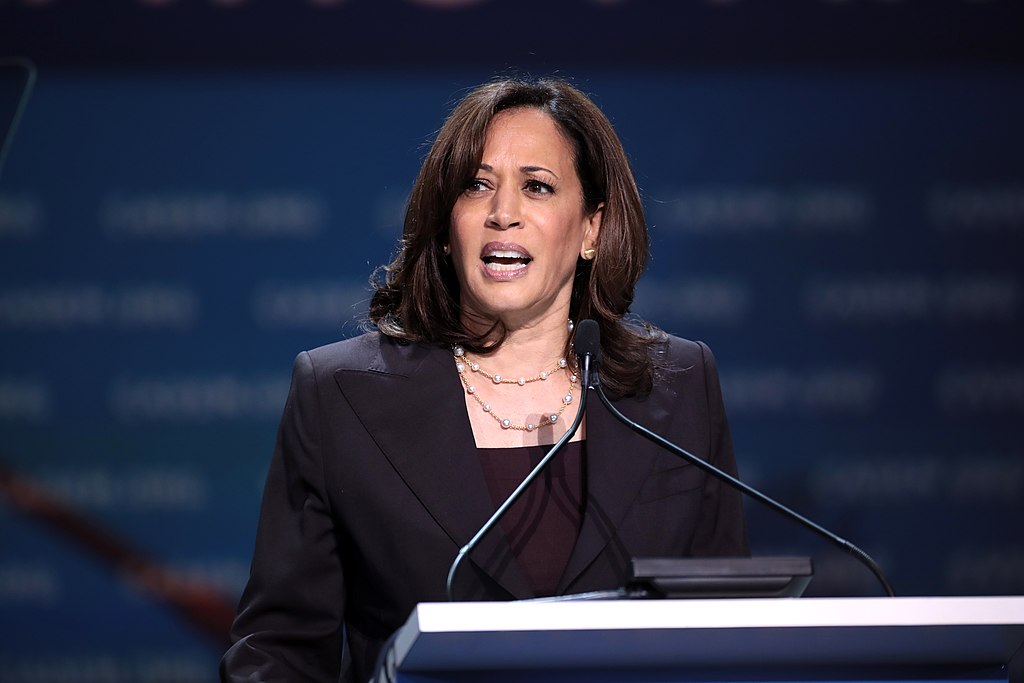
Former President Donald Trump has pointed the finger squarely at Vice President Kamala Harris for today's significant stock market crash. Trump's sharp remarks, branding the financial downturn the "KAMALA CRASH," have stirred controversy and debate across political and economic landscapes.
The market turmoil comes amid heightened concerns over the economic policies and leadership of the current administration. As stock values plummeted, Trump wasted no time on social media to express his disdain for Harris, accusing her of being the catalyst for the market's instability. He criticized her past governance of California, suggesting that her leadership has been detrimental at the state and national levels.
The former president's comments referenced Harris's tenure as the Attorney General of California and later as a U.S. Senator, arguing that her policies contributed to the economic challenges faced by the state. Trump's scathing critique implied that investors and markets are reacting negatively to the potential for Harris to ascend to higher leadership roles, given her perceived radical leftist stance.
Market analysts, however, have pointed to myriad factors that could contribute to the market's volatility. These include ongoing global economic uncertainties, inflation fears, and potential interest rate hikes by the Federal Reserve. While Trump's attribution of the crash to Harris may resonate with his base, it oversimplifies the complexities influencing market dynamics.
The fallout from Trump's statement has been swift, drawing responses from political allies and adversaries. Supporters echoed Trump's sentiments, blaming the current administration's policies for the economic downturn. Conversely, critics accused Trump of fearmongering and using the stock market's fluctuations to score political points.
The White House has yet to issue an official response to Trump's remarks, but economic advisors have been working to reassure the public and investors. Efforts are underway to stabilize the markets and address the underlying concerns that have led to the recent sell-off.
This incident underscores the ongoing partisan divide over economic policy and leadership in the United States. Trump's rhetoric reflects a broader strategy to undermine confidence in the current administration while rallying his supporters ahead of potential future political endeavors. His use of the term "KAMALA CRASH" is a calculated move to associate economic instability with Harris's leadership, further polarizing public opinion.
The political discourse surrounding these events is likely to intensify as the markets continue to react to a complex web of domestic and international issues. Investors and the general public are left navigating a landscape where economic realities and political narratives are increasingly intertwined.