


 Tencent Shares Fall as $5 Billion AI Bond Sale Weighed
  Moonshot AI Executives Seek Settlement Ahead of Hong Kong IPO
  Samsung, SK Hynix Shares Fall as China's CXMT Advances DRAM Technology
  US Suspends Microsoft, Adobe From Green Card Program
  Morgan Stanley Predicts $10 Trillion RWA Market by 2030
  Nvidia’s China AI Chip Market Share Falls to 34% as Huawei Gains Ground
  South Korea Blocks 27 Crypto Exchange Websites in Regulatory Crackdown
  Yandex Data Center Hit by Drone Strike as Russia-Ukraine Cyber Infrastructure Attacks Escalate
  Syndax Stock Drops 15% After Axatilimab Trial Failure
  TSMC Profit Set to Surge 65% as AI Chip Demand Drives Record Earnings
  Russia Approves Sberbank for Crypto Exchange Services
  Epic Games Delays Disney Shooter, Shifts to AI-First Development
  Arthur Hayes Announces FLOP Testnet Launch Within Weeks
  Amazon in Talks to Acquire AI Startup Decart for $7 Billion
  Apple Supplier Luxshare Faces US Patent Probe, Sees Limited Impact
  Meta Launches Muse Wonder AI Models, Shares Rise 3.7%


 Add as a preferred source on Google
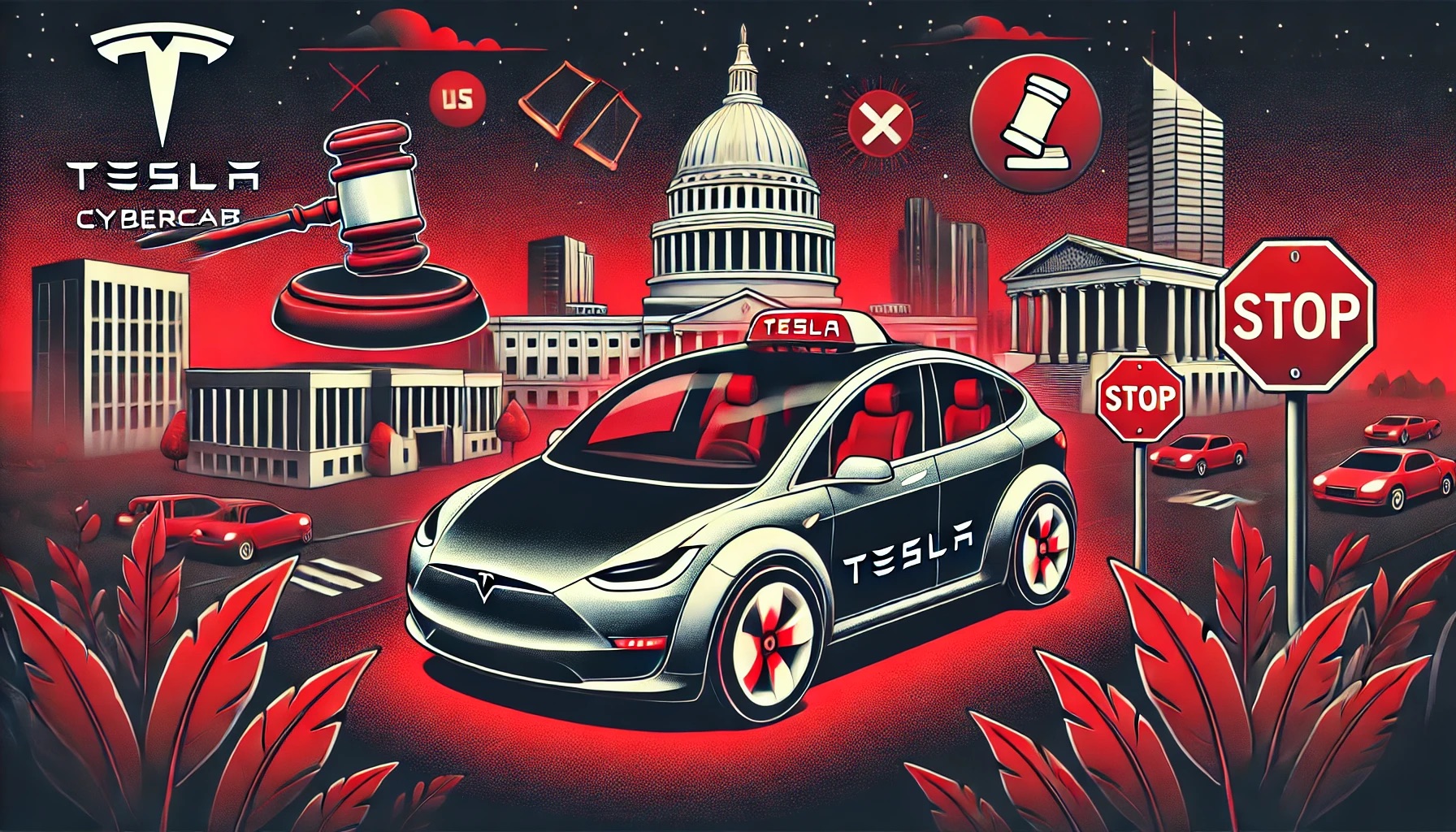
Elon Musk showcased Tesla's futuristic Cybercab, aiming for mass production by 2027. However, strict U.S. laws governing autonomous vehicles may render mass production illegal, putting Musk's ambitious timeline in jeopardy.
Musk Unveils Cybercab and Robovan
At a glamorous event in Los Angeles last week, Elon Musk, CEO of Tesla, revealed his plans for a future where cars drive themselves. The Robovan, an autonomous bus, and the Cybercab, a self-driving taxi developed by Tesla, were unveiled at the event.
Musk claims that by 2027, the business intends to release a fleet of these autonomous vehicles; however, there are several challenges that Tesla must first resolve.
Full Self-Driving Tech Faces Crucial Refinement
According to Bloomberg, the first challenge will be for the business to perfect its Full Self-Driving tech, which it claims would be the foundation of the new Cybercab. The second will be to persuade Congress to reconsider its stance on the introduction of autonomous taxis.
Musk has grand plans to make the Cybercab a best-seller, but American lawmakers have imposed stringent regulations limiting the mass manufacture of autonomous vehicles:
“Unless Congress increases this limit, as several failed bills would have done, exemptions aren’t a viable route for a mass manufacturer,” said Bryant Walker Smith, a University of South Carolina law professor and autonomous vehicle expert.
Regulatory Hurdles Threaten Musk’s Ambitious Timeline
Regulatory hurdles were one of multiple issues Musk sidestepped during his much-anticipated unveiling of the robotaxi, billed as a pillar of the Tesla chief executive officer’s push into robotics and artificial intelligence.
NHTSA has long permitted manufacturers to deploy 2,500 vehicles per year under a granted exemption, a tiny total for a company that sold nearly half a million cars last quarter alone. Such a low number also contrasts with what Musk told investors last week, when he said Tesla would “make this vehicle in very-high volume.”
Congressional Limits Overshadow Cybercab Rollout
During his presentation at last week's We, Robot event, Musk, predictably, avoided discussing the limitations imposed by Congress. Additionally, Musk has been vague on how his business would transition from developing driver aid technologies to distributing fully autonomous vehicles.
Cybercab Production Delays Echo Previous Promises
While presenting the Cybercab, Musk made the ambiguous claim that production will begin in 2026 and that customers should begin receiving their orders by 2027.
Jalopnik notes, however, that he has been promising Tesla self-driving taxis for nearly a decade, has failed to release the long-awaited Tesla Roadster, and delayed the first Cybertruck delivery by many years.







