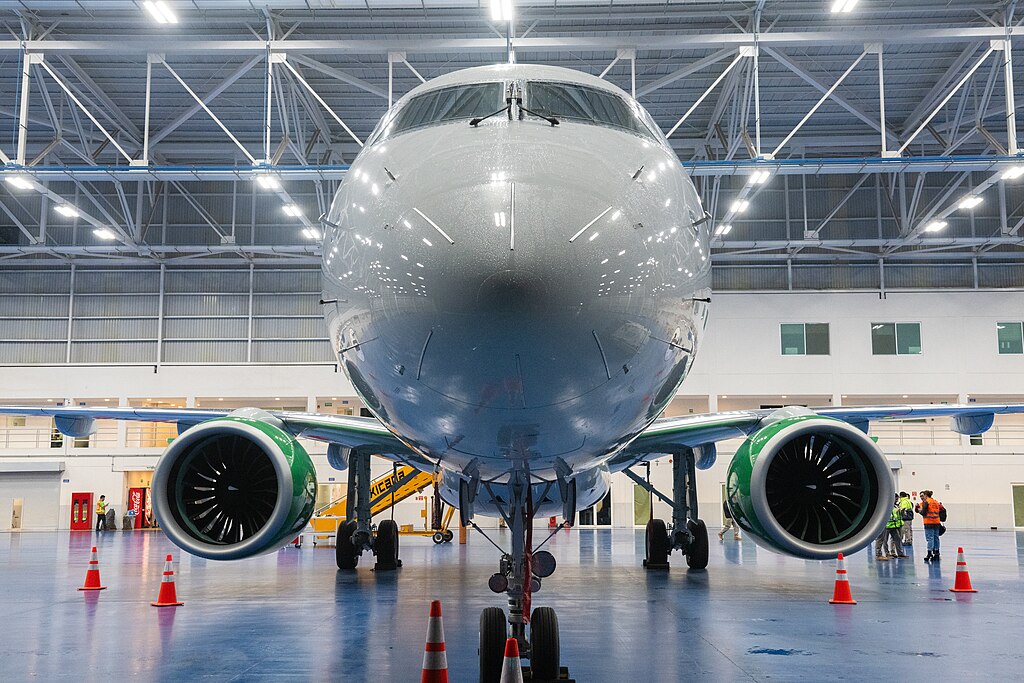
Brazilian aircraft manufacturer Embraer is aiming to restore annual commercial jet deliveries to pre-pandemic levels of around 100 aircraft within the next two years, with plans to grow beyond that as demand for regional jets accelerates. The company delivered 78 commercial aircraft last year, meeting its guidance range, and now plans to boost production and deliveries by nearly 30% over the next 24 months.
According to Arjan Meijer, CEO of Embraer Commercial Aviation, the immediate goal is to return to 100 annual deliveries, but strong order momentum suggests the company may exceed that target. Embraer has benefited from a surge in airline demand as carriers resume fleet renewal programs that were delayed during the COVID-19 pandemic. Despite ongoing geopolitical uncertainty, Meijer emphasized that market demand remains resilient and shows no signs of slowing.
Embraer’s E2 regional jet family has seen particularly strong sales performance. The company reported 131 net orders for the E2 series last year, quadrupling its sales year over year and outselling Airbus’s competing A220 by a ratio of three to one. Major customers included airlines such as All Nippon Airways and LATAM, reinforcing Embraer’s competitive position in the regional aircraft market, even after losing a politically sensitive campaign in Poland to Airbus.
Supply chain challenges, which have constrained global aircraft production in recent years, are easing but not yet fully resolved. Meijer noted that stability is expected to return in 2026, with engines and aerostructures among the components most affected by past disruptions. U.S. engine manufacturer Pratt & Whitney has largely overcome shortages and maintenance issues affecting Embraer’s jets, a contrast to the ongoing tensions between Pratt & Whitney and Airbus over Geared Turbofan engine availability for the A320neo family.
Maintenance-related groundings of Embraer aircraft have dropped significantly, from as many as 40 planes at peak levels to single digits, with expectations that this issue will be fully resolved by the end of the year. On future aircraft development, Embraer is taking a cautious approach, focusing on advancing technology rather than rushing into a new jet platform, underscoring its intent to grow sustainably while navigating an evolving aviation landscape.