
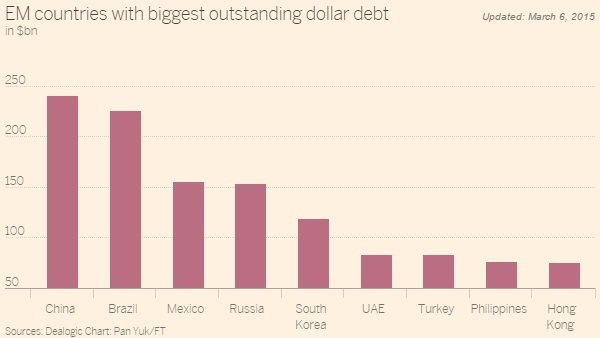
- Emerging markets remain very vulnerable over rising interest rates in US and USD denominated bonds.
- Since 2010, issuing dollar bonds remained extremely popular amid low interest rates in US.
- Recent rampant movement in emerging market currencies show that market remains cautious over the debt problem and possible defaults ahead.
Debt levels -
- Overall debt level is expressed in the chart that shows Chinese, Brazilian and Mexican companies are the top issuer more than $150 billion. These loans might go for defaults or restructuring should the cost rise significantly.
- Loans taken after the FED decision of asset purchase are particularly vulnerable as they were gobbled up more rapidly to benefit from the yield differential. Recent drop in China's capital account suggests the trend could be reversing.
- Since 2010, the top issuers are China ($230 billion+), Brazil ($180 billion+), Mexico ($130 billion+), Russia ($120 billion+), South Korea ($ 110 billion+), UAE ($ 60 billion+), Turkey ($50 billion+).
- Moreover dollar rose against most of the countries which would incur further cost in local currencies.
Impact -
- Dollar which already strengthened significantly against the currencies, further pain could be in store for them.
- Turkish Lira dropped to 2.64, new record low against dollar.
- Mexican Peso dropped to 15.6, new record low against dollar.
- Brazilian Real fell to 3.16, more than 2%.
- Yuan still managed by government, posted its first yearly loss in decades in 2014.
Chart courtesy Dealogic and Financial Times.


