


 Oil Prices Rise as Hormuz Risks Offset IEA Stock Release
  UK Finance Minister Healey Calls for Fiscal Discipline Amid Global Risks
  US, EU Push for Action Against Asia’s Excess Factory Capacity
  Dollar Near 18-Month High as Euro, Yen and Pound Weaken
  Asian Stocks Mixed as OpenAI Revenue Concerns Hit Chipmakers
  US-Led Coalition Targets Global Factory Overcapacity
  Bangladesh GDP Growth Accelerates to 4.6% on Industrial Rebound
  France to Release 10 Million Barrels of Diesel to Ease Fuel Prices
  Oil Prices Trim Gains After Trump Rules Out Iran Strikes Before Midterms
  Oil Prices Rise as Houthi Attacks Threaten Middle East Supply
  IMF, World Bank Meetings Face Global Economic Risks Amid Iran War
  US Dollar Near 18-Month High Ahead of Inflation Data
  Asian Currencies Steady as Dollar Eyes Fourth Weekly Gain
  Gold Prices Rise as Hormuz Tensions Fuel Inflation Risks
  Trump Secures Russian Diesel Deal as US Fuel Prices Surge
  Gold Prices Hit One-Week High as Oil Falls, Fed Rate Outlook Weighed


 Add as a preferred source on Google


Russia’s invasion of Ukraine is happening half a planet away from Australia.
But the ripple effects are plain to see at every petrol station and, potentially soon, your electricity bill.
As a result of the invasion and Western sanctions on Russian exports, energy prices have skyrocketed.
If that makes you think nations should have taken steps to secure alternatives to fossil fuels years ago, you’re not alone. As it is, the much higher energy prices are likely to accelerate the exit of coal – and gas – from our energy grids.
This should be a wake-up call. It doesn’t matter that Australia is far from the battlefield. Everyone in the world will be affected in some way.
What’s the link between the invasion and Australian energy prices?
You might think Australia’s domestic supply of coal and gas means we’d be immune to price rises. Not so.
Due to formal sanctions and informal shunning of Russian exports, oil, coal and gas are now extremely expensive on a global scale. Thermal coal prices have increased five-fold to an unprecedented ~$A500 per tonne. Oil is ~$140 a barrel and up 60% year on year. Natural gas in Europe is around 50% higher than last October, but since the invasion, prices have spiked as high as ~200% higher than 2021 levels.
Coal buyers are locking in supply, concerned that Russian sanctions will continue. Russia is the third largest exporter of coal and its existing customers are now under pressure to find alternative supplies.
Russia’s aggression is not just resulting in a major humanitarian and political crisis. It is also causing pain at the bowser for Australian consumers due to the surge in oil pricing and may soon result in higher electricity bills.
Australia’s east-coast electricity market is still heavily reliant upon coal. While many coal-fired power stations have existing supply contracts, the much higher global coal price may increase the cost of any extra coal purchases by existing power stations.
Not only that, but our gas-fired power stations are facing potential increases in operating costs due to much higher global gas prices.
Unfortunately, we may see the result in rising power bills. The price of future contracts for wholesale electricity next year in NSW are now twice what they were a year ago. Assuming this flows through to end-users, prices for residential customers could increase by as much as 10–15%.
So what should Australia do?
While it’s too late to dodge this bullet, we can prepare for future shocks by doubling down on firmed renewables. The faster we move, the less we’ll be hit by the price and reliability risks of coal.
Already under pressure from cheaper renewable technologies, coal power station operators now find themselves potentially facing much higher costs in the short-term. There’s no relief for coal in the long term either, with the rapid rise of renewables and other zero-carbon technologies.
Not only that, but most of our coal power stations are near the end of their lives, and industry doesn’t want to build new ones. That means coal will become more and more expensive, as the plants become increasingly unreliable.
Wind and solar technologies are now much cheaper per unit of energy generated and can be integrated with energy storage to provide dispatchable “firmed” energy. The faster we transition to renewables firmed by storage, the better.
If we do this, our new grid will also be more reliable. Continuing to rely upon coal is like relying upon a 1970s car to travel from Sydney to Melbourne on the hottest day of the year.
State governments around the nation are already embracing this approach, with the New South Wales government moving ahead with plans for 12 gigawatts (GW) of new renewables and storage and the Victorian government announcing plans for 9GW of offshore windfarms.
Governments must carefully design policies to avoid guaranteeing profits for private sector players while socialising any losses across taxpayers and energy consumers. In NSW, alternatives are being considered.
As European and many other nations scramble to reduce their dependency on Russian coal, oil and gas, Australia now has a once in a generation opportunity to become a leading exporter of new clean energy.
We have truly enormous clean energy resources in the form of free sunlight and wind. To export it, we can either run underseas cables to neighbouring countries, or convert cheap renewable power into green hydrogen and ship this to the world just as we currently do with LNG.
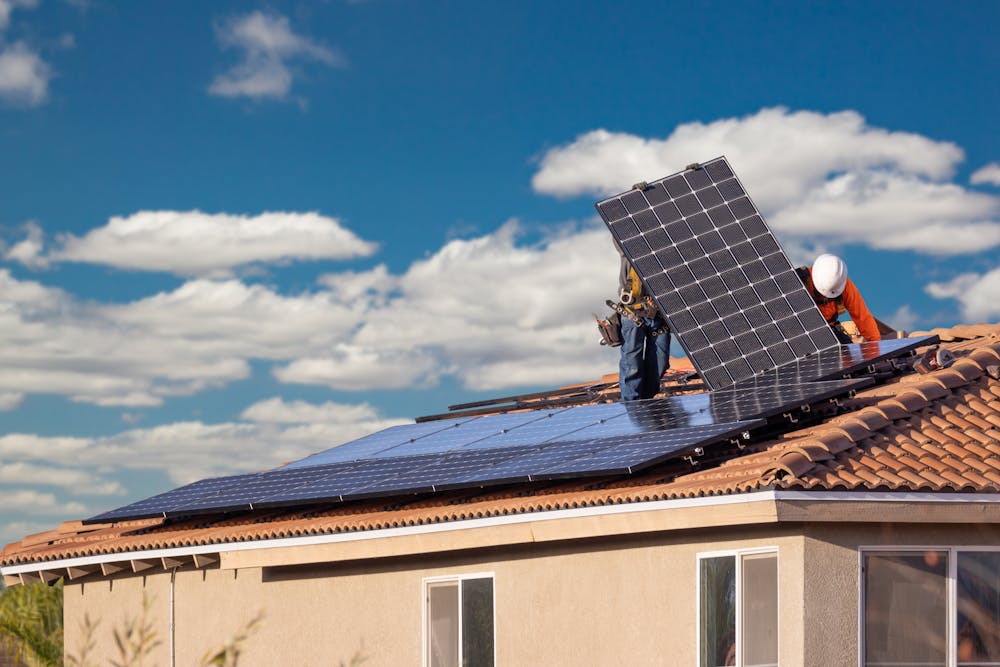
Renewables draw energy from sources unaffected by war. Shutterstock
What else can we expect to see?
Surging fossil fuel prices has supercharged the existing disruption to an already rapidly changing domestic energy industry. In the past month, Origin announced it would abandon coal more rapidly, with the closure of its NSW coal-fired power station, Eraring, in 2025.
Meanwhile, AGL has been pursuing a “demerger” with a view to splitting off its coal assets and pursuing new energy technologies. This comes as Australian tech billionaire Mike Cannon-Brookes and Canadian asset fund Brookfield offered to buy AGL for $8.25 a share, though they were not successful. Their plan was to accelerate the closure of AGL’s coal assets, which would move AGL from the highest carbon emitter in Australia to a clean energy company. The age of coal power is ending, and much faster than most of us realise.
This crisis should spur us to build a future-proofed fleet of “firmed” and well-distributed renewables with a known cost structure.
By doing this, we will protect ourselves from the pain of geopolitically driven fossil fuel prices. And we will have a platform ready if we want to provide clean energy to the world in the form of green hydrogen.
We have had decades to make full use of our wealth of renewable energy resources. We haven’t embraced this as fully as we should have.
It turns out localised clean energy production is not just necessary to tackle climate change. It will prove a vital resource as we navigate the highly turbulent decade we have found ourselves in.







