


 FxWirePro: Daily Commodity Tracker - 21st March, 2022
  Best Gold Stocks to Buy Now: AABB, GOLD, GDX
  Gold Prices Fall Amid Rate Jitters; Copper Steady as China Stimulus Eyed


 Add as a preferred source on Google
The shift in China's FX regime in August and coincident slowing of the Chinese economy has significant direct and implied ramifications for the global economy, including the euro area and the EUR.
The slowing of China's economy, with downside risks, should reduce global aggregate demand, exposing the euro area both directly and through its other emerging market trading partners.
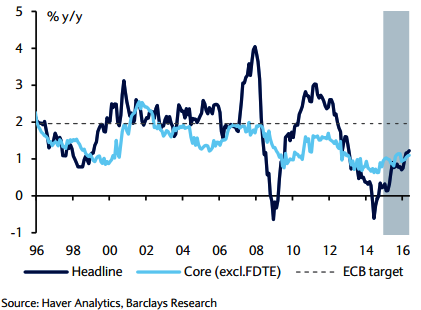
Moreover, the significant depreciation of CNY, that is expected, likely will increase disinflationary pressures globally, increasing the already considerable downside risks to euro area inflation stemming from tightening of financial conditions, falling oil prices and a still large output gap.
"Indeed, the euro area inflation is expected to be materially below the ECB's target next year and, as such, expect the ECB to ease policy further by year-end", says Barclays.

- News

- Economy

- Central Banks
- Investing
- Research
- Roundups
- Digital Currency
- Insights
- Technical Analysis
- Technology
- Business
- Law
- Health
- Nature
- Fintech
- Science
- Topic
- Opinions
- ©Econometrics LLC . All Rights Reserved.
Euro area inflation likely to be below ECB’s target next year
Wednesday, September 23, 2015 5:19 AM UTC
Editor's Picks



- Market Data
Most Popular




