
European Central Bank's (ECB) asset purchase program has made Euro the top funding currency this year ahead of traditional Japan.
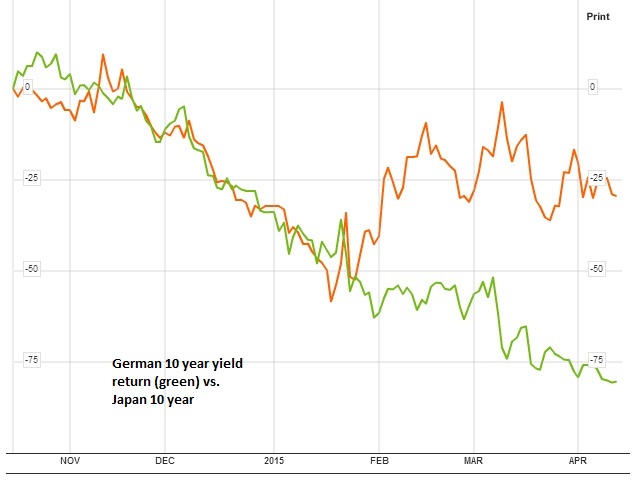
- German 10 year yield has fallen from 0.86% to 0.15% in last 6 months, fueled by ECB bond buying. Euro has fallen from around 1.40 last year to current 1.054.
- Japan on the other hand saw its benchmark 10 year yield rise, as investors move away from Yen to fund the carry trade to Euro. Since ECB announcement Japanese benchmark 10 year yield rose from 0.20% to 0.34% as of now. Yield reached high point around 0.47% in early March.
Yield spread between Japan and Euro zone are expected to keep widening, unless Bank of Japan (BOJ) come up with next set of stimulus.
Japan which is yet to register commendable economic recovery will further suffer, as European goods would produce tough competition for Japanese manufacturers.
Euro will remain under downside pressure from yield compression which might exacerbate further over tomorrow's ECB press conference.
As of now, Swiss 10 year yield stands lowest in the world about 26 basis points lower than German benchmark 10 year yield, however recent yield compression has put Swiss National Bank (SNB) at policy odds. Negative libor of -1.25% if failing to keep Euro up against franc. Euro is down 14% against franc this year so far.


