


 FxWirePro: Daily Commodity Tracker - 21st March, 2022
  Fed’s Hammack Says Bond Yield Surge Is Not Driven by Inflation Fears
  Fed’s Logan Signals 50 Basis Points More in Rate Hikes
  RBA Set for September Rate Hike as Inflation Stays High
  Best Gold Stocks to Buy Now: AABB, GOLD, GDX
  Fed Unveils Stablecoin Rules Under GENIUS Act
  ECB May Stop Rate Hikes After December, Capital Economics Says


 Add as a preferred source on Google
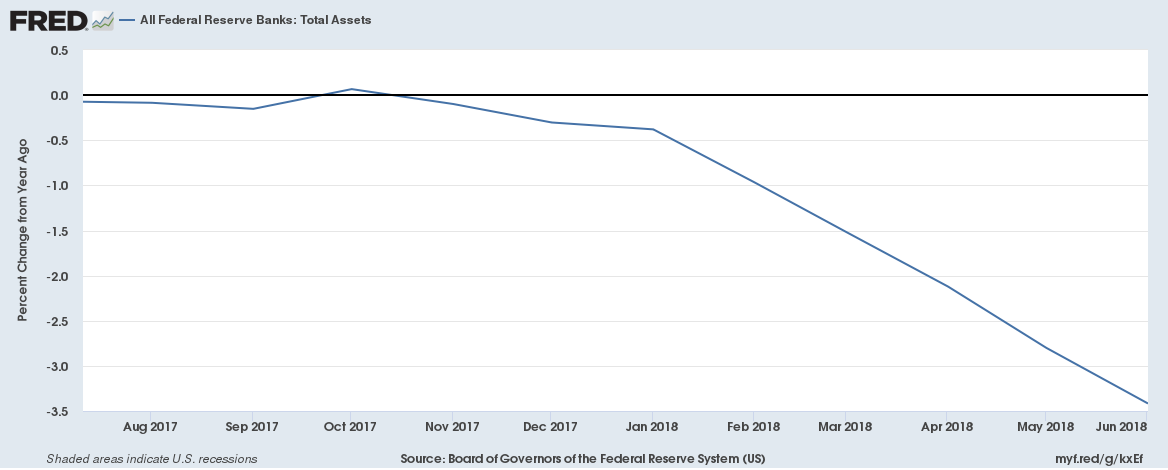
The Fed’s balance sheet reduction, which is one of the key reasons for dollar liquidity drain from the financial systems is gathering pace and soon it would hit its peak of $50 billion per month. The balance sheet reduction began last year in October with $10 billion per month and as of this month, it has gradually increased to $40 billion per month and in October the pace would hit $50 billion per month, which is the announced ceiling rate of reduction by the U.S. Federal Reserve.
The chart shows that the size of the balance sheet is down 3.42 percent from a year ago but with balance sheet reduction gathering pace, we expect that number to reach as high as 25 percent, just like it did when the Federal Reserve was purchasing assets at the pace of $600 billion per annum.







