


 FxWirePro: Daily Commodity Tracker - 21st March, 2022
  Gold Prices Fall Amid Rate Jitters; Copper Steady as China Stimulus Eyed
  Fed’s Williams Signals One More Rate Hike Before Year-End
  Australia Consumer Confidence Plunges as RBA Rate Hike Hits Households
  RBI Uses $10 Billion Currency Swaps to Drain Excess Rupee Liquidity
  Fed’s Hammack Says Bond Yield Surge Is Not Driven by Inflation Fears
  BOJ Raises Interest Rate to 31-Year High as Yen Weakens
  Yen Sinks as BOJ Rate Hike Fails to Impress Markets


 Add as a preferred source on Google
Recent testimony by Chair Yellen regarding the Fed's confidence in the economy's performance, coupled with the robust consumption-related data in recent weeks (including the sharp rebound in October employment), make a lift-off in December very likely. The soft inflation outlook could still pose some risk for a delay, but it is more likely to affect the signalling about the path of rate hikes than postpone the initial hike into 2016. Indeed, as the lift-off is anticipated, the focus will increasingly shift towards the pace of hikes, especially since market pricing remains (50bp) not only below the Fed's current guidance (100bp) but also forecast (75bp).
In parallel to the developments at the Fed, ECB President Draghi's communication in October provided strong signals for additional monetary policy accommodation in December. Such a step was already expected, but the view has now taken more concrete forms, especially after the ECB communication about potential further depo rate cuts. The ECB in December is expected to announce: 1) a time extension of QE to at least mid-2017 or, alternatively, an explicit commitment to extend QE until the ECB inflation forecast reaches 2%; 2) a 10bp cut to the deposit facility rate to -30bp; 3) additional changes to parameters of QE such as removing the restriction to buy only EGBs yielding above the deposit rate and including German Laender debt in the asset purchase program.
Other measures such as increases of the PSPP's monthly size (ie, from EUR60-70bn currently), the addition of new asset classes, or possibly an abandonment of the capital key rule, remain on the table in principle, but are less likely to be announced in December.
The two opposing policy directions by the Fed and ECB could meaningfully accelerate the USD's appreciation against the EUR. However, policy makers do watch their currencies as well as each other. The risk is that a very rapid exchange rate move could itself influence policymakers not to implement such a 'diverging policies' scenario - which would defeat the predicted scenario. However, recent communication suggests to us that both sides have commensurate motivation to undertake this direction since there is limited room to back track as long as data developments do not change radically.

- News

- Economy

- Central Banks
- Investing
- Research
- Roundups
- Digital Currency
- Insights
- Technical Analysis
- Technology
- Business
- Law
- Health
- Nature
- Fintech
- Science
- Topic
- Opinions
- ©Econometrics LLC . All Rights Reserved.
Fed versus ECB in December: lift-off versus easing
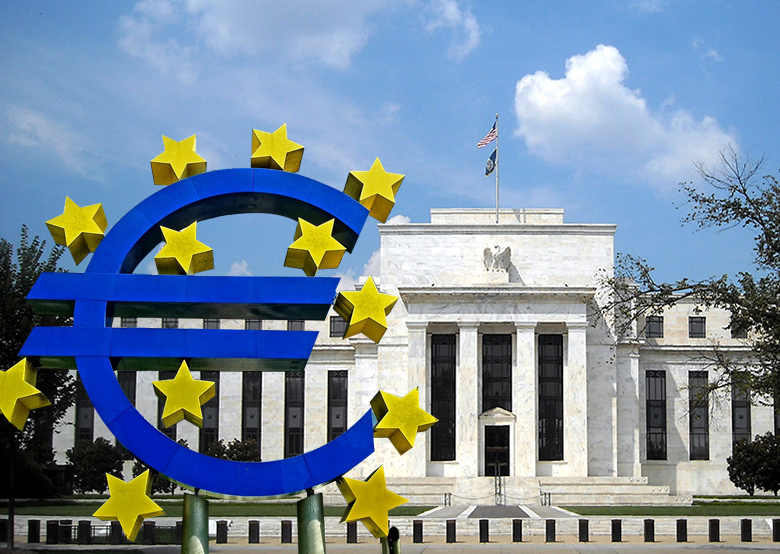
Fed versus ECB
Thursday, November 12, 2015 11:47 PM UTC
Editor's Picks



- Market Data
Most Popular




