


 IMF Maintains 2027 Global Growth Forecast at 3.4% Amid Rising Risks
  China Bank Lending Rebounds in September, Beats Forecasts
  Fed's Hammack Urges Faster Rate Hikes to Fight Inflation
  Container Ship Sinks in Strait of Hormuz as Iran Attacks Escalate
  China Resumes US Soybean Purchases After Trump-Xi Summit
  Samsung, SK Hynix Shares Plunge as China Chip Competition Grows
  Philippines Current Account Deficit Seen at $19.1 Billion in 2026
  RBA Signals More Rate Hikes as Inflation Risks Rise
  Asian Currencies Steady as Dollar Nears 18-Month High Ahead of US CPI
  Wall Street Falls as Hot US Inflation Fuels Fed Rate Hike Bets
  Oil Prices Surge Above $106 After Deadly Saudi Airport Attack
  US Dollar Index Falls as Fed Signals Caution, Indian Rupee Surges
  IMF Warns US Debt Crisis Needs Fiscal Action, Urges China to Boost Consumption
  Gold Prices Mixed Ahead of US Inflation Data and Fed Rate Outlook
  Trump Defends Russian Diesel Deal Amid US Sanctions Backlash
  US Dollar Hits 18-Month High as Inflation Fuels Fed Rate Hike Bets


 Add as a preferred source on Google
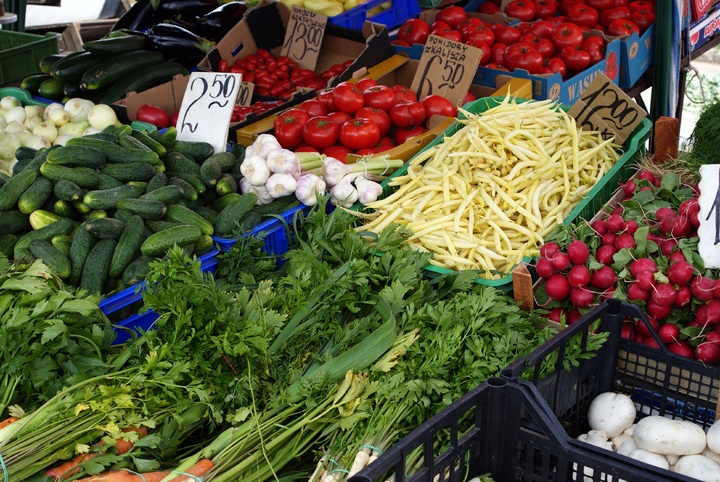

Fruit and vegetable prices are expected to be 8% higher than they would have been over the December and March quarters as a result of the floods, according to budget figures released by Treasurer Jim Chalmers.
And inflation, still forecast to peak at 7.75% in the December quarter, is set to stay higher for longer, largely because of energy prices.
Tuesday’s budget will show tax receipts revised upwards by more than $100 billion over the forward estimates, predominantly due to high commodity prices and the strong labour market.
But most of the upgrades are in the first two years of the budget period. Later, with expected lower commodity prices and slower employment growth, the upgrade is more than offset by outlays being revised up. Higher inflation will increase indexed payments, programs such as the NDIS will face cost pressures, and the government will have higher interest payments on debt.
As a result, the deficit in the final two years of the forward estimates is forecast to be bigger than in the Pre-election Economic and Fiscal Outlook (PEFO) released before the election. Spending pressures are anticipated to continue to build over the medium term.
Chalmers said on Friday that while it was too early to put a precise final price tag on the extensive flooding, which has hit NSW, Victoria and Tasmania, “we already know it will push up prices, slow growth in the near term, and cost billions”.
About a quarter of a percentage point is expected to be subtracted from GDP growth in the December quarter by the flooding, but this is likely to be mostly offset by increased activity in the first half of next year.
The floods will add an estimated 0.1 percentage point to inflation in the December quarter, followed by a similar amount in the March quarter.
But in the figures prepared for the budget, the forecast that inflation will peak at 7.75% in the December quarter has not been revised.
Chalmers points out this number is affected by swings and roundabouts, notably lower fuel prices than were expected in his July ministerial statement.
But energy prices are forecast to stay higher for longer because of foreign and local factors.
The overseas energy market remains increasingly disrupted. The domestic issues keeping up high energy prices have been exacerbated by ageing electricity assets and inadequate policy certainty to support investment in new infrastructure, the government says.
Unemployment, currently 3.5% on figures released this week, is forecast in the budget to rise to 4.5% in 2023-24.
Unemployment is expected to be higher than estimated in Chalmers’ July statement for 2023-24 and 2024-25. This is as a result of the global slowdown and rising interest rates and cost of living pressures affecting economic activity next year.







