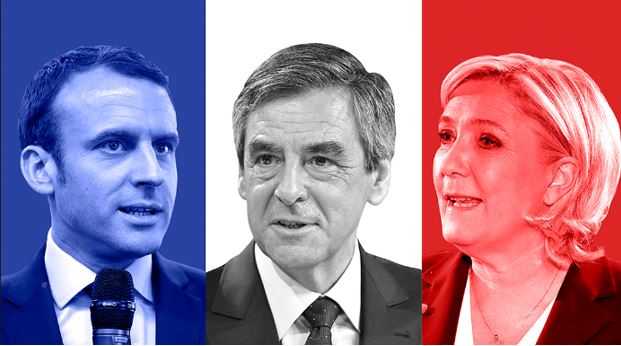
The French elections are drawing closer with each passing day and we will know how France will vote in the next couple of days. The outcome of the election could trigger shockwaves in the France's economic landscape and we can reasonably expect the shockwaves to ripple through the rest of the Eurozone. In fact, veteran investors won't be surprised if the outcome of the French election also triggers some whiplash in the U.S. This post is however more concerned with how the French economy is likely to fare after the French elections.The French elections are drawing closer with each passing day and we will know how France will vote in the next couple of days. The outcome of the election could trigger shockwaves in the France's economic landscape and we can reasonably expect the shockwaves to ripple through the rest of the Eurozone. In fact, veteran investors won't be surprised if the outcome of the French election also triggers some whiplash in the U.S. This post is however more concerned with how the French economy is likely to fare after the French elections.
Here's how the pendulum might swing for the French banks
French banks are most vulnerable as the elections draw closer because of how the leading candidates on the far right and far left could move the economy. French economists will hope that a conservative/centrist candidate wins the election – at least to provide a voice of reason amidst the extremist views on the right and left.
Simon Tucker, an analyst at Saxon Trade observes that "French bank giants Societe General and BNP Paribas have been suffering wild swings since February when the campaign of the conservative candidate, Francois Fillon suffered a scandal." The chart below shows how both French banking giants have fared in the year-to-date period.
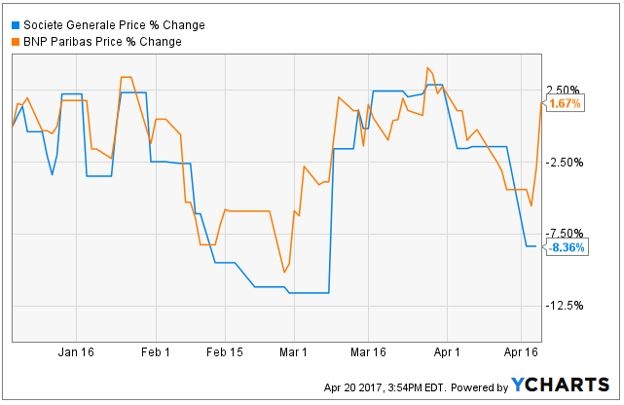 From the chart, you'll observe that the shares of BNP Paribas have only managed to creep up 1.67% after dropping by more than 10% in March. The share price of Societe General is down a massive 8.36% in the year-to-date period. The weakness in French banks underscores the prevailing sense of apprehension in the French economic landscape and in the larger Eurozone. For one, the extremist views in France suggest that a 'Frexit' might trigger the breakup of the EU.
The effects of the 2016 Brexit vote are still fresh in the mind of investors who had to contend with the historical decision of Britain to leave the EU. After the Brexit vote, the pound crashed to a 31-year low and the European market indexes suffered massive losses. The Brexit vote also emboldened populist and nationalist sentiments across the European continent.
Investors are worried about increased uncertainties
The upcoming French election is being hotly contested between far-right's Marine Le Pen and Jean-Luc Mélenchon who is flying the flag for the far-left. The French electorate are practically equally divided between supporting the far-right and far-left candidate – electoral surveys indicate that only a silent minority of voters are leaning toward centrist candidates.
Investors are mostly worried that the election is forcing them to choose between the lesser of two evils and they won't hesitate to exit at the first sign of trouble. To start with, the far-right candidate is proposing economic policies that could cripple the French economy. The far-left candidate on the other hand is proposing foreign policy that could further weaken the EU.
The first round of the elections will hold on April 23 but it is shaping up to be one of the most unpredictable elections in French political history. In a field of 11 candidates, many stakeholders are hopeful that at least one of the mainstream (center-leaning) candidates will make it through to the second round of the election on May 7. However, if both extremists candidates make it to the second round of the elections, investors won't need anybody to tell them that they are sitting on a keg of economic gunpowder.