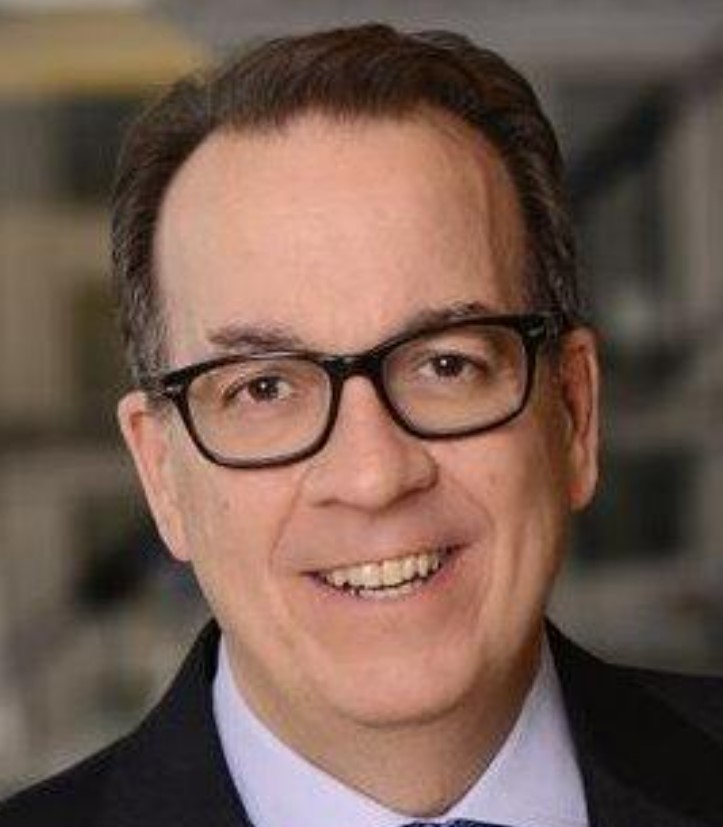
Amid whipsawing markets, investors are rediscovering risk management. Can they overcome their emotions and stay there when markets turn? Chairman of Diffractive Managers Group and former CEO of Natixis, John Hailer, says yes, with the right portfolio.
It’s an old adage that investors will always pay for performance. But with advisory portfolios looking more and more like institutional ones and risk management an increasingly common input in modern portfolio construction, is the perception of value for money among investors shifting as well?
We spoke with the former CEO of Natixis, John Hailer, now Chairman of Diffractive Managers Group, a fast-growing multi-boutique asset manager whose ten affiliates offer a range of core portfolio and non-traditional, specialized offerings.
“For a lot of investors, their portfolios become an amalgamation of their own emotional behaviors,” said Hailer. “The result is that it hardwires them to be poor investors, investing the most when they’re the most comfortable and retreating from their plan when they hit a bump in the road.”
This usually means investors reacting to whatever is most recent in their minds, what the industry calls ‘recency bias,’ whether that is what is happening now or what was most meaningful to them in the recent past. It could be today’s headlines or the last bull or bear market. Either way, it leads to poor decision-making, Hailer says.
Take recent years as an example.
Prior to 2021, late in a bull market, high-risk assets were dominating headlines. Then when 2022 ushered in a bear market, with many still pursuing returns through high-risk portfolios highly correlated to the market, the traditional 60/40 portfolio mix of fixed income and equities had its second-worst year since the inception of the Bloomberg US Aggregate Bond Index, an 18% loss on a nominal basis.
“Today’s recency bias is now looking back at 2022 and that has meant a renewed focus on managing risk in portfolios,” said John Hailer. “That’s good, but when the market turns, can investors avoid pivoting back with it and again chasing returns? That’s where good portfolio construction comes in.”
“We know that for most investors the biggest risk is not staying invested,” said Hailer. “And the only way to avoid that is to build durable portfolios that keep investors aligned with their outcomes.”
That often means building investor portfolios that look more and more like those of large institutional investors like large pension funds, insurers, and even sovereign wealth funds, whose broadly diversified portfolios and long-term outlooks generally eschew the attempts at market timing too often seen among the investing public.
“As more investors are recognizing this, we’re seeing a lot more interest from the advisor community in new types of vehicles that can access asset classes more traditionally available to institutions in order to help advisors build the types of portfolios that help shield investors from these behaviors and keep them invested,” said Hailer.
The key for investors is to build a plan and strategy that is risk aware, diversified, and can allow investors to stay invested when the market bends or even breaks. To do this, investors need access to what institutions with long-term horizons and liabilities have done, which is to look for a combination of liquid and non-liquid options. The typical institution has more than 20 percent of its assets in private non-liquid investments. But new vehicles and new fund structures are providing more of the liquidity that individual investors need to be able to access these complex structures.
“It’s always been a secular theme that individual investors need to behave more like institutions,” said John Hailer. “But getting the emotion out of the portfolio is only the first step. They also need the building blocks to do it. And in recent years, the industry has come a long way in developing the new vehicles investors need to build more sophisticated, more broadly diversified and more durable portfolios.”
So, how are these trends driving change in individual investor portfolios?
While an average investor portfolio ten years ago may have contained a mix of mutual funds, stocks, and bonds, and five years ago more ETFs and fewer mutual funds, advisors today are building portfolios utilizing a broader mix of structures that span active and passive ETFs, specialized ETFs, illiquid private placements, individual securities, private debt, and even unique derivatives.
“What we are seeing across the board are new vehicles that provide better access to the types of uncorrelated real asset classes – whether it be timber, conservation, green energy, infrastructure, regenerative farming, new approaches to real estate, or other thematics – that institutions commonly use to moderate their range of risk and return,” said Hailer.
Hailer believes that through product engineering, asset managers can provide the vehicles, tools, and asset classes that advisors need to build portfolios that can access real assets, create real impact, and achieve the optimum diversified risk and return profile investors need.
“If you’re not looking at all these structures as an advisor, as a consultant, or as an investor, then you’re not building a really, truly durable portfolio or structuring an investment portfolio that can withstand the ups and downs of the market and keep people invested,” he said.
For example, Diffractive Managers Group is developing funds that bring together diversified sets of real assets with the necessary due diligence to make them accessible to individual investors.
Diffractive is looking at real assets, natural resources and active impact solutions through its affiliate partners like Greenbacker, which is a leader in green energy investment; Gitterman Asset Management, which specializes in sustainable investing; and Conservation Resources, which aligns private equity with conservation capital to manage real asset properties, to name a few.
“And not only do real assets support a better, more durable investment philosophy,” said Hailer, “they create real impact.”
Recent regulatory changes have made a difference as well.
Investment expert John Hailer cited the shift from product commission-based advisory models to fee-based fiduciary advisory models as a big driver of interest in a broader set of vehicles and asset classes.
Advisors and investors are getting more comfortable with new types of products and investment vehicles, but education is critical, and the story advisors tell their clients will go a long way in determining whether they stick with these changes over the long term or revert back to emotional behaviors of the past.
“Advisors need to get investors to a place where they’re comfortable with a portfolio that is non-correlated but also dynamic,” said Hailer.