
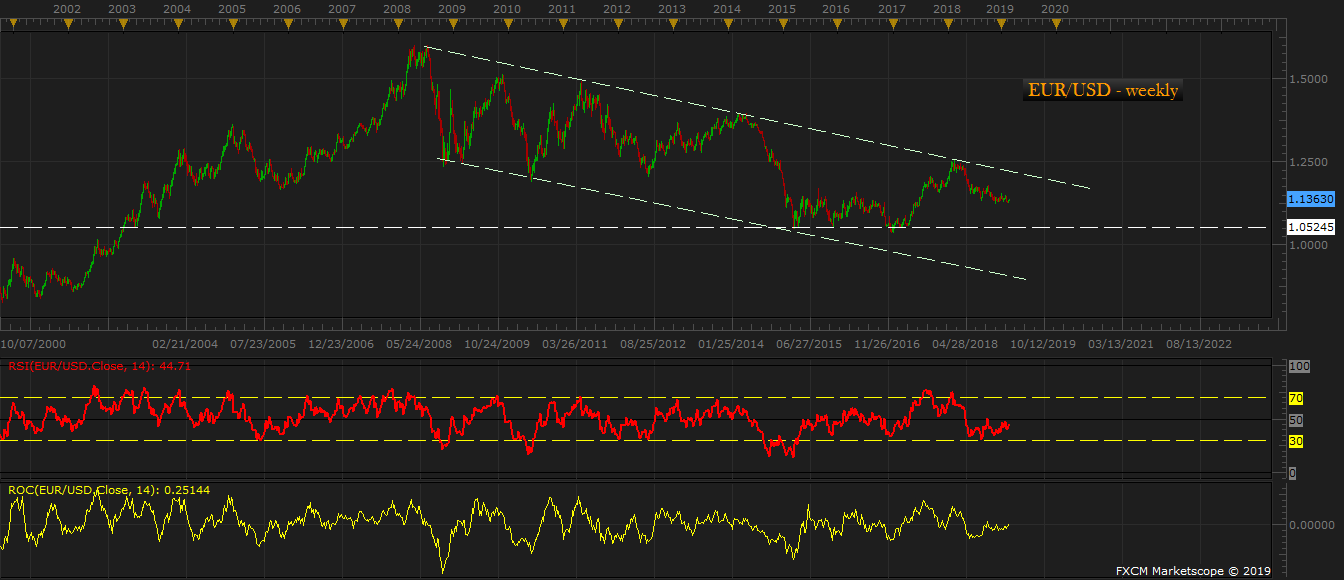
Lower euro makes sense for Eurozone and we expect the European Central Bank (ECB) to act on it.
- At this point, a weaker euro against USD and the majority of its trading counterparts seem more sensible, as Eurozone’s biggest economic powerhouse Germany is showing signs of weakness. In the December quarter 0f 2018, German economy failed to grow at all, as per GDP numbers and annual growth rate declined to just 0.6 percent, down from 2.8 percent in 2017. This was the weakest growth rate in almost 7 years.
- Germany could definitely use a lower euro at this time of trade tensions with the United States, as its economy depends broadly on exports.
- A weaker euro is likely to have a quick and broad boost to exporters all over the Eurozone.
- A weaker euro also makes sense in terms of promoting inflationary policies. According to the latest release, the inflation rate is just hovering around 1.4 percent. In January, the price index declined by 1 percent.
Several central bakers across the Eurozone including governing council members have expressed doubts over Eurozone’s growth prospect. One of the most hawkish members of the council, German Bundesbank has expressed concern over German and Eurozone’s economic prospect, which suggests that it would be less opposed to dovish comments.
Trading idea:
- With the above fundamental outlook, we urge readers to keep euro short targeting as low as 1.08 per USD. A key resistance lies at 1.143, 1.155, 1.65, and finally 1.18 area.

