


 Moody's Upgrades Argentina's Credit Rating Amid Economic Reforms
  Mexico's Undervalued Equity Market Offers Long-Term Investment Potential
  XRP Ledger Activates New Security Feature for Banks and Stablecoins
  Trump’s "Shock and Awe" Agenda: Executive Orders from Day One
  Lithium Market Poised for Recovery Amid Supply Cuts and Rising Demand
  Cardano Price Eyes $0.30 as ADA Whale Activity Surges
  Gold Prices Fall Amid Rate Jitters; Copper Steady as China Stimulus Eyed
  U.S. Stocks vs. Bonds: Are Diverging Valuations Signaling a Shift?
  David Schwartz to Reveal XRP Ledger Future at Ripple Swell 2026
  Dogecoin Liquidations Surge as DOGE Bulls Face Heavy Losses
  Ethereum Price Drops Below $2,600 as Long Liquidations Hit 4-Month High
  Solana Price Drops 3% Despite Samsung USDC Partnership
  Bank of America Posts Strong Q4 2024 Results, Shares Rise
  U.S. Banks Report Strong Q4 Profits Amid Investment Banking Surge
  Jameson Lopp Downplays AI Threat to Bitcoin Cryptography


 Add as a preferred source on Google
ECB extends asset purchases to end-2017: The monthly pace of purchases, however, will be reduced The ECB on 8 December announced that it would extend the end date of its asset purchase programme by nine months to the end of 2017, more than the six-month extension widely anticipated.
However, it also announced that from April it would reduce its monthly pace of purchases to €60bn from €80bn. The parameters of the programme will also change, enabling it to buy more short-dated securities, which helped to weaken the euro.
From January, the ECB will buy assets in the maturity range of 1-30yrs, compared with 2-30yrs previously, and also assets that yield below the deposit rate (-0.4%).
President Draghi sounded dovish and left open the possibility that asset purchases could be ramped up in the future if downside risks to economic growth materialise or underlying inflation fails to pick up. But if ‘core’ inflation does rise as projected, the ECB may start to wind down asset purchases from 2018.
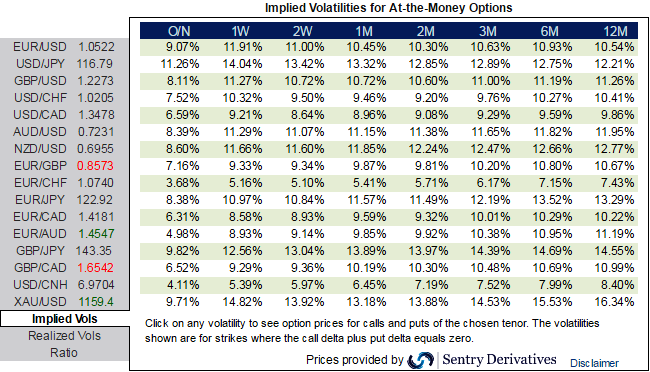
You see higher and steeper 6M-1Y EUR vols: you could make this out from the IV nutshell, rising hedging interests during this span.
Europe faced one constitutional referendum (Italy in December) and three to four national elections next year:
Netherlands in March, France in April/May, Germany by October and possibly Italy.
There are good reasons to think that eventual ballot box outcomes will buck the current populist trend and turn out Euro-benign.
Trump shock will now pull forward that time table, lift 6M-1Y expiry EUR vols that span European election dates, and bull-steepen the vol curve even if shorter- expiry implieds remain well-anchored by tight ranges on spot Euro.







