


 Energy Sector Outlook 2025: AI's Role and Market Dynamics
  Bitmine to Stop Ethereum Buying After Reaching 5% ETH Supply
  Strategy’s STRC Nears $100, Raising Prospects for Major Bitcoin Buys
  BlackRock’s Rick Rieder Favors Bonds Over Stocks as Treasury Yields Surge
  Trump’s "Shock and Awe" Agenda: Executive Orders from Day One
  Australia Consumer Confidence Plunges as RBA Rate Hike Hits Households
  Geopolitical Shocks That Could Reshape Financial Markets in 2025
  Kazakhstan and Tether Explore Tenge Stablecoin and RWA Tokenization
  Wall Street Analysts Weigh in on Latest NFP Data
  Fed Unveils Stablecoin Rules Under GENIUS Act
  RBA Hikes Interest Rate to 4.60% as Inflation Risks Rise
  DogecoinVM Makes DOGE Transactions 300x Faster
  Sector Spotlight: Data Availability and Storage Lead 24-Hour Market Gains
  Circle Stock Falls 4% as Crypto Selloff Overshadows SAP Pay Expansion
  Cardano Price Surges 10% as ADA Targets $0.30


 Add as a preferred source on Google
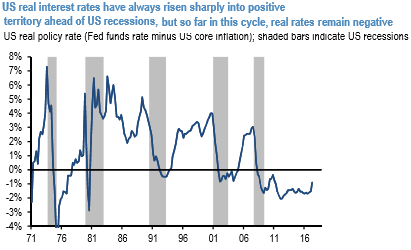
Post ECB, clarity from two of the three majors Now that the ECB has confirmed its tapering schedule through September 2018 (a reduction from €60bn per month to €30bn), it is reasonably clear what tedious path DM central bank balance sheets will take over the next two years. In 2018, aggregate balance sheets (Fed, ECB, BoJ, BoE, SNB, Riksbank) will probably expand by about 4%, as a roughly $200bn fall in Fed assets due to maturing Treasuries meets a €270bn ($320bn) increase in ECB assets through tapering and perhaps a ¥40trn ($350bn) increase in BoJ holdings through its yield curve control.
We ponder over the key projections for 2018/19: The smaller influence of QE relative to cyclical factors should only comfort investors who hold two assumptions: that the global growth upturn over the past year has not resulted solely from easy financial conditions; and that G10 inflation will only move slowly towards the target.
Where growth has been levered to low rates – some believe that peripheral Europe can only expand if QE artificially depresses borrowing costs, or that the US economy must be highly rate-sensitive due to record corporate indebtedness – even modest mean reversion higher in yields due to diminishing asset purchases can destabilize economies and markets.
Also, if inflation returns to target more quickly that the Fed, ECB or even the BoJ expect (the author knows it’s hard to imagine Japan with too much inflation), then the positive relationship between inflation and risky market returns will become negative as focus turns to the possibility of restrictive monetary policy, Profits squeeze and a material growth slowdown (refer above chart). We’re still biased to think that these balance sheet preoccupations are fodder for 2019 outlooks rather than the 2018 ones most analysts are crafting now.
For now – and in the wake of ECB decision – better to think more about how much Fed tightening the US money market should price in an environment of improving US growth, normalizing inflation, fiscal stimulus and a new Fed chair. Little of the basic relationship between Fed expectations, the dollar, precious metals, the carry trade and equities has changed, even two years after the first Fed hike.
The significant declines in EURUSD on Thursday and Friday were exclusively caused by USD strength. While the FxWirePro currency strength index for the USD has been slightly bullish by flashing a shy above 67, while EUR has also been highly bearish by flashing -123 while articulating (at 11:57 GMT).
For more details on our index please visit below weblink:
http://www.fxwirepro.com/fxwire/currencyindex
FxWirePro launches Absolute Return Managed Program. For more details, visit:







