


 China’s Growth Faces Structural Challenges Amid Doubts Over Data
  Fed’s Hammack Says More Data Needed Before Next Rate Move
  Robinhood Buys $25 Million in Bitcoin for Corporate Treasury
  Geopolitical Shocks That Could Reshape Financial Markets in 2025
  Moody's Upgrades Argentina's Credit Rating Amid Economic Reforms
  Fed Rate Hike Threatens Housing as U.S. Growth Leans on AI, Citi Says
  UBS Projects Mixed Market Outlook for 2025 Amid Trump Policy Uncertainty
  Global Markets React to Strong U.S. Jobs Data and Rising Yields
  Indonesia Surprises Markets with Interest Rate Cut Amid Currency Pressure
  Strategy’s STRC Nears $100, Raising Prospects for Major Bitcoin Buys
  Mexico's Undervalued Equity Market Offers Long-Term Investment Potential
  Moldova Criticizes Russia Amid Transdniestria Energy Crisis
  Australia Consumer Confidence Plunges as RBA Rate Hike Hits Households
  2025 Market Outlook: Key January Events to Watch


 Add as a preferred source on Google
EURSEK is unchanged over the past month, albeit once again the cross briefly flirted with the upper end of the six-year range at 9.60-9.70.
We expect continued range-trading through until year-end and then only very modest appreciation from SEK through next year (9.35 by end-16 and 9.15 by Q3’17).
The catalyst for a major break higher in SEK is lacking – a definitive end to the Riksbank easing cycle and a tangible prospect of rate hikes within a 6-9 month time frame.
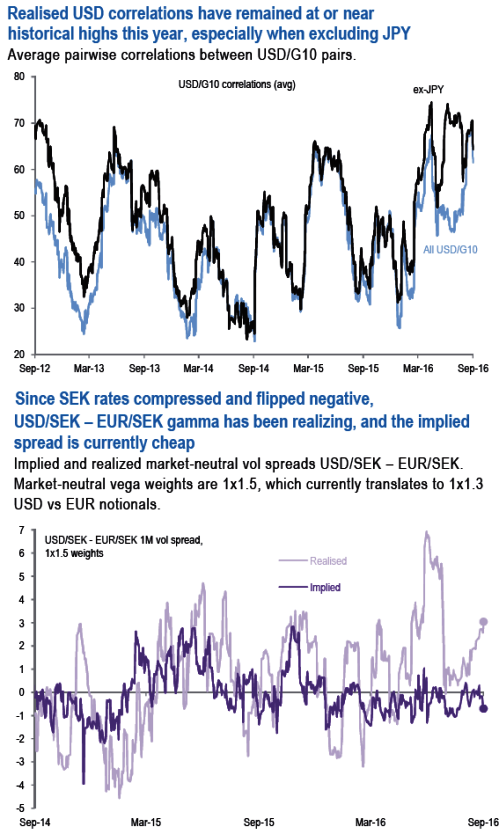
In the case of SEK, long positions in USD vols can be advantageously coupled with short vols in the EUR cross.
Long gone are the days when the market was testing the Riksbank’s nerves in the low 9.0s in EURSEK. The latest Swedish data do point to a rebound from slowing economic momentum.
However, this did very little to improve sentiment and lift SEK, as the undershoot in the country’s Economic Activity Surprise Index (EASI) is second only to NZD among the pairs we track .
With the market looking for negative rates to extend to Q3 2019 – a good 1y past the Riksbank’s forward guidance, it is unlikely that SEK attracts significant inflows, and “we expect continued (EURSEK) range-trading through until year-end”. This range-bound outlook on EURSEK – which the price action around German.
Financials woe doesn’t question, should play its part in keeping USD correlations at historically firm levels, especially when removing the BoJ-led effect of JPY. It is, therefore, supportive of a USDSEK vs EURSEK vol spread trade.







