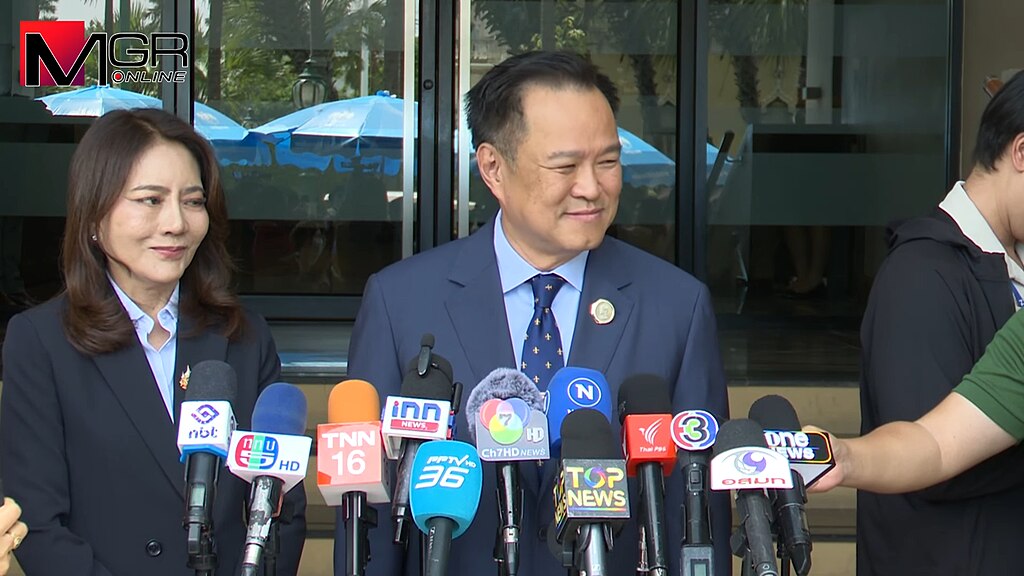
Thailand’s political landscape may be entering a more stable phase after Prime Minister Anutin Charnvirakul’s Bhumjaithai Party secured a decisive victory in Sunday’s general election. Preliminary results from the Election Commission, with nearly 95% of polling stations counted, show Bhumjaithai winning around 192 seats in the 500-member House of Representatives, far ahead of the progressive People’s Party with 117 seats and the once-dominant Pheu Thai Party with 74 seats.
The snap election was called in mid-December amid heightened tensions from a Thailand–Cambodia border dispute. Political analysts widely viewed Anutin’s decision to dissolve parliament as a strategic move to capitalize on rising nationalist sentiment. The gamble appears to have paid off. Anutin had taken office after former prime minister Paetongtarn Shinawatra of Pheu Thai was ousted over the Cambodian crisis and dissolved parliament less than 100 days later, citing dysfunction and infighting within a minority government.
Addressing supporters after the results, Anutin said Bhumjaithai’s win was “a victory for all Thais,” pledging to govern inclusively and serve the public to the best of his ability. While the party fell short of an outright majority, analysts say its strong performance puts it in a powerful position to form a stable coalition government and advance key campaign promises, including consumer subsidies and a tougher stance on disputed maritime agreements with Cambodia.
Experts note that Bhumjaithai benefited from a nationalist platform and a successful strategy of drawing support from rural politicians previously aligned with rival parties. The People’s Party, which had led opinion polls earlier in the campaign, conceded defeat and announced it would not join a Bhumjaithai-led coalition, instead positioning itself as the main opposition.
Alongside the election, Thai voters also backed a constitutional referendum by nearly two to one, signaling support for replacing the 2017 military-backed charter. If carried through, the process could mark another major turning point in Thailand’s long history of constitutional change and political upheaval.