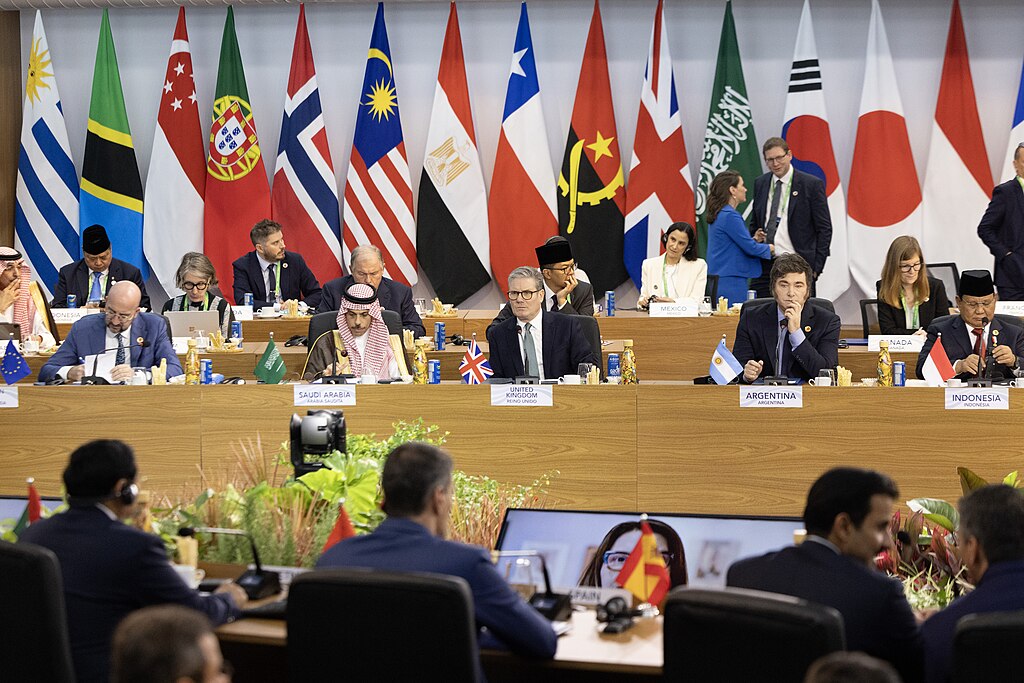
Group of 20 leaders adopted a new declaration addressing the climate crisis, global challenges, and geopolitical tensions—despite strong objections from the United States. The move triggered a sharp response from the White House, which accused South Africa of “weaponizing” its G20 presidency after the U.S. delegation boycotted the summit in Johannesburg.
South African President Cyril Ramaphosa’s spokesperson Vincent Magwenya said the document, drafted without U.S. input, “can’t be renegotiated,” emphasizing that negotiations had taken place throughout the year. Hours later, the White House criticized Ramaphosa for refusing to facilitate a proper handover of the G20 presidency, claiming he had planned to pass the gavel to “an empty chair.” U.S. officials said South Africa pushed the declaration through despite persistent American objections.
Argentina, a close U.S. ally under President Javier Milei, withdrew from the final negotiations at the last minute. Argentine Foreign Minister Pablo Quirno said the declaration’s reference to the Israeli-Palestinian conflict lacked nuance. Still, Ramaphosa moved forward, saying there was “overwhelming consensus.”
The declaration highlighted urgent global concerns, including climate change, renewable energy goals, and crushing debt burdens on developing nations—language the Trump administration strongly opposes. U.S. officials had repeatedly warned they would reject any mention of climate change, reflecting Donald Trump’s skepticism of human-driven global warming.
Ramaphosa defended South Africa’s leadership role, urging countries not to diminish the significance of the first African G20 presidency. The U.S. boycott was based on widely discredited allegations that South Africa’s Black-led government persecutes its white minority—a claim Trump reiterated earlier this year.
Global divisions were evident throughout the summit, with tensions heightened by Russia’s war in Ukraine, climate negotiations at COP30 in Brazil, and concerns about China’s trade restrictions on rare earth minerals. EU Commission President Ursula von der Leyen warned against “weaponizing dependencies,” seen as a veiled reference to China.
South Africa also rejected a U.S. proposal to send a charge d’affaires to receive the G20 handover, calling it a breach of protocol. Instead, Pretoria said it would appoint an equivalent-ranking diplomat for the transition.
This year’s summit underscored growing global divides and competing visions for the G20’s future, setting the stage for renewed debate when the U.S. assumes the presidency next year.