
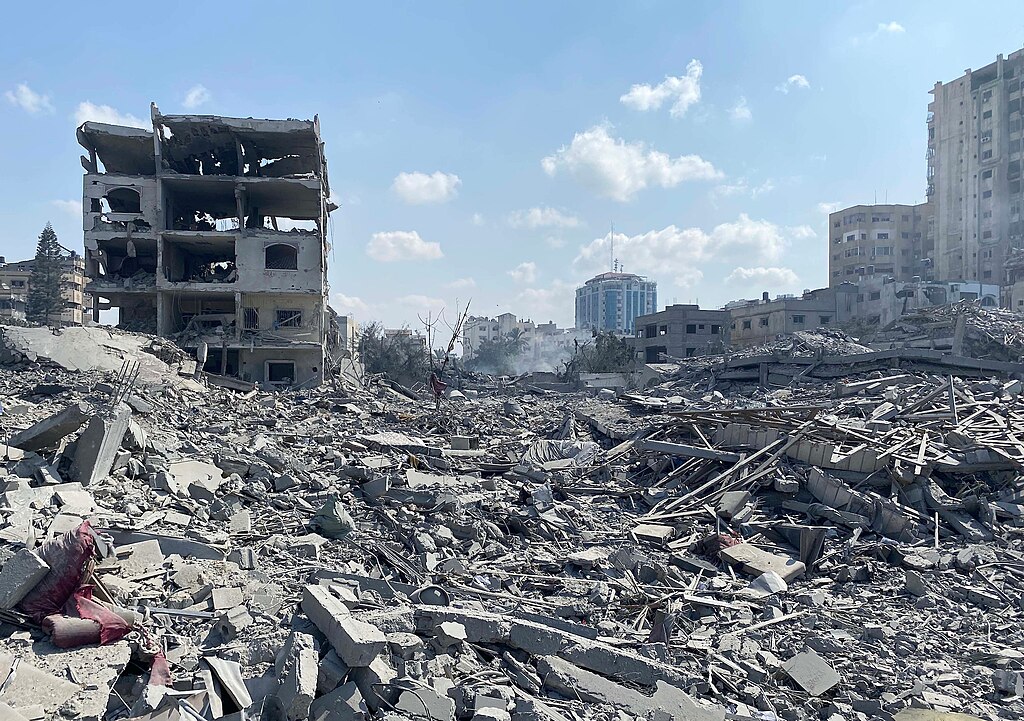
A senior envoy from the Board of Peace warned the United Nations Security Council that Gaza could face a permanent territorial split if a ceasefire agreement fails to move forward. The warning comes as the humanitarian crisis in Gaza continues to worsen, with more than 2 million Palestinians potentially confined to less than half of the enclave’s land area.
The Board of Peace, established by U.S. President Donald Trump, was designed to oversee efforts to end the nearly two-year Israel-Gaza war and launch a large-scale reconstruction plan for the devastated territory. However, progress has stalled due to ongoing tensions between Israel and Hamas.
Speaking before the U.N. Security Council in New York, Board of Peace envoy Nickolay Mladenov said Hamas’ refusal to disarm and surrender authority remains the main obstacle to implementing the ceasefire and rebuilding Gaza. Israel currently maintains military control over roughly 60% of Gaza’s 365-square-kilometre territory, leaving civilians crowded into increasingly limited areas.
Mladenov warned that the current situation could create a long-term humanitarian and political disaster. He said a divided Gaza under Hamas control would leave millions living in unstable conditions, many still displaced in temporary shelters and tents. According to the envoy, such an outcome would also undermine Israel’s long-term security concerns and eliminate hopes for a viable Palestinian state.
The envoy also acknowledged reports of Israeli ceasefire violations and civilian deaths while highlighting major funding shortages for reconstruction efforts. He stressed that international investors and donors are unlikely to support rebuilding projects unless weapons are surrendered and stability is restored.
Hamas spokesperson Hazem Qassem rejected the remarks, accusing the Board of Peace of attempting to justify Israeli military actions and tighter restrictions on Gaza. Meanwhile, humanitarian organizations continue to report severe shortages of aid and essential supplies entering the enclave despite promises of increased assistance under ceasefire discussions.


